
Most Disney World days don’t fall apart because of something unexpected. They fall apart because a decision got skipped the night before, or a detail nobody thought about surfaced at 12:30pm when everyone is already tired and the lunch queue is 25 minutes long.
The five things below are not general tips. They are decisions with real timing and real consequences. We have gotten each one wrong at least once, and each one noticeably changed how the day went.
1. Arrive With a Plan for the First Ninety Minutes, Not the Whole Day
The most valuable window in any major theme park is the first 90 minutes after the gates open. Crowds are thinnest, waits are shortest, and the people who know this are already moving toward their priorities while everyone else is still gathered near the entrance watching the opening show.
For Disney World specifically: arrive at the park entrance at least 30 minutes before official opening. If you’re staying at a Disney resort, you get Early Theme Park Entry, which is 30 minutes of access before the general public arrives. That window is most useful at Magic Kingdom and Hollywood Studios, where the most in-demand rides are concentrated. EPCOT and Animal Kingdom are slightly more forgiving on entry timing, though earlier is still better.
In those first 90 minutes, target your top two priorities: the rides with the highest daytime waits and no easy Lightning Lane workaround. After that, let the day breathe. A minute-by-minute schedule for the rest of the day is the wrong approach. The parks shift constantly based on crowd flow, weather, and ride availability. Build a rough order of preference, not a locked timeline.
Worth it for: Everyone doing a full park day. Rope drop is the single highest-leverage move available to any Disney visitor regardless of budget or group type.
What we’d change: On early visits, we spent too long at the first ride: lingering in the gift shop exit, stopping for photos, not moving with purpose toward the second priority. The first 90 minutes are not for lingering. There is more time for that later in the day, when the waits make moving quickly feel less urgent anyway.
2. Decide the Lightning Lane Question Before You’re Standing at the Tapstiles
Disney World’s Lightning Lane system has two parts. Lightning Lane Multi Pass covers a broad selection of rides and lets you book one return time at a time throughout the day, with a daily fee per person. Individual Lightning Lane covers the highest-demand attractions and is purchased separately per person per ride, on top of the Multi Pass or park admission.
Individual Lightning Lane prices vary by date and attraction. As of spring 2025, they typically ranged from roughly $7 to over $20 per person per ride. Verify current pricing in the My Disney Experience app before your visit. Disney adjusts these prices frequently based on demand and date. For a group of four, a single Individual Lightning Lane purchase for a popular attraction can run $30 to $80 or more. That adds up quickly on a multi-ride day.
Worth it for: Single-day visitors who have one or two specific must-do rides and cannot afford to have those rides simply not happen. If the emotional success of the day depends on a particular attraction, Individual Lightning Lane is low-stakes insurance compared to the cost of the overall trip.
Skip it if: You’re arriving at rope drop and targeting that ride in the first 90 minutes. The early-morning window often eliminates the need entirely. Also worth skipping if you have multiple park days, since you can plan to return to that ride during a different early morning. The Multi Pass question is separate and worth evaluating on its own merits.
What we’d change: Making this decision at the hotel the night before, not at the park entrance in real time with a group waiting on us. The app is slower when you need it most. Have a clear plan before you leave the hotel.
3. The Mid-Afternoon Break Is a Strategy, Not Giving Up
Noon to 4pm is the busiest, hottest, and most draining stretch of a Disney park day. Queues are at their longest. In Florida between June and September, the heat and humidity are at full strength. The people who try to push through this window often leave the park by 5pm because they have used everything they had. The people who plan around it are usually still there at 9pm.
The approach we’ve landed on: leave the park around noon or 1pm, rest for two to three hours at the resort, and come back for the evening. For Disney resort guests, this is straightforward. The Skyliner, monorail, or bus lines back to the hotels run continuously, and most Disney resorts have pools that are significantly less crowded during the mid-afternoon park rush. For off-site guests, it’s a real calculation: driving back to the hotel is feasible if you’re staying nearby, but it costs 30 to 45 minutes each way depending on location and traffic.
If leaving the park isn’t realistic for your group, the next best version is finding a genuinely air-conditioned space and actually resting in it, not slow-walking through more attractions while tired. A sit-down meal, a long indoor show, or a pavilion with seating works. The goal is a real recovery window, not a slower version of the morning.
Worth it for: Families with young kids (for whom this often aligns naturally with nap timing), summer visitors, and anyone who tends to run out of energy by late afternoon. This approach is almost universally useful. The people who resist it most are usually the ones who regret not doing it.
What we’d change: On our first full Disney World day, we tried to push through the 2pm heat. We left by 6pm and missed the evening entirely. We’ve taken the midday break on every visit since.
4. Eat Before You’re Hungry and Set Up Mobile Ordering Before You’re in Line
The worst time to think about lunch at Disney World is when your group is already hungry. At noon on a busy day, the quick-service queues at the most popular locations run 20 to 30 minutes, seating areas fill up fast, and the decision-making quality of most groups drops noticeably around the same time everyone gets irritable. Eating at 11am or 2:30pm instead of noon changes this significantly.
The other tool worth using: mobile ordering. Disney’s quick-service locations are set up for this through the My Disney Experience app. You browse the menu, customize your order, select an arrival window, and bypass the counter queue entirely. The key is setting it up before you’re hungry: during a ride queue, at a show, or during a slow walk between lands. If you try to set it up at the restaurant because the line looked long, you’ve already lost the time it was meant to save.
For table-service restaurants, reservations open 60 days in advance. The most popular dining locations, including several character meals and a handful of EPCOT and Magic Kingdom spots, fill up at or very close to that window. If a sit-down meal matters to your group, book it at the 60-day mark rather than hoping for availability closer to your visit.
Free cups of water are available at any quick-service location without a purchase. Ask for it specifically at the register or service window. Water fountains are also located near restrooms throughout all four parks.
What we’d change: Waiting until 12:30 to think about lunch, which is exactly when 10,000 other people had the same idea. The 11am meal is a genuinely different experience from the noon meal at the same restaurant.
5. Name Your Two or Three Non-Negotiables the Night Before
The most common regret after a Disney World day is a version of the same story: the group covered a lot of ground, had a reasonably good time, and somehow never got to the one thing that mattered most to someone in the group. It didn’t feel like a failure in the moment. It just felt that way at dinner.
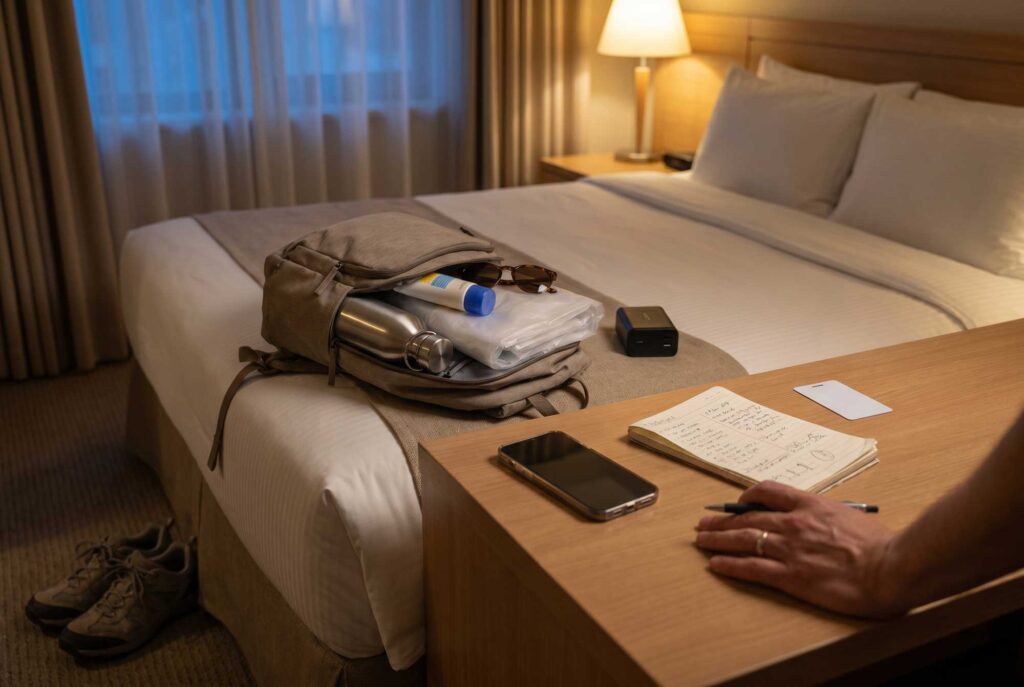
The fix is a short conversation the night before. Ask everyone in the group: if this day ended at 5pm and we only got to do three things, what would you want those three things to be? You don’t need a formal process. You just need to know the answers before the day starts.
Those two or three priorities become the structure of the day. The rope-drop window handles the ones with the longest queues. Lightning Lane or careful timing handles any others. Everything beyond those priorities is bonus: genuinely nice to do if the day allows, but not the measure of whether the day worked.
This matters most in groups with different priorities. A teenager and a six-year-old have different lists. A first-timer and someone who has visited before have different answers. A group of adults who think they mostly agree will often discover, if they ask specifically, that they don’t entirely. Finding out the night before means no one ends the day having watched everyone else do their priorities while the one thing they most wanted got bumped for time.
What we’d change: On mixed-group days, we’ve started this conversation later than we should have: sometimes on the drive in, sometimes not at all. Starting it the evening before gives people time to actually think about it rather than answering under pressure.
The days that have worked best for us at Disney World had one thing in common: the important decisions were made before we walked through the gates. Not all of them. Just the five above.
Niko’s Tip: Guest Relations is located near the entrance of every Disney World park. If a ride reservation goes wrong, a Lightning Lane purchase has an issue, or someone in your group needs an accessibility accommodation, that is the first stop. Cast members there can fix or clarify more than most guests realize.
Found an error or an outdated detail? Send a correction for this article.