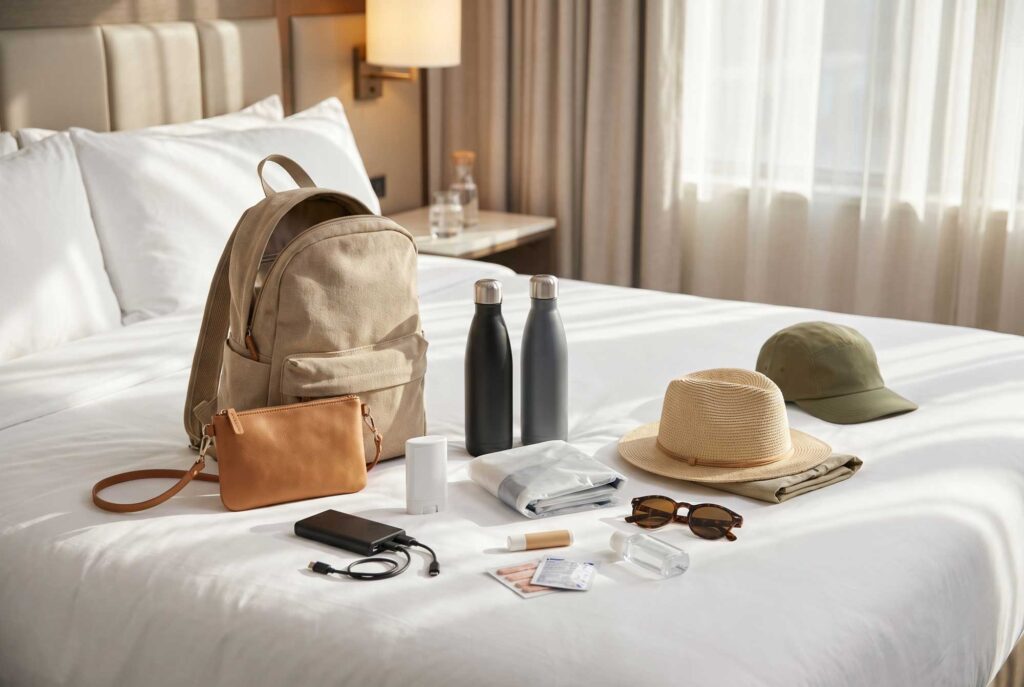

Two separate packing problems come with every theme park trip. The first is what goes in your checked bag and carry-on for travel day: clothes, toiletries, electronics, and everything you need to get there and settle in. The second is what actually comes into the park with you: a much shorter list you will carry for 10 to 16 hours on your feet.
Most packing lists treat these as one problem. This one doesn’t. The sections below separate them. Weather add-ons, a kids version, and a skip-it section follow at the bottom. Save this page or print it before you start packing.
Part One: Travel Day Packing
This covers your checked bag and carry-on: everything you need from the moment you leave home until you’re checked in and settled at the resort. These items stay at the hotel while you’re in the parks.
Documents
Keep these in your carry-on or personal bag, not in checked luggage. Have your boarding passes and park tickets accessible in your phone app before you leave home, not just downloaded on your device.
| Driver’s license, passport, or ID | Credit cards | Insurance cards |
| Printed itinerary or offline download | Emergency contacts | Boarding passes |
| Hotel confirmation | Park tickets or app confirmation | Bus, train, or shuttle tickets |
Clothes
This covers the categories. Quantities depend on your trip length: plan one outfit per park day plus a spare, and add a nicer option if you have a table-service dinner reservation. Theme parks are casual. Dress shirts are rarely the right call.
| Casual shirts (one per park day, plus one extra) | Shorts or lightweight pants | Underwear |
| Socks (one pair per day, plus one extra) | Pajamas or sleep clothes | Swimsuit |
| Cover-up or swim shirt | Light jacket or zip-up | Rain poncho |
| Hat with a brim (broken in, not new) | Broken-in walking shoes | Sandals or slip-ons |
| Sunglasses | Bra or sports bra | One outfit for a nicer dinner reservation |
Toiletries
If you’re staying at a Disney resort, most standard toiletries are provided. Check what your specific resort includes before overpacking this section. For off-site hotels, assume you’re bringing everything below.
| Toothbrush | Toothpaste | Dental floss |
| Body wash or soap | Shampoo | Conditioner |
| Deodorant | Sunscreen (SPF 50 or higher) | Lip balm with SPF |
| Moisturizer or lotion | Razor and shaving cream | Hair care products |
| Makeup | Pain reliever (ibuprofen or acetaminophen) | Prescription medications |
| Feminine hygiene products | Contact solution or spare glasses | Band-aids and blister treatment |
Electronics
Laptop and tablet are optional depending on your trip. The portable battery pack is not optional: it is one of the most used items across a full park day. Bring a pack with at least 10,000 mAh. Anything smaller may not fully recharge a modern phone even once.
| Phone and charging cable | Portable battery pack (10,000 mAh or higher) | Tablet and charging cable |
| Laptop and charger | Camera and memory cards | Headphones or earbuds |
| Universal travel adapter (international trips) | Extra charging cables | White noise machine or sleep app (resort nights) |
Carry-on Bag
If you’re flying, this is what stays with you on the plane. If you’re driving, this is what rides in the back seat instead of the trunk. Keep the items you might need before your checked bag arrives within reach.
| Snacks for the flight or drive | Empty refillable water bottle | Phone with charger accessible |
| Ear plugs | Eye mask | Lip balm |
| Tissues | Any medications needed during travel | Light layer for plane or car AC |
Part Two: Park Day Pack
This is a separate list from your suitcase. These items live in the daypack you carry into the park and carry for the full day. Several overlap with the suitcase list intentionally: sunscreen, sunglasses, and your hat need to be in your park bag, not buried in a checked bag at the hotel.
The bag itself should be in the 20 to 25-liter range: large enough to hold everything below, small enough to be comfortable for 10 to 16 hours. Wide main compartment, at least two exterior pockets. You want tickets, sunscreen, and snacks accessible without opening the main zipper in a crowded queue.
| Park tickets or phone with app | Photo ID | Credit card or linked payment method |
| Portable battery pack and cable | Sunscreen (SPF 50 or higher) | Lip balm with SPF |
| Sunglasses | Hat with brim | Refillable water bottle (20 to 24 oz per person) |
| Snacks (2 to 3 per person) | Rain poncho | Light zip-up or layer |
| Hand sanitizer | Blister treatment or moleskin | Small zip-lock bags |
Weather Add-ons
These are additions to your park day pack based on conditions. You don’t need all three. Pick the one that matches your dates and add those items to the core list above.
Summer and High Heat (June Through August)
Florida summer heat is not a minor inconvenience. The outdoor queues at Magic Kingdom and EPCOT can hold you in direct sun for extended stretches. Midday in July is genuinely hard without preparation. The people who plan around the heat have better afternoons than the ones who push through it. Plan outdoor rides for early morning or after 5pm, and build in at least one mid-afternoon break in an air-conditioned space.
| Cooling towel | Small personal fan | Extra sunscreen (plan to reapply) |
| Second hat or bandana | Electrolyte packets or sports drink | UV-protective long-sleeve shirt |
Florida Wet Season and Rain (June Through September)
Florida afternoon rain comes fast and typically passes within 30 to 45 minutes. When it rains, guests cluster under overhangs and in gift shops, outdoor queue times drop, and anyone willing to ride in a poncho moves through the park faster than on a dry Saturday. The rain is not a problem if you’re prepared for it. Pack your poncho at the top of the bag, not the bottom.
| Waterproof poncho (pack at top of bag) | Dry bag or waterproof phone pouch | Extra pair of socks |
| Microfiber towel | Zip-lock bags for electronics | Waterproof or quick-dry shoes |
Cool Weather (Late Fall Through Early Spring)
Florida winters are mild by most standards, but park evenings can drop into the low 50s or high 40s, and the indoor-to-outdoor temperature swings between Disney’s heavily air-conditioned spaces and the night air outside catch a lot of visitors off guard. A packable layer weighs almost nothing in your bag and gets used more than people expect.
| Light fleece or zip-up | Packable jacket | Scarf |
| Gloves | Warm hat | Hand warmers for evening hours |
If You’re Bringing Kids
Add these to your park day pack. The bag gets meaningfully heavier with kids in the group, so consider splitting across two smaller bags rather than loading one large shared pack. Each adult having faster access to what they need tends to work better than one person carrying everything.
One note before the day starts: check the height requirements for every ride on your list. Disney’s website and the My Disney Experience app list every attraction. Finding out a child doesn’t meet a requirement while standing in a 45-minute queue is a real problem that takes two minutes to prevent the night before.
| Full change of clothes per child | Kids’ sunscreen (gentle formula) | Extra snacks for gap hours |
| Stroller, wagon, or carrier | Age-appropriate pain reliever | Small comfort item for long waits |
| ID wristband or emergency contact card | Extra zip-lock bags (spills, wet clothes) | Kids’ rain poncho |
What to Leave Behind
Packing well is as much about what you leave out as what you bring. These are the items that come up most often as unnecessary friction.
New shoes. This one matters more than most people expect. A shoe that fits fine in a store and even feels comfortable for a two-hour errand can cause serious problems at 15,000 to 20,000 steps on pavement. Wear your park shoes for at least a few full days before the trip. If you arrive with new shoes, you will know by noon.
A selfie stick. Not permitted on most rides, creates friction at bag check, and does not solve a problem your phone can’t already handle.
A full-size backpack unless you need the volume. Anything over 25 liters is hard to manage in crowded queue areas and gets heavy by afternoon. Most travelers overestimate how much they need. The 20 to 25-liter range covers a full park day for most people.
Glass containers. Not permitted inside Disney’s parks. Leave them at the hotel.
A dedicated camera unless photography is the real priority. A recent smartphone handles what most people want to capture on a park day. A dedicated camera is worth carrying if you actually know how to use it in motion and will use it throughout the day. Otherwise it’s extra weight that comes out twice and stays in the bag the rest of the time.
Heavy or irreplaceable jewelry. Water rides, high-speed attractions, and a crowded park create real lost-item risk. Wear what you’re comfortable losing.
An autograph book if attraction time is the priority. Character meet-and-greets take significantly more time than most groups budget for. If this is meaningful to your group, plan for it. If it’s an afterthought, leave the book at the hotel and focus on what you’re actually there for.
Niko’s Tip: Water fountains are located near restrooms throughout all four Disney World parks. You can also ask for a free cup of water at any quick-service restaurant, no purchase required. A refillable bottle per person is the right call, especially in summer.
Niko’s Tip: Disney’s parks allow outside food with a few limits: no alcohol, no glass containers, and nothing that requires heating. Snacks, fruit, sandwiches, and drinks in sealed containers all go through bag check without issue. This is worth knowing before you pay resort prices for a mid-morning snack.