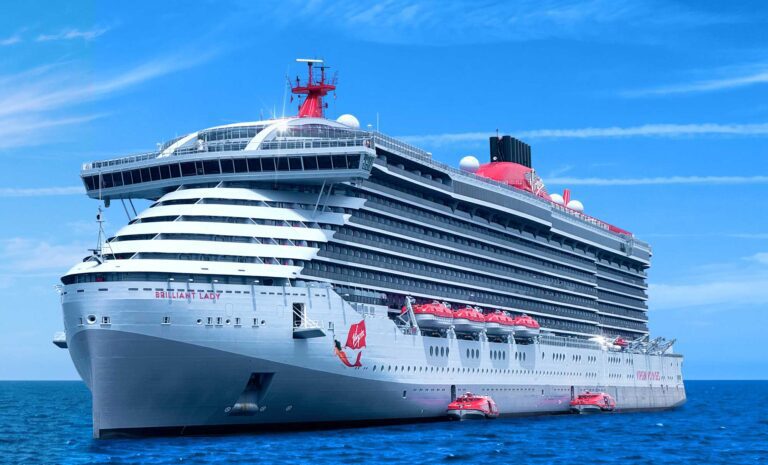

The itinerary name is not enough to tell you where Brilliant Lady is going.
Virgin Voyages uses several similar names for its Alaska sailings, but the actual routes can swap Sitka for Juneau, Tracy Arm for Endicott Arm, or a Seattle round trip for a one-way sailing between Seattle and Vancouver. The longer routes add places that do not appear on the standard seven-night cruises, including Icy Strait Point, Skagway, Haines, Victoria, and Hubbard Glacier.
Before you compare excursions, check the port list attached to your exact departure. That one step will prevent most of the confusion this guide is meant to solve.
What we have tested, and what we have researched
We have sailed Brilliant Lady for seven nights on the Mexican Riviera. Our observations about the ship, its outdoor spaces, dining, cabins, and daily rhythm come from that trip.
We have not sailed Brilliant Lady in Alaska. The Alaska route information in this article comes from Virgin Voyages’ published itinerary pages and official destination sources. We have removed recommendations that sounded like firsthand verdicts and kept the planning advice within the evidence we actually have.
Watch our full Brilliant Lady review on YouTube
Virgin Voyages can change ports, arrival times, tender arrangements, and scenic cruising plans. The line’s Alaska cruise page and the booking page for your departure are the final sources for your sailing.
The route families currently published for Brilliant Lady
The table below summarizes the main route patterns shown on Virgin Voyages’ booking pages as of August 1, 2026. It is a comparison tool, not a substitute for the itinerary attached to your reservation.
| Route family | Ports and scenic days currently shown | What separates it from the others |
|---|---|---|
| 7-night Inside Passage and Glacial Fjords | Seattle, Inside Passage, Ketchikan, Sitka or Juneau, Tracy Arm or Endicott Arm and Dawes Glacier, Prince Rupert, Seattle | The shortest round-trip option. The middle Alaska port and glacier day vary by departure. |
| 7-night Glacial Fjords and Coastal Views | Seattle, Ketchikan, Sitka, Tracy Arm, Prince Rupert, Seattle | Similar length, but some departures list a general sea day instead of a separately named Inside Passage day. |
| 8-night Seattle to Vancouver | Selected departures include Sitka, Icy Strait Point, Skagway, Endicott Arm and Dawes Glacier, and Ketchikan before ending in Vancouver | A one-way route with more Alaska ports and a different arrival city. Published 2027 versions may use a different port mix, so check the date-specific page. |
| 9-night Hubbard Glacier and Coastal Views | Seattle, Ketchikan, Icy Strait Point, Hubbard Glacier, Sitka, Victoria, Seattle | Adds Hubbard Glacier and Victoria while remaining a Seattle round trip. |
| 9-night Vancouver to Seattle | Vancouver, Inside Passage, Juneau, Skagway, Hubbard Glacier, Icy Strait Point, Ketchikan, Seattle | A port-heavy one-way route that includes both Juneau and Skagway. |
| 12-night Inside Passage and Hubbard Glacier | Seattle, Inside Passage, Ketchikan, Sitka, Hubbard Glacier, Skagway, Haines, Juneau, Icy Strait Point, Victoria, Seattle | The broadest current route, with Haines and several long port calls. |
The seven-night sailings need the closest comparison. A Sitka departure and a Juneau departure may carry nearly the same name, but they do not create the same trip. The same applies to Tracy Arm and Endicott Arm. Read the day-by-day schedule before choosing a date based on price alone.
Seattle: where most Brilliant Lady Alaska sailings begin
Virgin Voyages currently uses the Smith Cove Cruise Terminal at Pier 91 for Seattle departures. The Port of Seattle also lists Brilliant Lady at Pier 91 for its Alaska season.
Pier 91 is north of downtown rather than beside Pike Place Market or the central waterfront. Light rail connects Seattle-Tacoma International Airport with downtown, but it does not continue to the cruise terminal. The final part of the trip requires a taxi, rideshare, shuttle, or another transfer.
Arriving the day before remains the safer plan. It protects the sailing from flight delays and gives you time to handle the airport-to-hotel and hotel-to-terminal trips separately. Virgin’s current Seattle itineraries generally list a 5pm departure and require passengers aboard before that time, but use the app and your travel documents for the exact deadline.
The Port of Seattle maintains a ship and terminal lookup that is worth checking shortly before departure.
Inside Passage: a route, not one fixed scenic event
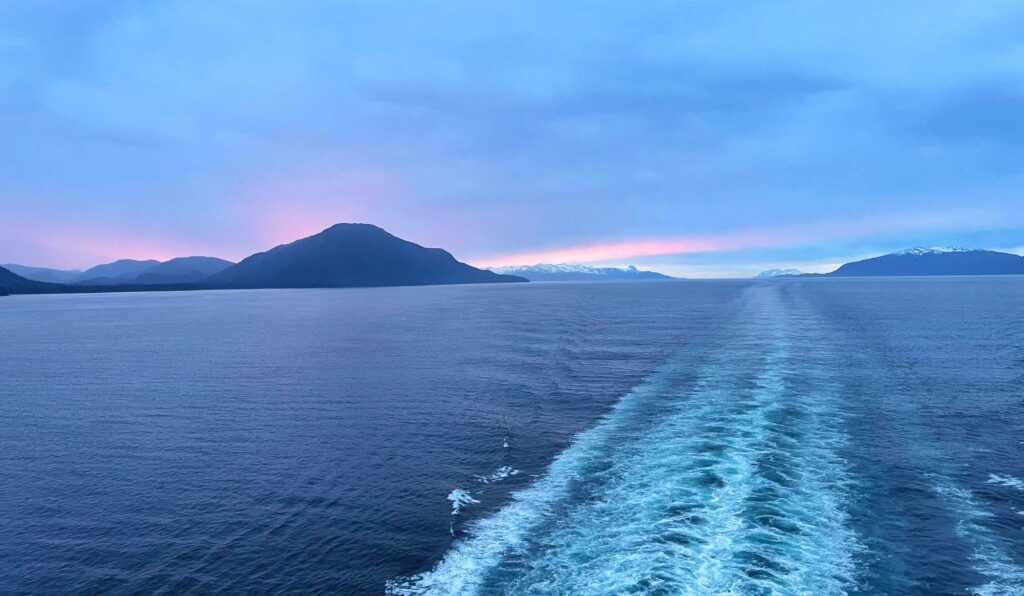
The Inside Passage is a network of protected coastal waterways running through British Columbia and Southeast Alaska. Some Brilliant Lady itineraries list it as a named cruising day. Others travel through the same broader region without giving it a separate line in the schedule.
That distinction matters because a named Inside Passage day does not work like a port call or a timed glacier approach. The scenery changes over many hours. There may be stretches of open water, narrow channels, forested islands, small communities, and mountain views. Weather and daylight will determine how much you can see.
This is one of the days when the ship itself becomes part of the itinerary. We would plan around outdoor access, sheltered views, and windows rather than treating the day as empty time between ports.
Our separate guide covers the ship areas we would examine first for a cold-weather sailing:
Brilliant Lady Alaska: How to Use the Ship’s Spaces on a Cold-Weather Sailing
Binoculars are useful, but wildlife should never be treated as a scheduled attraction. A whale, eagle, seal, or sea otter sighting is possible, not guaranteed.
Ketchikan: the most consistent Alaska port in the lineup
Ketchikan appears across the seven-night, eight-night, nine-night, and twelve-night route families. For many Seattle departures, it is the first Alaska stop.
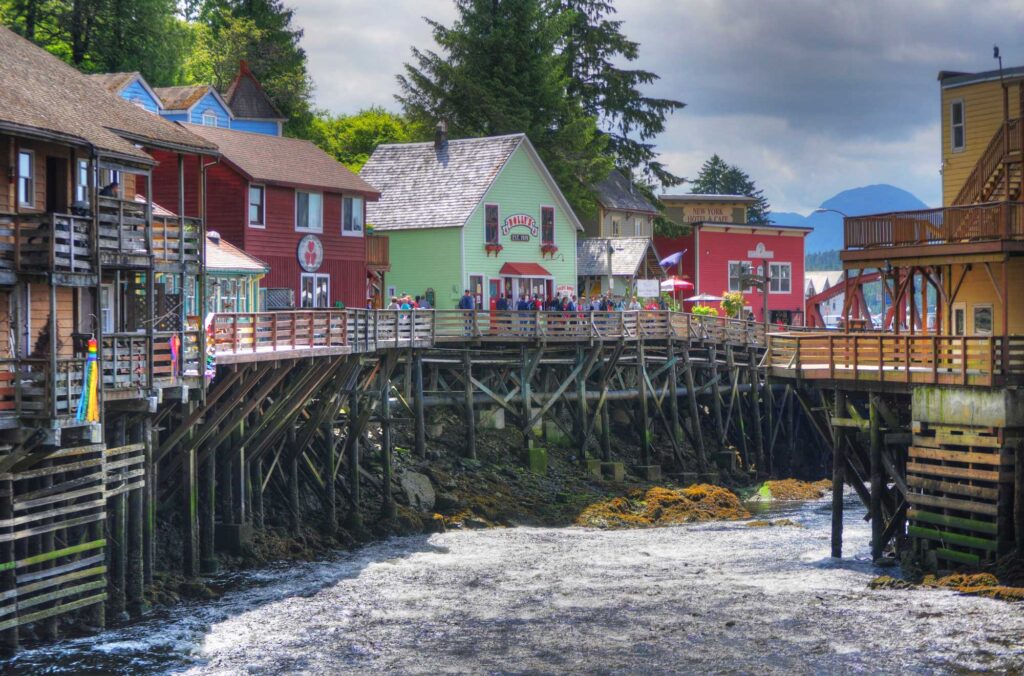
The downtown area, Creek Street, local museums, and the Totem Heritage Center can support an independent day, but the berth matters. Cruise ships do not all use the same Ketchikan dock, and transportation from the berth can change how much time you actually have downtown. Check the port information in the Virgin Voyages app rather than assuming the gangway will open beside Creek Street.
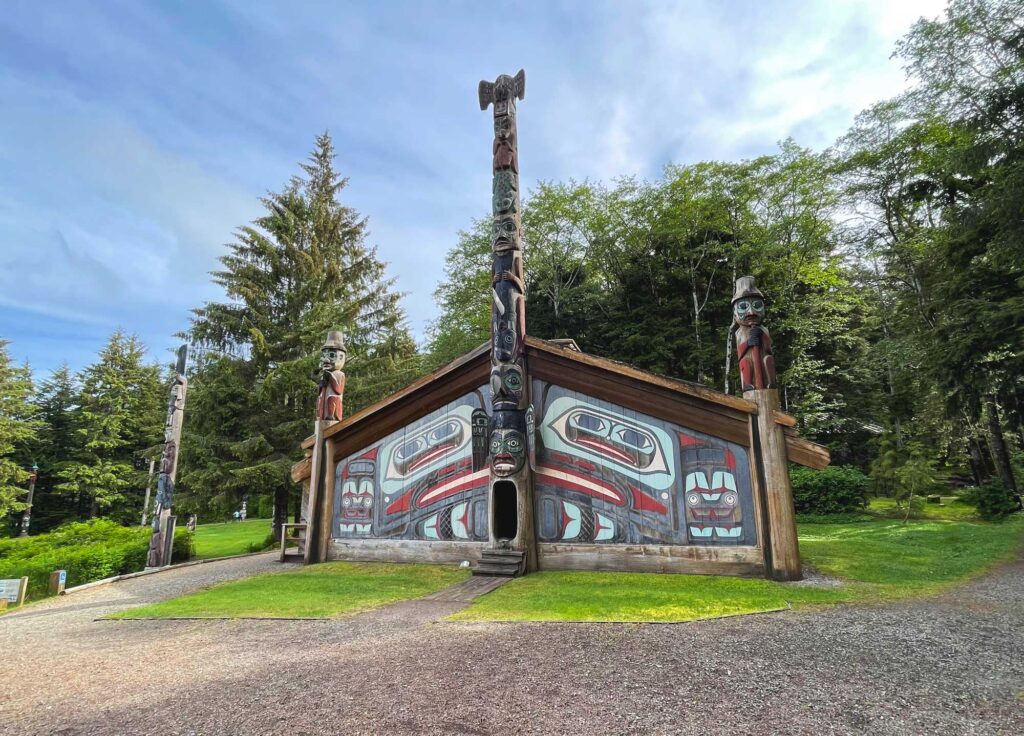
Creek Street is close to the center of the visitor area and easy to understand without a tour. The Totem Heritage Center requires more time but provides more historical context than a quick photograph near the waterfront. Travelers who want a larger wilderness day can compare boat or flight excursions into Misty Fjords National Monument.
Ketchikan’s rainfall is not a footnote. Pack a waterproof outer layer and shoes that can handle wet pavement and trails. A disposable poncho may keep your shirt dry, but it does not make a full port day comfortable.
Sitka: the history-focused alternative to Juneau
Sitka appears on the seven-night Sitka route, the Seattle-to-Vancouver itinerary, the nine-night Seattle round trip, and the twelve-night route.
Its useful distinction is not that it is automatically better or quieter than the other ports. It is that the town brings Tlingit history, Russian colonial history, and a national historical park into one port day.
Sitka National Historical Park preserves the site connected with the 1804 Battle of Sitka and includes a coastal trail, totem poles, and interpretive material. St. Michael’s Cathedral and the downtown area add the Russian Orthodox side of the city’s history. The Alaska Raptor Center is another common stop, but it is separate from the compact downtown route and needs its own transportation plan.
Do not assume the same docking or tender process on every departure. Port assignments can change. The itinerary page and onboard instructions should determine when you leave the ship and how much transfer time to allow.
Juneau: the route with the biggest planning fork
Juneau creates a different day from Sitka because several of its best-known options compete for the same limited port time.
You can stay near downtown and use the Mount Roberts Tramway, travel to the Mendenhall Glacier Recreation Area, book a whale-watching trip, or combine parts of those plans when the schedule allows. The mistake is assuming all of them fit comfortably without looking at arrival time, transportation, and the ship’s all-aboard deadline.
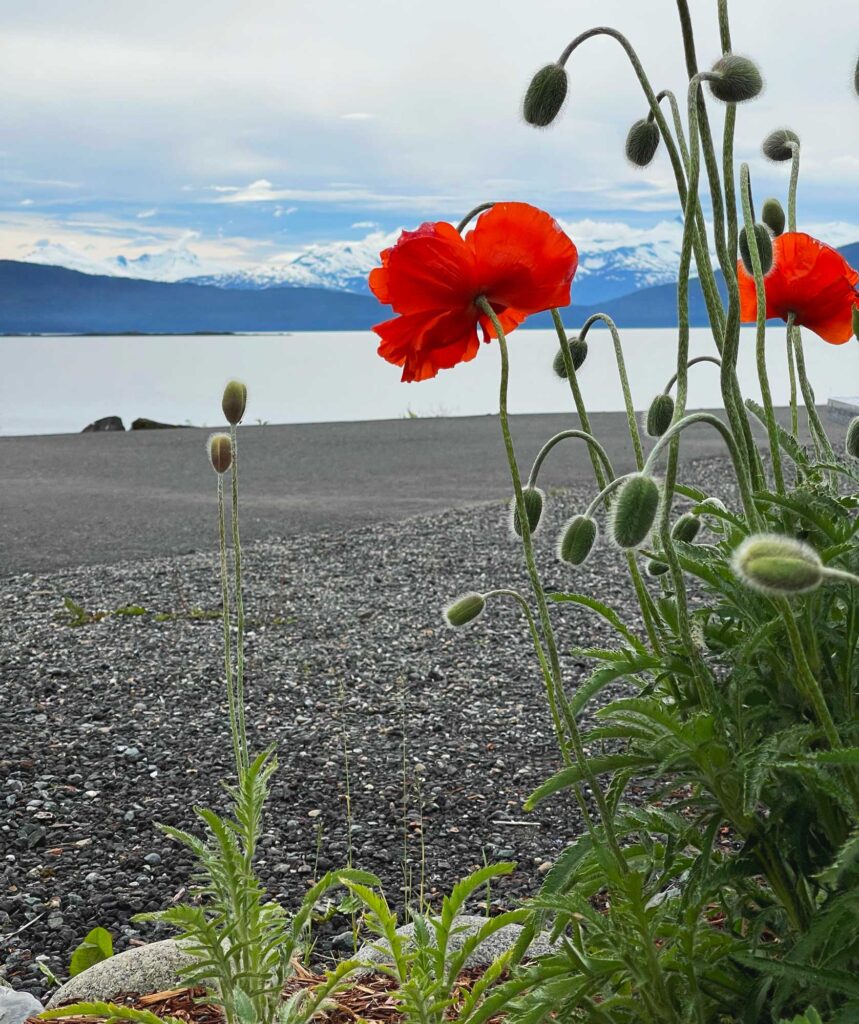
Mendenhall Glacier is outside downtown. Transportation capacity can be limited on busy cruise days, and access rules have changed over time. Use the Tongass National Forest information for the Mendenhall Glacier Visitor Center and current transportation providers rather than relying on an old cruise forum post.
Juneau’s port access can also vary by sailing. Virgin Voyages currently marks at least one published twelve-night departure as requiring a tender boat in Juneau. That is a strong reason to check the exact itinerary rather than repeating the common assumption that Juneau always means a direct downtown dock.
The seven-night Juneau route makes the most sense for travelers who specifically want Juneau’s glacier, tram, or whale-watching options and are comfortable giving up Sitka to get them.
Icy Strait Point and Hoonah: an excursion-centered stop
Icy Strait Point appears on the longer route families. It was developed by Huna Totem Corporation, an Alaska Native corporation connected to the Huna Tlingit community.
This is not the same kind of port day as Ketchikan or Victoria. The port area contains attractions, restaurants, shops, and cultural programming, while the nearby community of Hoonah provides a different view of the area. The day works best when you decide in advance whether your priority is wildlife, the ZipRider, cultural programming, or time in Hoonah.
Whale-watching is one of the major offerings, but sighting conditions and excursion quality vary. Compare the length of the trip, boat capacity, cancellation terms, and the amount of port time left afterward. Do not select it only because a marketing page describes wildlife as reliable.
The current eight-night, nine-night, and twelve-night routes give Icy Strait Point more relevance than it has on the standard seven-night sailings, where it does not appear.
Skagway: the route for the White Pass railway and Gold Rush history
Skagway appears on selected eight-night, nine-night, and twelve-night routes.
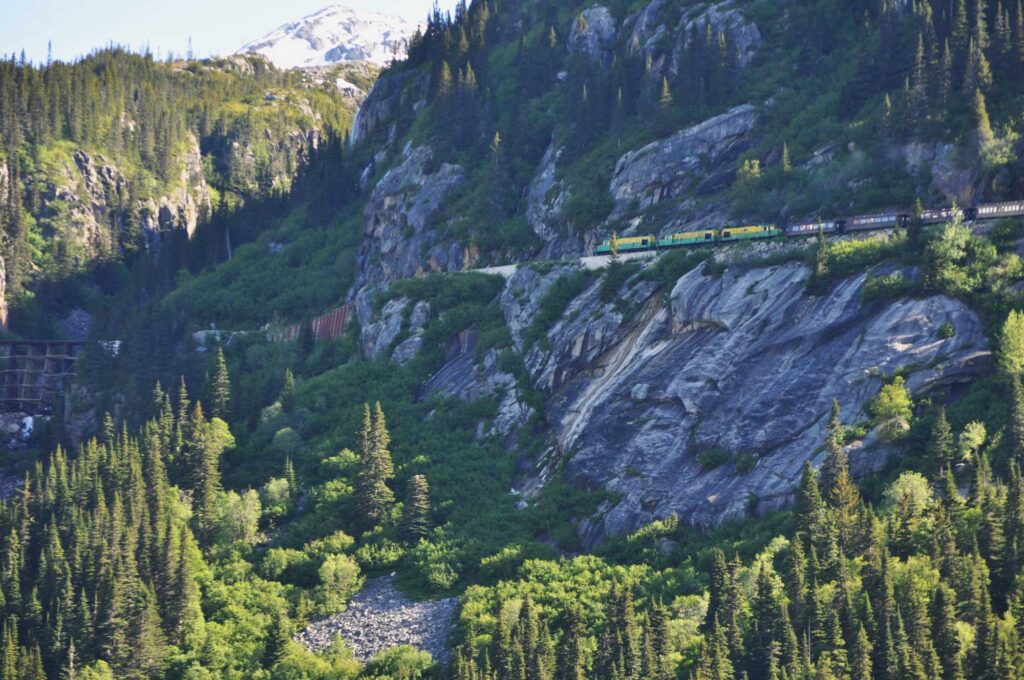
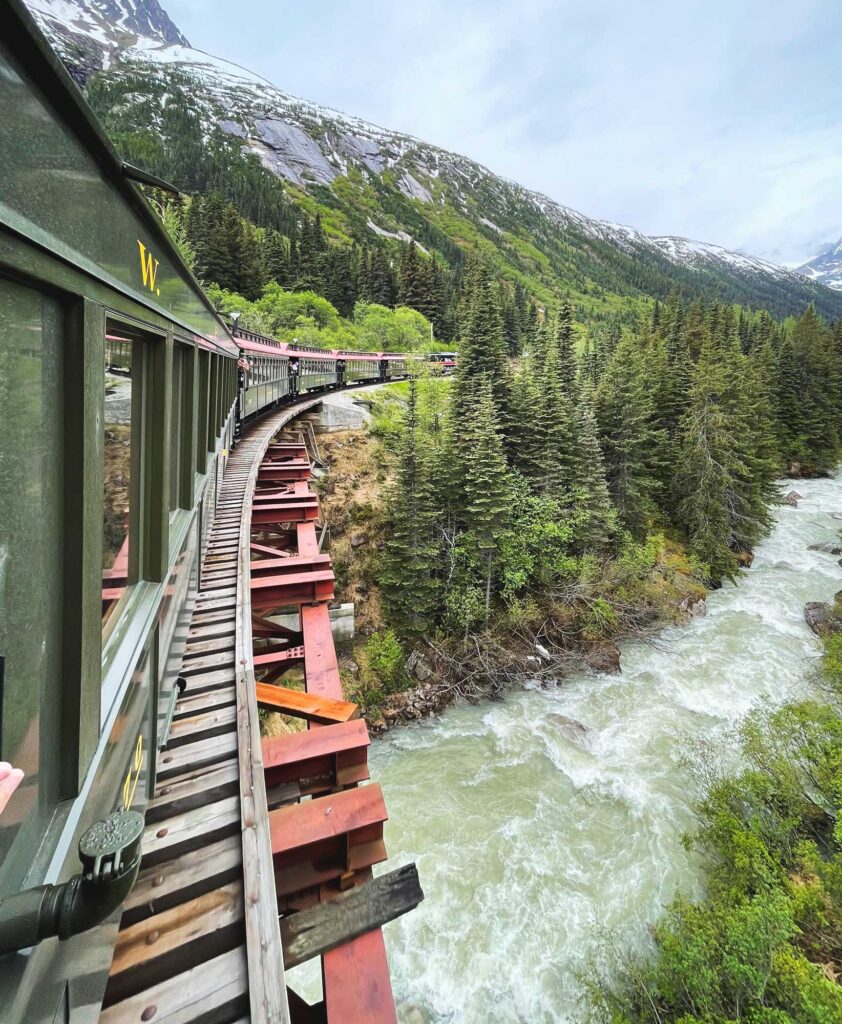
The town’s value is unusually specific. The Klondike Gold Rush National Historical Park preserves buildings and stories tied to the 1897 and 1898 rush, while the White Pass and Yukon Route railway follows the mountain corridor toward the Canadian border.
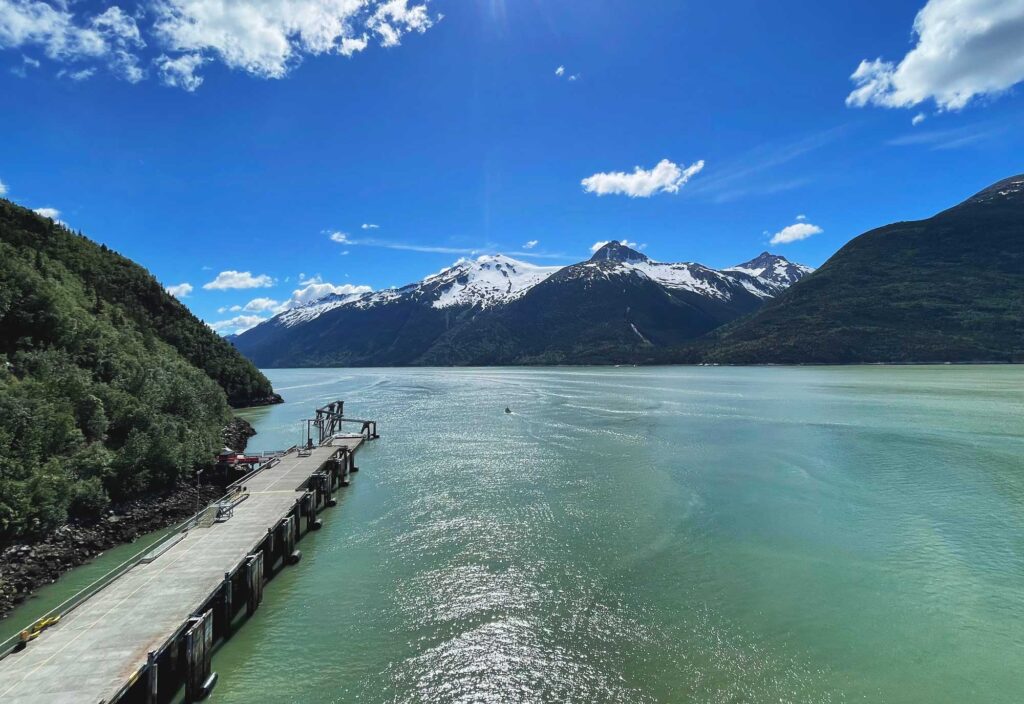
The historic district is compact enough to explore independently. The railway requires more planning because departures can sell out and different trips may use different train and motorcoach combinations. Compare the duration and border-document requirements before booking.
The National Park Service Skagway page is a better planning source for the historic district than a list of souvenir stops. Travelers who do not care about the train can still build a complete day around the park’s sites, walking routes, and local museums.
Haines: available only on the longest current route
Haines is the rarest port in the current Brilliant Lady Alaska lineup. It appears on the published twelve-night Inside Passage and Hubbard Glacier itinerary.
That scarcity is the main reason to notice it. Haines offers a smaller town, Fort William H. Seward, access to the Chilkat Valley, and a different pace from the ports that receive several large ships at once. It should not be sold as an untouched version of Alaska, but it does give the twelve-night route another type of day.
A traveler who chooses the twelve-night itinerary only to collect more ports may still feel rushed. Haines is more useful when the extra time allows a slower day rather than another attempt to stack several excursions.
Prince Rupert: the Canadian port on the seven-night routes
Prince Rupert appears on the seven-night Sitka and Juneau route families. It is usually the final port before the return to Seattle.
The cruise terminal is close to the waterfront and Cow Bay area. The Museum of Northern British Columbia provides context on Tsimshian history and Northwest Coast cultures, while the surrounding streets support a lower-commitment walking day.
This stop is easy to underestimate because it follows Alaska’s better-known names. It also arrives late in the trip, when many travelers are tired. That can work in its favor. You do not need to turn Prince Rupert into another full-day excursion for the port to justify its place on the itinerary.
Some published calls use afternoon and evening hours. Check closing times before assuming a museum, tour, or restaurant will match the ship’s schedule.
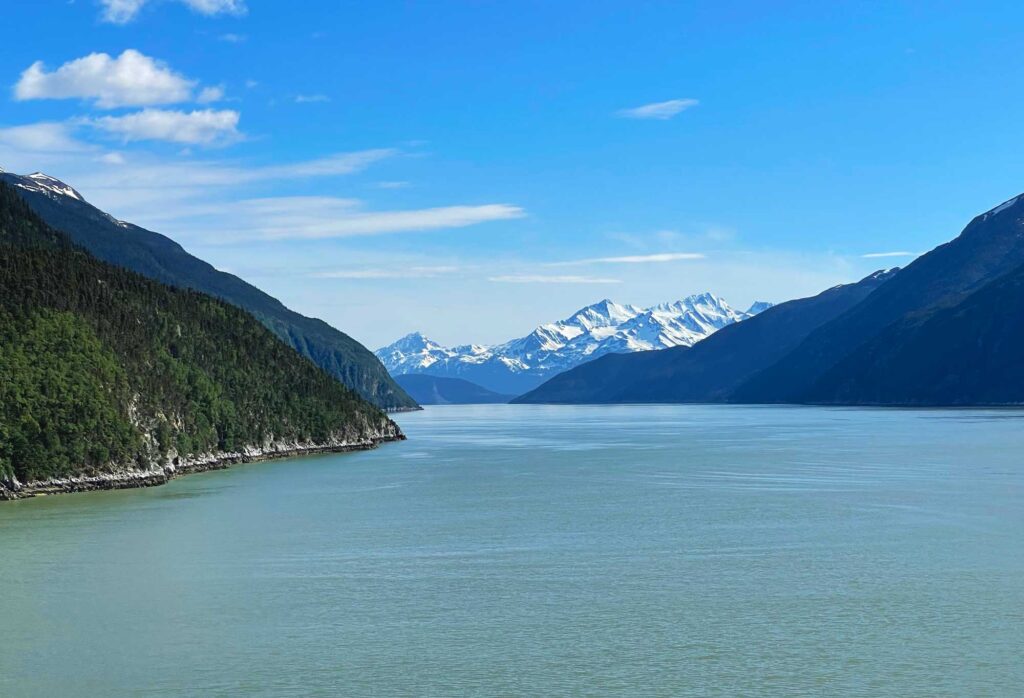
Tracy Arm Fjord: the narrow-fjord glacier day
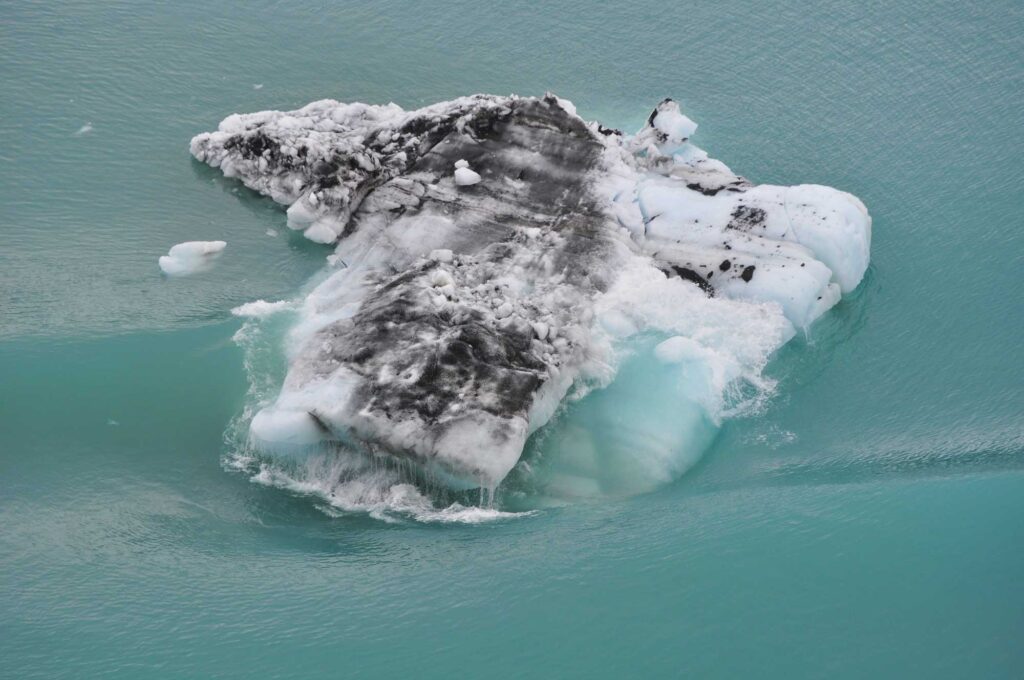
Tracy Arm appears on several seven-night routes and on selected Seattle-to-Vancouver departures.
This is a scenic cruising day. You remain on the ship while it travels into the fjord as conditions allow. Ice, weather, visibility, and other operational limits determine how far the ship can proceed and how close it can approach the glacier area.
The useful planning question is not whether Tracy Arm is “better” than Endicott Arm. It is how you will spend the hours around the approach. Check the schedule the night before, choose a viewing area before the decks fill, and move during the transit because the view changes from side to side.
A private balcony offers shelter and less crowding, but it shows only one side at a time. Public decks give you more angles and more people. The best choice may be to use both.
Endicott Arm and Dawes Glacier: similar purpose, different route
Endicott Arm and Dawes Glacier appear on the Juneau version of some seven-night sailings and on the published 2026 Seattle-to-Vancouver itinerary.
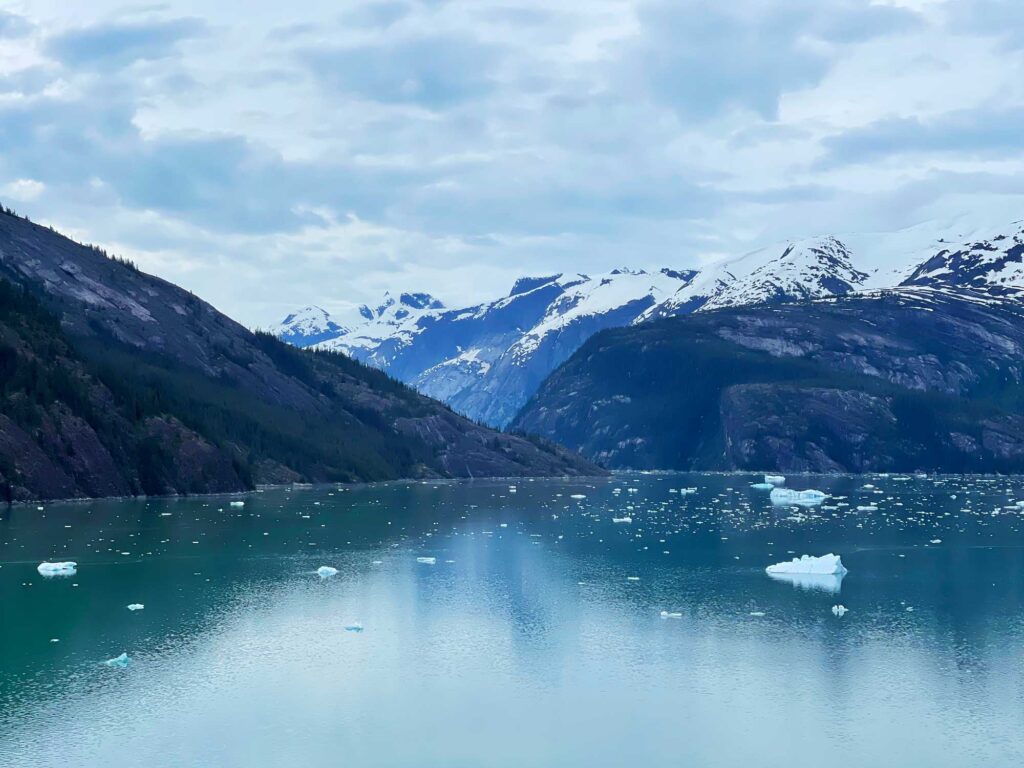
Like Tracy Arm, this is not a guaranteed close-up. The captain and local conditions determine the approach. The itinerary may also change after booking when ice or weather affects navigation.
The original version of this article tried to rank Endicott Arm against Tracy Arm. The published evidence does not support a universal verdict. Both routes provide a fjord-and-glacier day, and both depend heavily on conditions. Choose the departure based on the whole itinerary rather than treating the scenic-day name as the only decision.
Hubbard Glacier: the reason to compare the longer sailings
Hubbard Glacier appears on the nine-night and twelve-night route families. It creates a different scenic day from Tracy Arm or Endicott Arm because the ship approaches across a broader bay rather than traveling to the end of a narrow fjord.
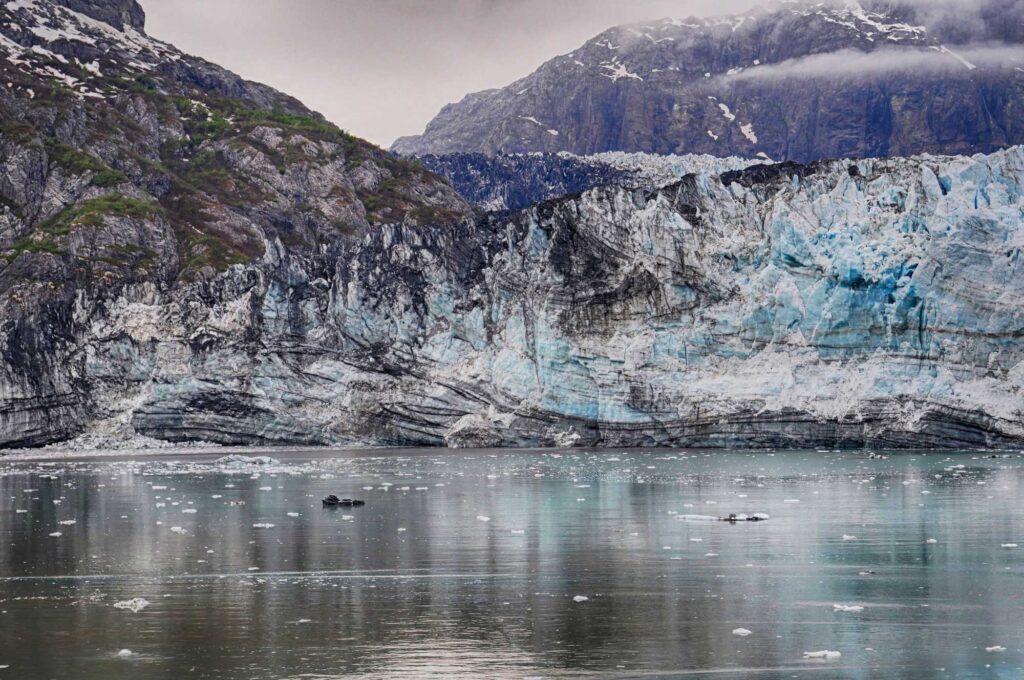
The glacier’s scale is the selling point, but distance and visibility still depend on ice and weather. A route that lists Hubbard Glacier is not promising that the ship will reach the same position on every sailing.
The nine-night round trip is the shorter way to add Hubbard while keeping Seattle as both the beginning and end. The nine-night one-way sailing adds Juneau and Skagway. The twelve-night route combines Hubbard with the broadest port list.
That makes the Hubbard decision practical rather than emotional. Decide whether the extra days, fare, and port mix are worth it for your schedule. The glacier is one part of that comparison, not the whole answer.
Victoria: a final city day on the longer round trips
Victoria appears on the nine-night Seattle round trip and the twelve-night route.
The Ogden Point terminal sits outside the Inner Harbour, so reaching the center requires a walk, shuttle, taxi, or local transportation. Once there, the harbour, Parliament Buildings, Royal BC Museum, and central streets are close together.
Butchart Gardens is outside the city center and requires a larger block of time. The choice is straightforward: use the port call for a compact city day, or commit much of it to the gardens. Trying to do both can turn the last stop into a transportation exercise.
Victoria works well near the end of the sailing because it offers a different environment from the Alaska ports. It should not be framed as a lesser compliance stop. The route gives you enough material for a complete day without another wildlife or glacier excursion.
Vancouver: the beginning or end of a one-way trip
The one-way itineraries use Canada Place in downtown Vancouver.
That location is easier to combine with a city stay than Seattle’s Pier 91 because the terminal is beside downtown hotels, transit, and the waterfront. The logistical complication is the open-jaw trip itself. You need flights or ground transportation that account for different embarkation and disembarkation cities.
Do not book a Vancouver flight as though the ship were returning to Seattle. Border crossings and ground transportation add variables that do not exist on a round trip. An extra Vancouver night gives the trip more margin and makes better use of the one-way route.
Virgin Voyages lists the terminal address on its port information page.
How to choose between the itineraries
Start with the port you would regret missing.
Choose the seven-night Sitka route when Sitka’s history and national historical park matter more than Juneau’s glacier and excursion options. Choose the seven-night Juneau route when Juneau is the priority and you are comfortable giving up Sitka.
The eight-night Seattle-to-Vancouver route makes sense when the one-way flight plan works and you want more port variety than the standard seven-night sailing. The exact 2026 and 2027 versions are not identical, so the departure date matters.
The nine-night Seattle round trip is the simplest Hubbard option for travelers who do not want an open-jaw trip. The nine-night Vancouver-to-Seattle route is more port-heavy and includes Juneau and Skagway.
The twelve-night itinerary is not merely the nine-night route with extra sea days. It adds Haines and creates a longer sequence through Southeast Alaska. It also carries the highest time and budget commitment.
Do not choose by port count alone. A route with fewer stops may give you a better balance between the ship, scenic cruising, and shore days. A route with more stops gives you more variety, but it also means more mornings organized around arrival times and all-aboard deadlines.
What to verify before paying for excursions
Check these items against your exact departure:
- The date-specific port list, not only the itinerary name.
- Arrival and departure times for each port.
- Whether the ship docks or uses a tender.
- The berth location in ports with more than one cruise terminal.
- Transportation included with an excursion.
- Cancellation terms when weather prevents an activity.
- Passport or border-document requirements for trips entering Canada.
- Mobility requirements, including tender access, stairs, boats, trains, and uneven ground.
- The ship’s all-aboard deadline in the Virgin Voyages app.
- The scenic cruising schedule, which may not be finalized until the sailing.
Virgin’s current twelve-night itinerary page includes a tender warning and notes that tender boats may not be wheelchair accessible. That type of information belongs in the booking decision, not at the bottom of an excursion description.
What to pack for the route, not for a postcard
Southeast Alaska can be wet, cool, windy, and bright within the same day. Pack layers that can be added and removed rather than one heavy coat meant for constant winter conditions.
A practical starting point includes:
- A waterproof shell
- Shoes with traction that can handle rain
- A warm middle layer
- A hat and light gloves for glacier viewing
- Sun protection
- A compact pair of binoculars
- A small dry bag or protected camera pouch
- Medication and essentials kept with you rather than in checked luggage
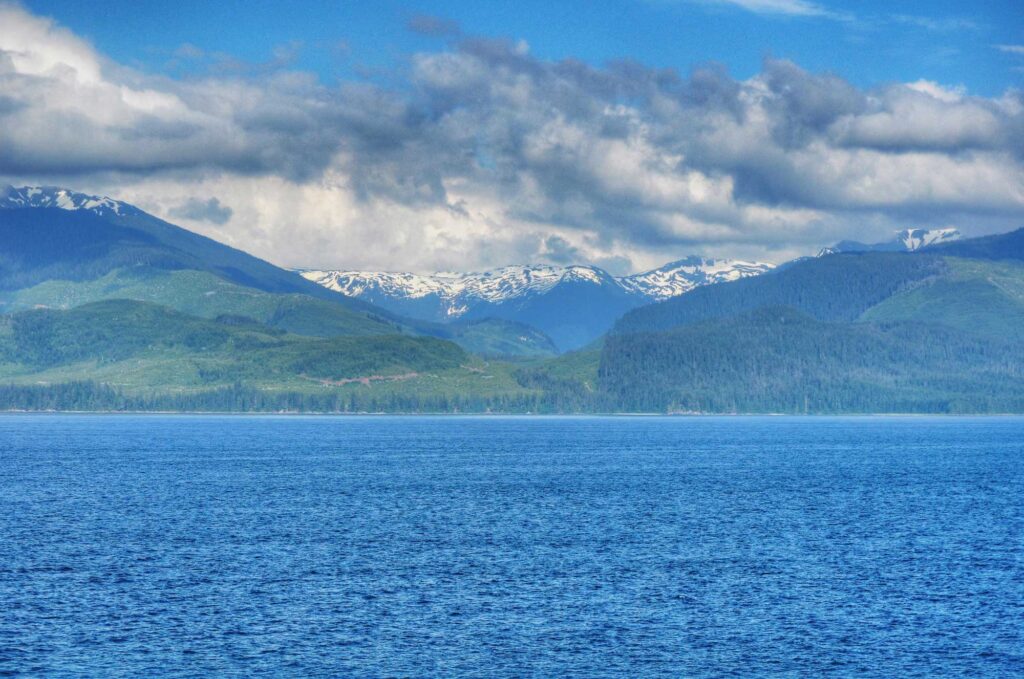
The weather does not need to be perfect for the trip to work. It does need to be taken seriously enough that rain or wind does not end your port day early.
Our current conclusion
The seven-night itineraries are not interchangeable. Sitka versus Juneau changes the strongest port day, and Tracy Arm versus Endicott Arm changes the named glacier route. The eight-night and nine-night sailings add ports that create a more active trip, while the twelve-night route provides the widest current mix and the only published Haines call.
We would not choose solely from the itinerary title. We would open the date-specific schedule, identify the one port or scenic day we would most regret losing, and work backward from there.
Watch our full Brilliant Lady review
Read our Brilliant Lady cold-weather ship spaces guide
Sources and verification
This article was checked against official sources on August 1, 2026:
- Virgin Voyages Alaska cruises
- Virgin Voyages voyage finder
- 7-night Glacial Fjords and Coastal Views itinerary
- 8-night Seattle to Vancouver itinerary
- 9-night Vancouver to Seattle itinerary
- 9-night Hubbard Glacier and Coastal Views itinerary
- 12-night Inside Passage and Hubbard Glacier itinerary
- Port of Seattle ship and terminal lookup
- Virgin Voyages port information
- Klondike Gold Rush National Historical Park
- Mendenhall Glacier Visitor Center
Port calls, scenic cruising routes, tender arrangements, excursion inventory, and prices can change after publication. Verify the current details with Virgin Voyages and the applicable official destination source before relying on them.