

What We Actually Use at Disney World (And What Stays at the hotel)
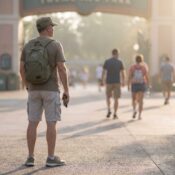
The bag you carry into a Disney World park is with you for 10 to 16 hours. What’s in it shapes how often you stop, how fast you move, and whether the back half of the day is manageable or miserable.
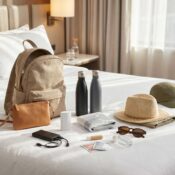
This is not a full packing list. We have a separate guide for that. This is the shorter, more useful version: what we actually reached for throughout the day, what earned its weight, and what you can leave behind. We also built out four variations at the end because the right bag for a summer trip looks nothing like the one you’d pack for a rainy morning, a rope-drop strategy, or a day with young kids.
Nothing on this list is a revelation. The difference is knowing when each item actually matters, and when it is just extra weight you are dragging past Space Mountain at 9pm.
The 10 Items That Held Up
1. Shoes You Have Already Worn for a Full Day
Not new shoes. Not shoes that feel fine in the store. Most Disney World guests log 15,000 to 20,000 steps in a single park day, on pavement that holds heat in summer and stays rough enough to wreck a soft sole by close. The shoe decision is the most consequential thing you pack.
Worth it for: Anyone doing a full-day visit. Bring shoes you’ve already worn hard for at least several days. Low-profile sneakers with real cushioning are the workhorse choice for most people. If anyone in your group has foot or ankle concerns, this is not the trip to push it.
Skip it if: You’re eyeing new shoes because yours look better. Break them in first, then bring them. Disney is not the place to find out they rub wrong on the heel.
2. Sunscreen You Will Actually Reapply
Florida sun hits differently than most people expect, and the outdoor queues at Magic Kingdom and EPCOT can hold you in direct sunlight for a long time. The apply-once-in-the-morning approach stops working around 11am.
We have had better luck with a stick formula for face and a spray for everything else. It takes less time, it fits in a side pocket, and you can use it without a sink between rides. SPF 50 or higher for a full day in the parks. Disney sells sunscreen in-park if you forget. Prices vary, and it is more expensive than bringing your own. Plan accordingly.
3. A Portable Battery Pack, Not Just a Cable
Your phone runs the Disney app, handles Lightning Lane selections, keeps your tickets accessible, and processes mobile orders at quick-service restaurants. It will not survive a full park day on one charge, especially in summer when screen brightness runs high.
A cable alone is useless if there is nowhere to plug in. A portable battery pack lets you charge while you wait in line, sit through a show, or walk between lands. We bring a compact 10,000 mAh pack. It is lighter than it sounds, fits in a daypack side pocket, and can get most phones from near-dead to full at least once. This is one of the items we use every single park day.
Skip it if: You’re doing a short half-day visit or you know you use your phone lightly. For a full day, it earns its place.
4. Snacks for the Gap Hours
The Disney snack culture is real and worth participating in. Churros, Dole Whip, popcorn in a souvenir bucket, the grey stuff at Be Our Guest: these are part of the visit. But there are also gap hours between real meals where you need something fast, something that doesn’t require standing in a separate 15-minute queue just to eat it.
Bringing two or three snacks per person handles those gaps. Granola bars, fruit, crackers, something protein-based. Disney allows outside food with reasonable limits: no alcohol, no glass containers, nothing requiring heating. Everything else is generally fine through bag check.
5. A Hat With a Real Brim
This is mostly a sun-and-glare item. Outdoor queues in direct sun are a real part of a Disney day. A brimmed cap reduces the fatigue that comes from squinting and keeps sun off your face on water rides.
Worth it for: Summer visits, any park day with significant outdoor queue time.
Skip it if: You’re primarily doing EPCOT’s indoor pavilions in November or December. Mild-weather visits make this optional. Summer visits make it close to essential.
6. A Light Layer for Indoor Spaces
Florida is genuinely hot. Disney’s rides, restaurants, shows, and indoor queues are air-conditioned to a degree that will catch you off guard the first time. Sitting through a 25-minute show or a long table-service meal after several hours in July heat, you will want a layer. We keep a lightweight zip-up in the bag almost every visit.
This is the item most people pack, assume they won’t use, and then reach for repeatedly. It doubles as an extra layer on the drive back when the kids fall asleep in the car with the AC running.
7. A Rain Poncho, Not an Umbrella
Florida rain between June and September comes fast, usually passes within 30 to 45 minutes, and the right response is to keep moving. A poncho lets you do that. An umbrella requires a free hand, does nothing to protect you on rides, and turns a crowded queue into an obstacle course for the people around you.
Disney sells ponchos in-park. Prices vary and are higher than buying one before your trip. The same basic style is significantly cheaper at a big-box store or online. Pack it at the top of your bag, not the bottom, so you can actually get to it when the sky opens up.
Skip it if: You’re visiting in December through February and the forecast is clear. In the wet season, it is not optional.
8. A Bag That Clears Security Fast
Every bag goes through a security check at Disney World park entry. The process has improved, but bag organization still matters. If your tickets, ID, and anything you need in the first five minutes are buried under a poncho and a spare layer, you slow yourself and the people behind you.
We use a daypack in the 20 to 25-liter range with a wide main compartment and two exterior pockets. The outer pockets hold the immediate items: tickets, sunscreen, first snack. The main compartment holds the rest. You do not need a specialized Disney bag. You need a bag that opens flat and sits comfortably across a long day.
Skip: A full-size backpack unless you genuinely need the extra capacity. Anything larger than 25 liters gets heavy fast and harder to manage in crowded areas.
9. Water or a Plan to Refill
Water costs more in the parks than you want to pay at 2pm when you’re already tired. Disney has water fountains throughout all four parks, usually near restrooms. A refillable bottle is the right call.
We bring a 20 to 24-ounce bottle per person. Anything larger gets heavy when the rest of the bag is already full. You can also ask for a free cup of water at most quick-service restaurants, no purchase required.
In summer specifically, you will drink more water than you think. This is not a small detail on a July visit.
10. A Clear Plan for How You’re Paying
Cash, a linked MagicBand+, Apple Pay, or a card in your pocket: all of them work. What slows everything down is switching between them at a counter, or realizing your phone has 4% battery right when you need to pull up mobile order confirmation. Decide before you walk in and stick to one method.
Mobile ordering at quick-service restaurants is worth learning before your trip. It lets you skip the counter queue entirely and pick up when your order is ready. Have your payment method linked and tested in the app the night before, not in the park at 11:45am when everyone is hungry.
How the List Changes by Situation
Summer Trip (June Through August)
The standard list applies, but weight it toward heat management. Midday in July at Disney World is genuinely hard, and the people who plan around it have a better afternoon than the people who push through it.
Add: A second hat or a bandana, extra sunscreen (you will go through it faster), a small personal fan or a cooling towel, and a schedule that gets you on outdoor attractions early or after 5pm. The parks with the most air-conditioned attractions make the midday stretch more manageable. The water bottle matters more in summer, not less. Use the mid-afternoon to sit in something cold.
Rainy Day
A rainy Florida afternoon is not a ruined Disney day. It is often a genuinely useful opportunity. Florida summer storms come fast and pass within 30 to 45 minutes. When it rains, crowd behavior is predictable: guests cluster under overhangs and in gift shops, outdoor queue times drop, and anyone willing to ride in a poncho moves through the park faster than they would on a sunny Saturday.
Pack your poncho at the top of the bag, not the bottom. Keep your snacks in a side pocket so they don’t get soggy if the bag takes water. And know which rides you want to hit during the downpour before it starts, so you’re moving with a plan instead of waiting it out.
Rope Drop
Rope drop means arriving at the park entrance at least 30 minutes before official open. Disney resort guests get Early Theme Park Entry, which is 30 minutes before the general public. That window matters most at Magic Kingdom (Seven Dwarfs Mine Train, TRON Lightcycle Run, Tiana’s Bayou Adventure) and Hollywood Studios (Rise of the Resistance, Slinky Dog Dash).
For a rope-drop strategy, keep the bag lighter than usual, have your tickets pulled up in the app before you reach the tapstiles, and wear your best walking shoes. The approach through Main Street USA before official park open is not a sprint. It is a fast-paced walk with several hundred other people who had the same idea. Have your first Lightning Lane selections ready to go the moment the park opens, and know your target ride before you leave the car.
Day with Young Kids
The bag gets heavier with kids. Plan for it.
Add: A change of clothes for each child (water rides happen whether you plan for them or not), a dedicated snack pocket so you’re not digging at the bottom of the bag under pressure, and sunscreen that works on kids’ faces without a fight. Know the height requirements for the rides on your list before the day starts. Disney’s website lists every attraction. Finding out a child doesn’t meet the requirement while standing in a 40-minute queue is avoidable.
If you’re traveling with two adults, consider two smaller bags instead of one large shared one. It distributes the weight and gives each adult faster access to what they need. The shared bag sounds more efficient until one person needs the sunscreen while the other person has the bag on the other side of Fantasyland.
What to Leave Behind
A selfie stick. Not permitted on most attractions and creates friction at bag check. Your phone on its own handles what you need.
A full-size backpack unless you need the capacity. A 20 to 25-liter daypack covers a full-day Disney visit for most adults. Anything larger just adds weight and makes navigating crowded areas harder.
An autograph book if the kids in your group are older than about 10 or if the day’s priority is attraction time. Character meet-and-greets take more time than people budget for. If it matters, build it into the day intentionally. If it’s an afterthought, skip it.
A dedicated camera unless photography is a genuine priority and you know how to use it under moving conditions. A recent smartphone is capable enough for what most people want to capture. A camera you don’t know well just adds weight and slows you down in the moments you’re trying to photograph.
Niko’s Tip: Water fountains are located near restrooms throughout all four parks. If you lose track of one, ask any cast member. You can also ask for a free cup of water at most quick-service locations, no purchase required. Some people complain about the taste of Disney World’s water, so you might even want to bring some water flavoring packets with you.
Niko’s Tip: Disney’s height requirements are listed for every attraction on the official Disney World website and in the My Disney Experience app. Check them before the day, not in the queue.