
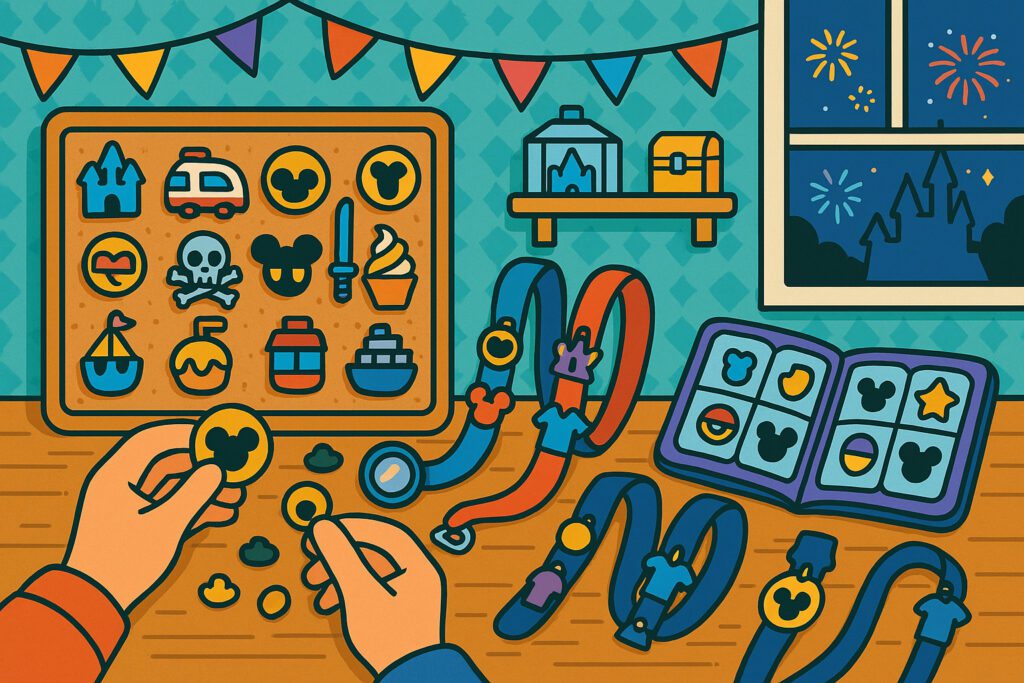

Disney pin trading is one of those park activities that looks simple from the outside, and for casual traders, it mostly is. You bring an official Disney pin, find a Cast Member or trading board with pins available, and trade one of yours for one of theirs.
The part that takes a little more context is knowing what counts as a tradable pin, where to look, how much to spend before your first trip, and when the hobby starts to become more about collecting than casual park fun.
This guide is for beginners. If you want to make a few trades on your next Disney trip without accidentally overbuying, this is the practical version.
How Cast Member Pin Trading Works
At Disney parks, pin trading is usually a one-for-one trade. You offer one official Disney pin, choose one pin from a Cast Member lanyard, pin pack, or trading board, and make the swap.
Look for a Cast Member wearing a visible pin-trading lanyard or pin pack, or for a trading board at a shop or designated location. If you are not sure, just ask, “Are you trading pins today?” That is normal, and it is the easiest way to avoid guessing.
You are never required to trade. If you look through the pins and do not see anything you want, thank the Cast Member and move on. No pressure. The same goes if another guest asks to trade with you. Wearing pins does not mean every pin you own is available.
For Cast Member trades, bring official Disney pins in good condition. Current Walt Disney World guidelines say the pin should be metal, have a Disney mark on the back, include the pin backing, and not be the same pin already displayed on that Cast Member’s lanyard or trading board. Disney also limits trades to two pins per Cast Member or trading board per day, so choose intentionally.
The entry point is simple: you do not need a collection. You need one tradable Disney pin you are willing to give up.
A Quick Note About Pin Authenticity
There is one thing beginners should know before buying a pile of cheap pins online. Disney pin collecting has an authenticity issue, especially on secondary markets. You may hear collectors use the word “scrapper” for pins that are factory rejects, unauthorized copies, or pins that look close enough to trade casually but are not the same as a clean retail pin.
This does not mean you need to inspect every pin like a museum curator before your first park day. For casual trading, the goal is usually the experience: browsing, finding a character or design you like, and bringing home a small memory from the trip.
It does matter more if you care about long-term collecting, resale value, or trading with serious collectors. In that case, learn the basics before you buy. Look at the designs embedded in the back of the pin, the Disney copyright mark, the finish, the enamel quality, and the pin post. Authentic pins usually feel cleaner and more consistent. Questionable pins often have rougher edges, uneven enamel, odd coloring, or back stamps that look slightly off.
The practical beginner takeaway is simple: avoid huge mystery lots from marketplace sellers unless you understand the risk. Buying your first trading pins directly from Disney, a Disney park shop, Disney Store online, or a reputable pin seller is usually the cleaner starting point.
If you are trading casually with kids or just want a fun park interaction, do not let the authenticity conversation ruin the activity. Start with a few pins from a source you trust, trade for designs you actually like, and leave the deeper collector research for later if the hobby sticks.
Pin Types Worth Knowing Before You Start
Disney produces a lot of pin types, but beginners only need to understand a few categories. These are the ones you will see most often when shopping, trading, or researching a pin after your trip.
Open Edition pins. These are standard pins with no stated edition size. They are usually available for a longer period and are the easiest to understand. For casual trading, Open Edition pins are a normal starting point because they are widely available and easy to replace.
Limited Edition pins. These are produced in a specific quantity, and the edition size is usually stamped on the back. A pin marked LE 500 is scarcer than one marked LE 3000. These are more collector-focused and often cost more.
Limited Release pins. These are sold for a limited period rather than a fixed numbered edition. They may be tied to a season, anniversary, event, attraction, or franchise release. They can still be collectible, but the scarcity works differently than Limited Edition pins.
Mystery packs and starter sets. These are often the most beginner-friendly way to start if you are buying from Disney. A starter set usually includes a lanyard and several pins. Mystery packs include surprise pins from a specific set. Keep the ones you like, and trade the ones you do not.
Artist Proof pins. These are much more niche. They are usually marked AP and are connected to the production or approval process for a pin design. You do not need to understand Artist Proof pins to start trading, but the term comes up in collector spaces.
Older Hidden Mickey or Hidden Disney style pins. You may see collectors use these terms for small trading-focused series from past pin programs. The names and availability have changed over time, so treat those terms as collector shorthand rather than a guaranteed current product category you will find on every trip.
A Practical Starting Path
If you want to try pin trading without turning it into a full collecting project, start small.
Before your trip, buy a starter set, a mystery pack, or a few official Disney pins you are comfortable trading away. You do not need 20 pins. Four to six gives you enough flexibility for a park day without making the activity feel like homework.
Once you are in the park, look for Cast Members with pin-trading lanyards or pin packs, or check shops for trading boards. Ask before touching any pins or lanyards. Pick a pin you actually like, offer one of your traders, and make the swap.
That is the whole beginner version. You are not trying to beat the system. You are trading a pin you do not care about as much for one that makes you smile when you see it later.
If you want to go further, that is when it is worth learning about PinPics, edition sizes, condition grading, release history, and trading communities. But you do not need all of that for your first trip. A few starter pins and a willingness to browse are enough.
Budget note: official Disney pins cost more than the bulk lots you will see online. Disney Store mystery pin blind packs are often priced as multi-pin sets, and individual pins can add up quickly. Prices vary by release, location, and availability, so check current pricing before your visit if you are buying pins specifically to trade.
Storing and Displaying What You Collect
Pins kept loose in a bag or pocket can scratch, and the backs can come off. If you are bringing home more than two or three pins, have a simple storage plan before you travel.
Pin books are the most portable option. They work like small binders with soft pages that hold pins securely. They are useful if you want to trade again later, bring pins to an event, or keep everything organized without displaying it on a wall.
Cork boards are the easiest home display option. If you add a layer of fabric or batting over the cork, it gives the pins a softer surface and looks more finished than plain cork.
Lanyards are good for wearing pins in the park, but they are not the best long-term storage solution. Pins on a lanyard can rub against each other, swing around, and pick up scratches over time. Use a lanyard for trading. Use a book or board for storage.
Is Pin Trading Worth Trying?
For most first-time visitors, yes, as long as you keep it casual.
As a park activity, pin trading is low-friction, easy to understand, and especially good for kids who like collecting. It gives you a small reason to interact with Cast Members, walk into shops you might have skipped, and notice tiny character details throughout the day.
As a collecting hobby, it can get expensive and detailed very quickly. Serious collectors track edition sizes, values, release dates, pin condition, and authenticity. That version of the hobby has real depth, but beginners do not need to start there.
Worth it for: Families with kids who enjoy collecting, Disney fans who like small souvenirs, anyone who wants a simple interactive activity between rides, and travelers who want a tiny piece of the trip to bring home.
Skip it if: You do not want to carry pins, your group finds trading interactions awkward, or you know you will get stressed trying to determine which pins are valuable. It is a fun extra, not a required part of a Disney trip.
Niko’s Tip: If you come home with a pin and want to know more about it, PinPics is a useful first stop. Search by character, attraction, year, or visual details. It can help you identify what you found without needing to become a serious collector overnight.