
Most theme park souvenir regret follows a predictable pattern. The item looked good in the store, possibly at the end of a long day when decision quality was lower than usual, and it seemed like a reasonable way to remember the trip. Three months later it’s in a drawer or a closet, and the memory it was supposed to anchor has faded along with whatever excitement made it seem worth buying.
The tips below aren’t about spending less. Some of the best souvenir decisions cost more than the impulse buy they replaced. They’re about spending intentionally on things that will actually carry the memory, and recognizing what tends not to before it’s already in the bag.
The One Question Worth Asking Before You Buy
Before any souvenir purchase, this question is worth a few seconds: where specifically will this item live in six months, and will I still want it there?
Not “do I like this right now.” Not “is this a good price.” Where does it go, and does it stay? A pin in a display case gets looked at. A mug that becomes the daily coffee mug carries the memory every morning. A pressed penny in a collector book is pulled out occasionally and means something. A keychain added to an already-crowded set stops being noticed within a week. A giant stuffed animal that has no designated home ends up wherever it fits, which is usually nowhere in particular.
The answer to that question predicts satisfaction better than the item itself. Things that have a home stay. Things that don’t have a home tend to disappear.
What Tends to Hold Meaning Over Time
Items tied to a specific experience, not just a park visit. The Wizarding World wand from Universal that you used to cast spells at interactive spots throughout Diagon Alley means something different than a general Universal Studios t-shirt. A ride photo from the first time you rode a signature coaster is the only photo that exists of you at that moment; it’s not reproducible at home. A Butterbeer-branded item from the Wizarding World connects to a specific thing you tasted in a specific place. The story is in the specificity. Generic park branding has no story that belongs to you specifically.
Park-exclusive items. If you can order it online when you get home, it’s not really a souvenir. It’s just merchandise purchased at a different location. The items worth buying at the park are the ones that can only be found there: land-specific merchandise, event-exclusive releases, limited-run items tied to a particular season or anniversary. At Disney, that includes park-exclusive pin releases and merchandise tied to limited-time events. At Universal’s Wizarding World, it includes wands specific to certain wand experience locations. At Dollywood, it includes artisan and craft items made by local vendors specific to the Tennessee mountain region.
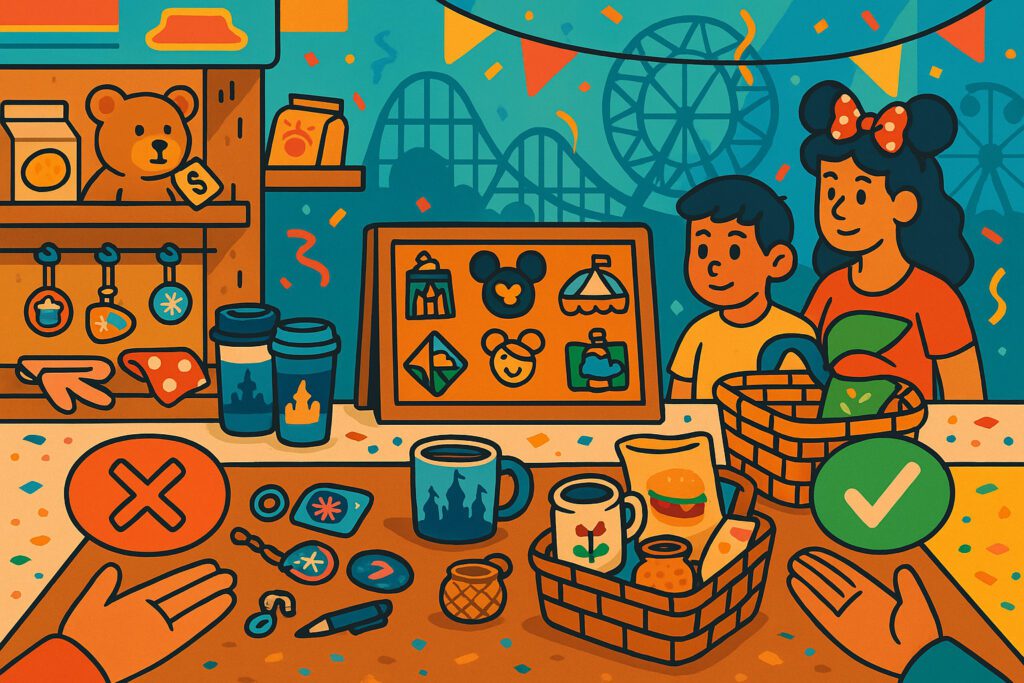
Functional items you’ll actually use daily. The drinkware category has an unusually high hold rate among theme park purchases because people use cups and mugs. A well-made tumbler from a park you loved becomes the daily cup. Disney’s park-specific Starbucks tumblers have a collector following precisely because they’re attractive and actually useful. Universal’s cup refill programs sell a souvenir vessel that gets used throughout the visit and taken home. The item that earns its place in the cabinet stays visible. The item that doesn’t ends up in a box.
Pressed pennies and low-cost location-specific items. Pressed penny machines are available at most major theme parks and many regional parks, typically costing around 51 cents per penny (the penny plus 50 cents for the machine, prices may vary). They’re small, specific to the location, datable if you save them, and cost almost nothing. Serious collectors keep them in dedicated pressed penny books. Casual visitors end up with a small, specific, essentially free memento from exactly where they were. The face value is comically low and the attachment rate is surprisingly high.
What Tends to Disappoint
Generic branded merchandise. Most of what fills the front tables of theme park gift shops is the same item with a park logo on it: pens, keychains, magnets, shot glasses, generic t-shirts. Some of it is well-made. Most of it is not. The problem isn’t the price; it’s that there’s no story attached to it that belongs to your specific visit. A generic “I visited [park name]” magnet doesn’t carry a memory. It records a fact.
Large plush animals. We have watched a lot of visitors buy large stuffed animals at theme parks. We have also watched them carry those animals for the remaining six hours of their park day, figure out how to fit them in a rental car, and attempt to pack them in luggage at the hotel. For young children who form a genuine attachment to a specific character, a plush can be meaningful. For most adult purchasers, the regret typically arrives in the parking lot. The size that seemed fun in the store is the size that needs its own seat on the way home.
Impulse buys near closing or after a long day. Souvenir decision quality drops sharply when the group is tired, hungry, or trying to get to the exit before the crowd surge. The last gift shop of the day is the highest-risk purchasing environment. If there’s something specific you want, note it earlier in the day and return to it with intention rather than grabbing something at 9pm because the shop is right next to the exit and it seems like the last chance to get something.
Items you can order at home. Check before you buy. A significant portion of park merchandise is available on the park’s official online store, on Amazon, or at Disney or Universal retail locations outside the parks. If the item can be ordered next week from your couch, it’s not a souvenir. It’s a purchase you could make anywhere. The reason to buy something at the park specifically is that it’s only available there, or that buying it there is part of the experience itself.
The Food and Edibles Question
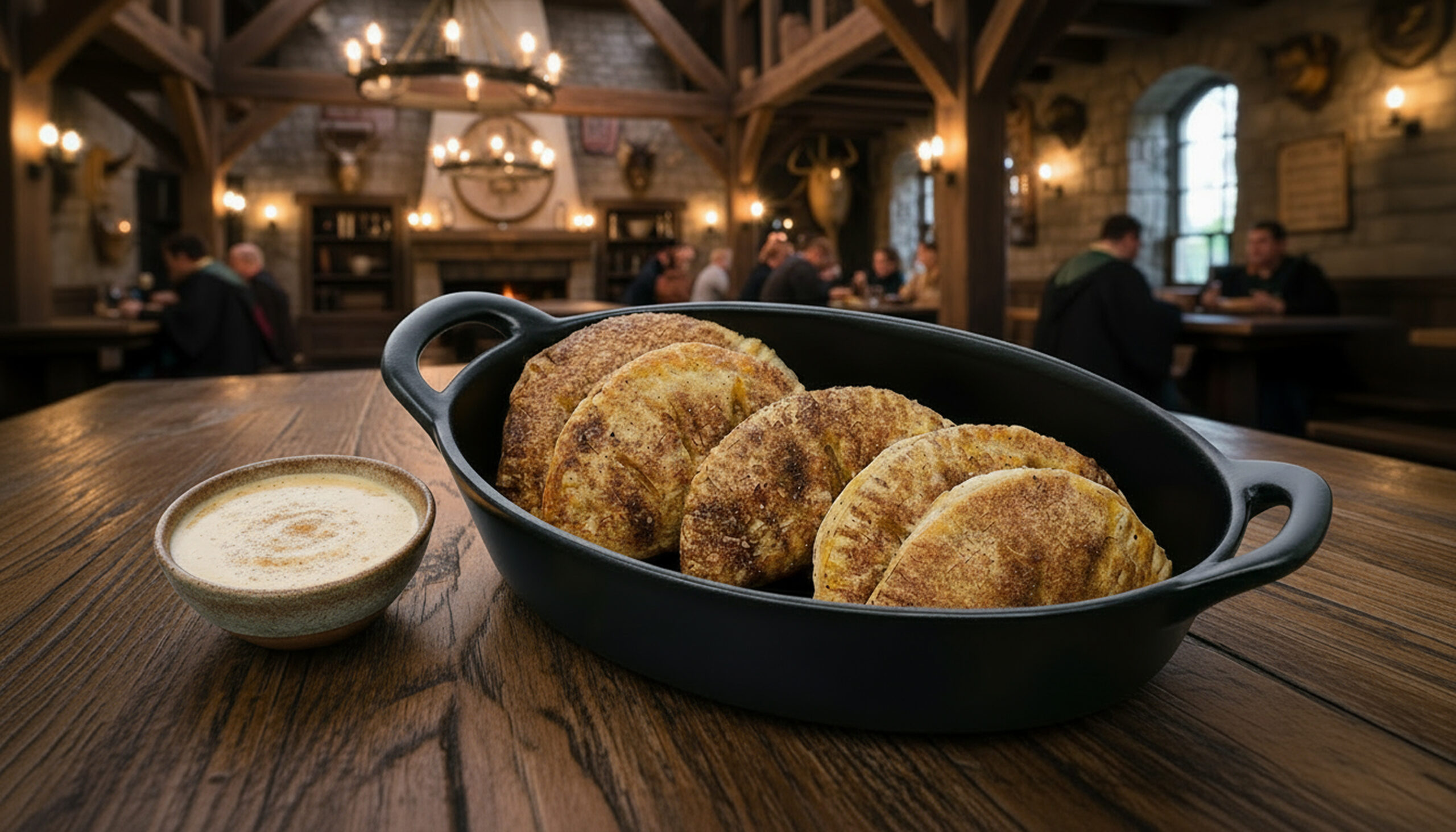
Food is one of the most genuinely memorable parts of most theme park visits, and it’s also one of the most perishable souvenir categories. Butterbeer fudge from Universal’s Wizarding World, Mickey-shaped rice crispy treats, Dole Whip mix, beignet mix from Disney’s New Orleans Square at Disneyland: these connect directly to a specific taste from a specific place. They’re consumed quickly, which means they don’t accumulate. They’re shared, which means more than one person has the memory.
Packaged food items with reasonable shelf life make strong souvenirs for exactly this reason: they extend the experience past the visit date rather than being a static object that represents the trip. The problem with perishable food souvenirs bought early in the day is logistics: carrying them through hours of park walking, heat, and bag searches creates its own friction. Buy food-based souvenirs near the end of the visit or as you’re leaving, not as an early impulse.
The branded drinkware that comes with theme park beverages is worth evaluating on its own. Universal’s souvenir cup for park refills, Disney resort resort mugs, the Wizarding World Butterbeer tankard: these often end up as daily-use items at home specifically because the vessel has both a functional role and a memory attached to it.
Budget and Timing: Set the Expectation Before You Enter
Theme park gift shops are placed intentionally at ride exits, near character meet locations, and at park entrances and exits. The layout is not accidental. Walking through a well-stocked gift shop after an exciting ride, with kids running ahead and adults still processing the experience, is the highest-conversion moment the parks can create. Knowing that going in changes how you engage with it.
For groups with kids, setting a souvenir budget and communicating it before entering the park removes the in-the-moment negotiation from the equation. “You each have $20 to spend on one thing you choose” produces more satisfying purchases than a running series of small decisions accumulating toward an unexpected total. The child who has to choose one thing with $20 usually chooses more carefully and ends up more attached to the result.
For adults, the most consistent souvenir satisfaction comes from identifying what you’re actually looking for before walking into a shop, rather than browsing and seeing what catches your eye in the moment. Are you looking for something wearable? Something for the kitchen? Something for a display? That question, answered before you’re in the store, filters out a lot of impulse-purchase regret.
What we’d change: Buying multiple small items at different points throughout the day and arriving at the exit with several mediocre purchases that together cost more than one deliberate choice would have. The single item bought with intention almost always produces more satisfaction than the accumulation of smaller impulse purchases that seemed reasonable in the moment.
Ride Photos: The One Category Worth Separate Consideration
Ride photos deserve their own note because they’re unlike any other souvenir category. The photo taken of you on a signature attraction at the moment of peak experience is the only documentation that moment will ever have. Your phone isn’t on the ride. No one else has that photo. It is either purchased or it doesn’t exist.
They are also consistently priced above what most people feel comfortable paying for a single photo. Prices vary by park and attraction, but physical prints and digital downloads from park photo systems typically run $20 to $35 or more per image; verify current pricing at the photo kiosk. At Disney, Memory Maker includes these ride photos within its flat-price package, which changes the calculation significantly for families buying multiple images across a multi-day trip.
Worth it for: First-time experiences on a park’s signature ride. Family photos where everyone is in the same frame in a situation that won’t be recreated. Any experience that has a genuine “first time” quality that won’t happen again the same way.
Skip it if: It’s a repeat ride and you already have the photo. The expression in the preview photo doesn’t represent the actual experience. You’re buying it primarily because it’s there and seemed expected rather than because you specifically want it.
The best souvenir from any theme park visit is the one that, five years from now, still connects you to a specific moment rather than just confirming that you were there. Most parks have items in that category if you look past the front tables. Most parks also have a lot of items that aren’t in that category. The difference is usually pretty clear once you’re asking the right question before reaching for your wallet.
Niko’s Tip: Many theme parks mark down merchandise at the end of the day or at the end of a season. If there’s something you’re interested in but the price feels high, asking a cast member or store associate whether the item is ever discounted, or checking the clearance section of the store, occasionally surfaces the same item at a lower price. It doesn’t always work, but it takes about 30 seconds to ask.
Found an error or an outdated detail? Send a correction for this article.