
Planning guide with official Space Center Houston visitor references.
Disclosure: This article is not sponsored. Photographs are supplied by Space Center Houston for editorial use.
Choose your NASA tram tour before filling the rest of a Space Center Houston day. Some tours are arranged on arrival, while Historic Mission Control requires an advance add-on booking. That decision can shape the visit more than the order of the galleries.
Then give the museum its own time. Independence Plaza, flown spacecraft, the Skylab trainer, and exhibits about life aboard the International Space Station are substantial reasons to visit. A sold-out tour need not turn the whole day into a disappointment, but it is better to know what you are buying before making the journey.
This guide builds a flexible first visit from the center’s published visitor information. It separates admission, tour arrangements, and optional extras so you can choose a day that fits your interests.
Start with the three different parts of the visit
Think of the trip as three decisions: admission to Space Center Houston, access to a particular NASA Johnson Space Center tour, and any extra experiences you want to buy. A ticket for one does not automatically establish that all the others are included.
The official exhibits directory is the place to compare the permanent galleries with current experiences. The NASA tram-tour page explains which tours are included subject to availability and which require a separate purchase. Use the description for the named tour, rather than assuming one boarding arrangement covers everything.
Choose a small number of priorities. For an Apollo-focused visit, Historic Mission Control and Starship Gallery make a coherent pairing. For visitors drawn to the shuttle era, Independence Plaza may matter more. A family interested in daily life in space might give the Skylab trainer and station exhibits more attention.
Book admission and the right tour together
Compare the online admission quote for your actual date and party. The center publishes different age bands and date-dependent prices, so a single headline price is a poor substitute for the final total. Read the entry-time conditions shown during checkout and keep the confirmation available.
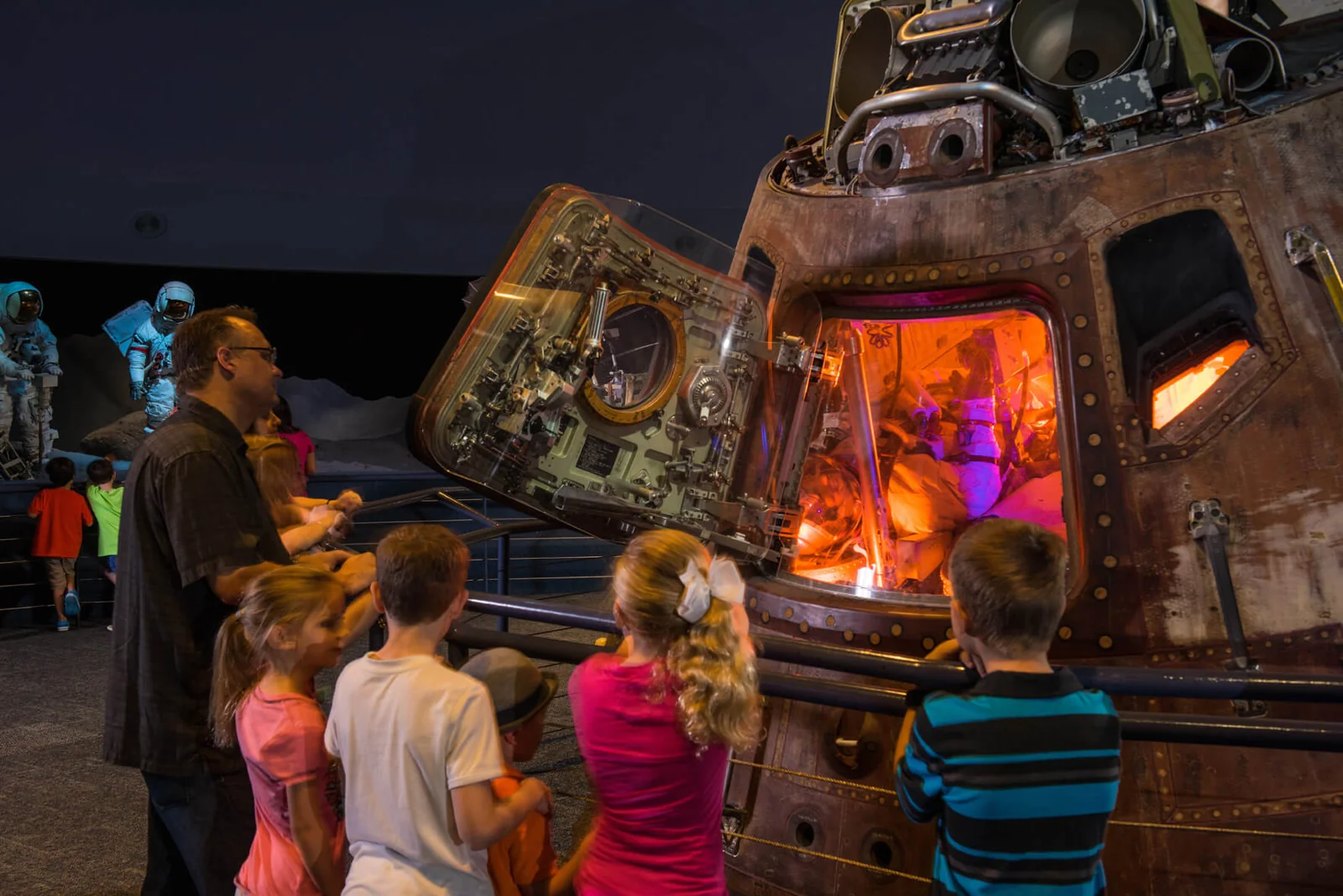
Historic Mission Control is an additional-cost tram experience purchased with general admission. The center recommends booking ahead because capacity is limited. If that room is the main reason for the trip, check its availability before fixing a nonrefundable travel plan.
For the Astronaut Training Facility and NASA Campus tours, the published process is to request a timed boarding pass at Guest Services after entering. Rocket Park uses a different, first-come queue. Availability can change, so read the current tour page again before departure.
The tours enter a working NASA site. Weather and operational closures can affect them, even after you have made a careful plan. Keep enough museum interests on your list that the day has another useful direction if a tour changes.
Build the morning around a real anchor
If you have an advance tour time, work backward from the instructions in its confirmation. Allow time to reach the center, enter, and find the boarding point. Avoid treating the arrival time in a navigation app as the moment you will be ready to board.
If your priority uses an on-site boarding pass, visit Guest Services early instead of spending the first hour in the galleries. Once you know the assigned time, choose an exhibit block that fits before it. Staff can explain the current boarding arrangements more reliably than an old itinerary.
A useful planning sequence is arrival and tour arrangements, one gallery, a meal or break, and another major exhibit. This is an order to adapt, not a timed promise. Check the official hours for your date, including the last tour departure relative to closing.
Give Starship Gallery room to tell a story
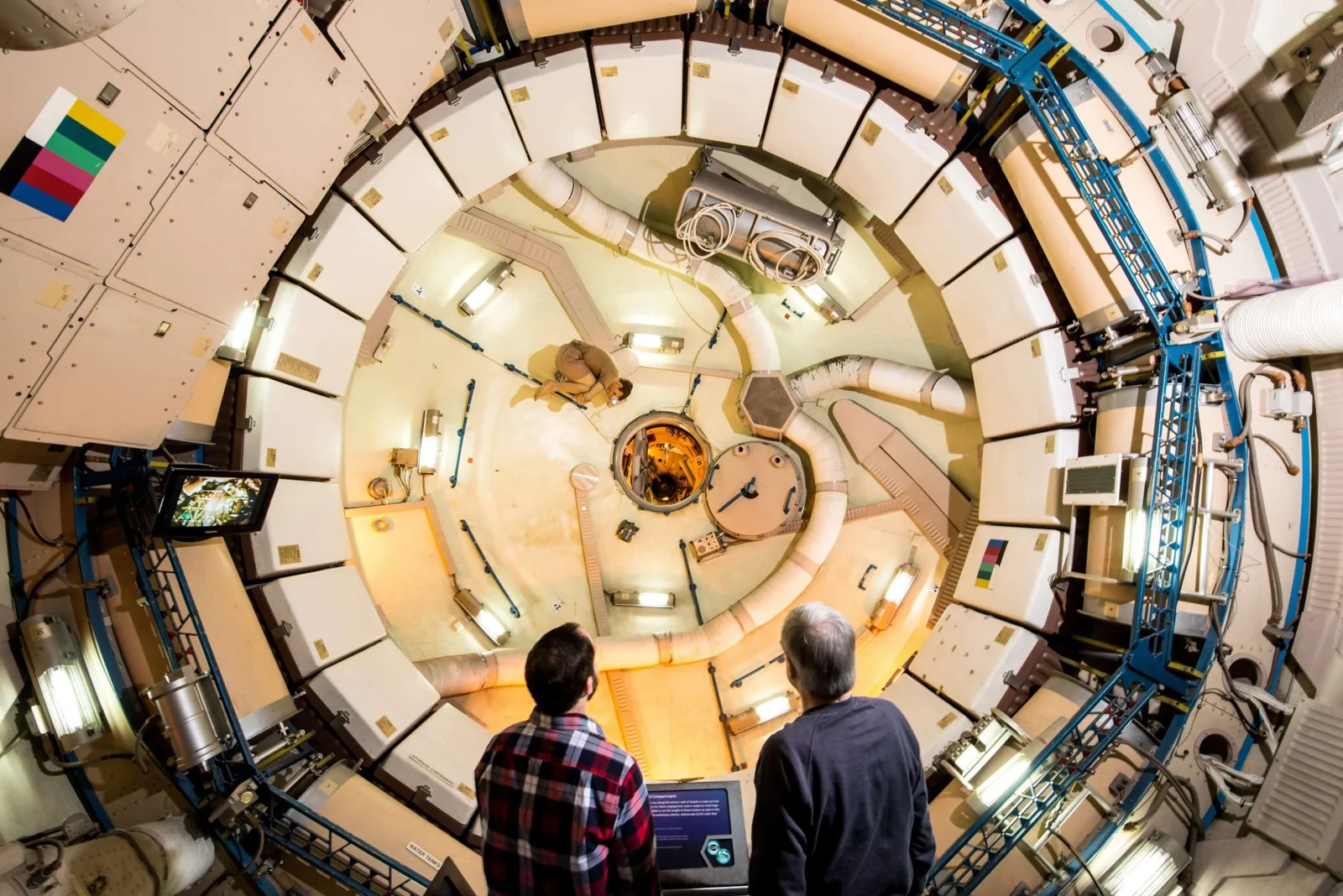
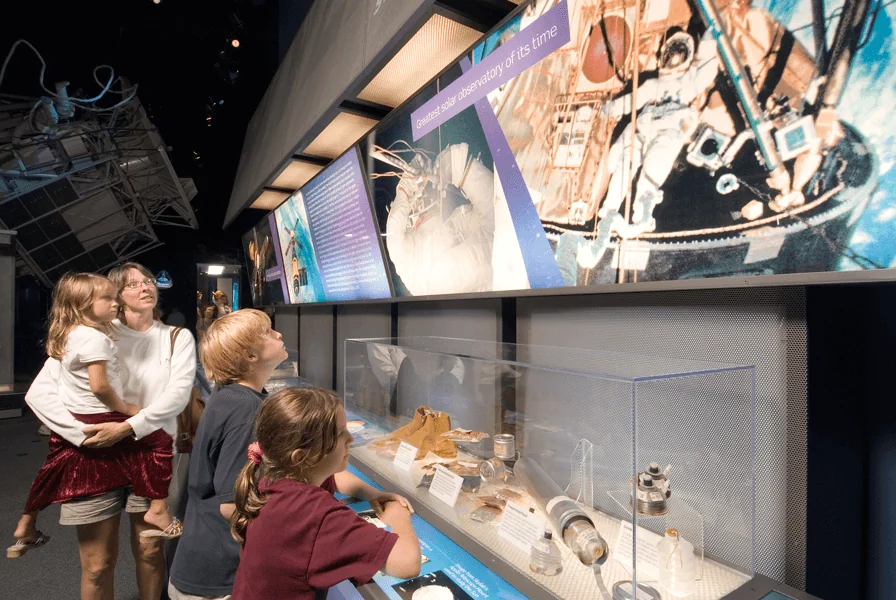
Starship Gallery includes flown spacecraft such as the Apollo 17 command module, Mercury Faith 7, and Gemini V, alongside trainers and other artifacts. Those labels matter. A flown capsule, a training vehicle, and a replica explain different parts of spaceflight.
Instead of photographing every case at the same speed, choose a thread. Compare the compact capsules, look at the living space represented by the Skylab trainer, and then consider the equipment needed to work outside a spacecraft. That creates a more understandable visit than a list of names alone.
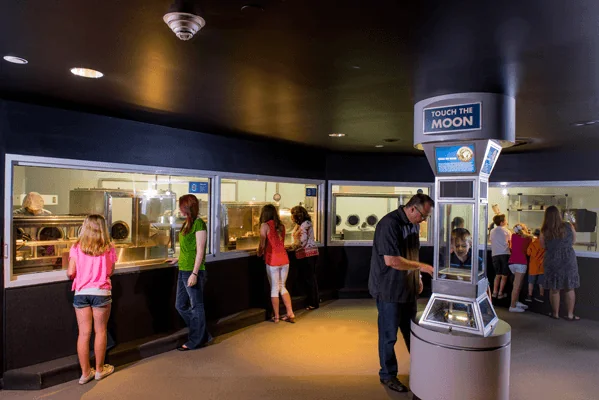
The gallery also includes a lunar sample visitors can touch under the exhibit’s arrangements. Follow staff instructions and the signs at the display. Leave time to look at the surrounding material rather than treating the touching point as the whole lunar exhibit.
See Independence Plaza as a shuttle-era exhibit
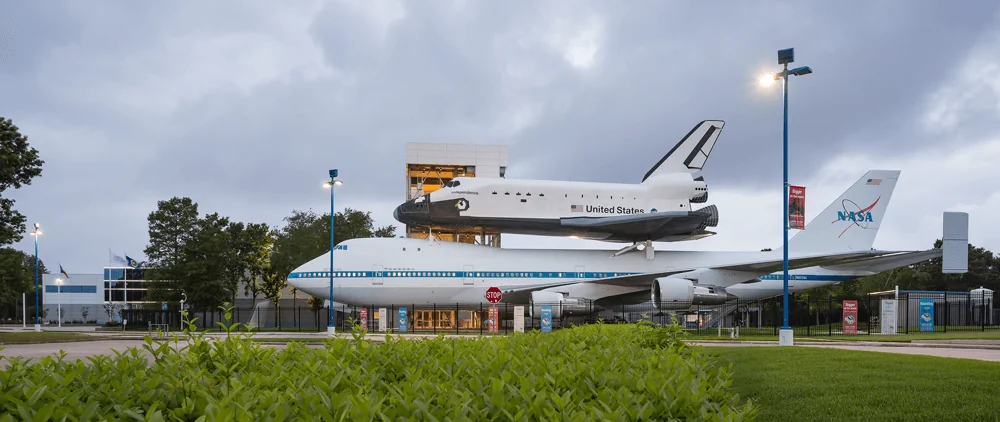
Independence Plaza pairs the shuttle replica Independence with the historic NASA 905 shuttle carrier aircraft. The orbiter is a replica; the carrier aircraft is the actual aircraft. Keeping that distinction clear makes the engineering story more interesting.
The published experience includes access inside the vehicles and exhibits about the shuttle era, and it is included in general admission. Check current access before relying on a particular level or route. Outdoor approaches and open-air waiting areas make weather relevant even during a museum day.
Use the visit to think about the journey after a landing. How did an orbiter get back to its next launch site? The aircraft-and-orbiter pairing gives that question a physical answer in a way a small model cannot.
Budget for the whole day, not only the ticket
Include transport, parking if needed, food, and any paid experience in the comparison. The visitor-information page lists parking arrangements and explains that simulators cost extra. A general admission ticket is not an all-inclusive entertainment package.
For parking, the center uses a phone-based payment process and offers an alternative at Guest Services for international phone numbers. Check the current charge and any service fee before arrival. Save the payment confirmation and follow the instructions for your vehicle.
Compare a membership or multi-attraction pass only if you will use the relevant benefits. Look at the exact admission and tour inclusions, dates, and reservation requirements. A larger discount headline is not useful if it changes the visit into a product you did not want.
Plan breaks, bags, and access before arriving
Wear shoes suitable for a museum day with walking, standing, and possibly an outdoor tram. Read the current permitted-items policy before packing a large bag. Security screening is part of arrival, and Historic Mission Control has a separate no-bags rule to protect its furnishings.
Use the accessibility resources for the social story, sensory guides, equipment information, and specific access contacts. The center describes ramps on tram vehicles, but confirm the arrangements relevant to your chair, mobility device, or boarding needs. A general accessible designation is not a substitute for checking the particular experience.
Give lunch and restrooms their own place in the day. Tram tours have limited restroom access, and a tour away from the main building is a poor time to discover that someone needed a break. With children, shorten the list before cutting every pause.
What to check again just before the trip
Reopen the official hours, your ticket confirmation, the named tram-tour instructions, and the exhibit directory. Check weather for the outdoor part of the visit and confirm transport for the return. Save the information you need without depending on a strong mobile signal at every step.
The most useful first visit has a clear purpose and room to change. Book the experience that needs advance action, arrange the on-site tour early if that is your choice, and leave enough time to look properly at the spacecraft you came to see.
Accurate as of October 2026. Check the linked official pages for current operating hours, ticket conditions, exhibit access, and tour arrangements.
Featured photograph: Photo courtesy of Space Center Houston.
Photos are used by permission in this editorial context.
Found an error or an outdated detail? Send a correction for this article.