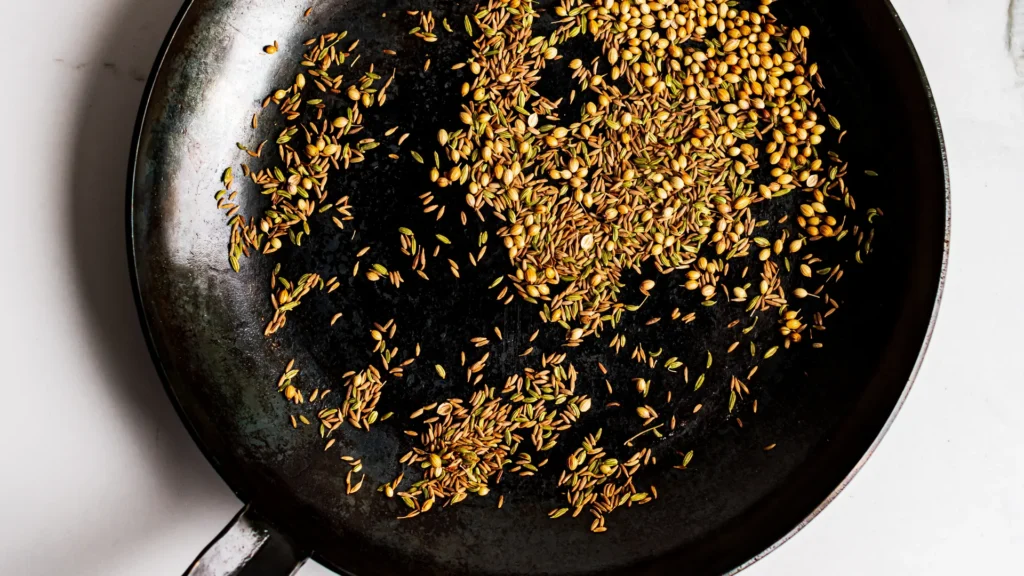

To toast whole spices, use a clean, dry skillet over modest heat, keep the seeds moving, and transfer them to a cool dish as soon as they become fragrant and lightly toasted. Have that dish ready before you start. Seeds can scorch quickly, and switching off the burner does not stop a hot pan from cooking them.
Decide whether toasting belongs in the recipe
Some spice mixes call for whole cumin, coriander, fennel, or mustard seed to be toasted before grinding. Heat can change their aroma, and grinding afterward distributes that result. Other recipes want the fresh, sharper character of the untoasted spice. Do not automatically add a toasting step to a sourced method simply because it sounds more involved.
The practical setup is a clean, dry skillet, modest heat, a utensil ready to move the seeds, and a cool dish to receive them. Work with a small quantity and keep the seeds moving. Watch the actual seeds rather than relying on a fixed time from another stove. If they smoke, turn unusually dark, or smell acrid, they have gone past the result you wanted.
McCormick identifies toasting as a use for whole cumin seeds. The practical method still depends on the recipe, seed size, pan, and heat.
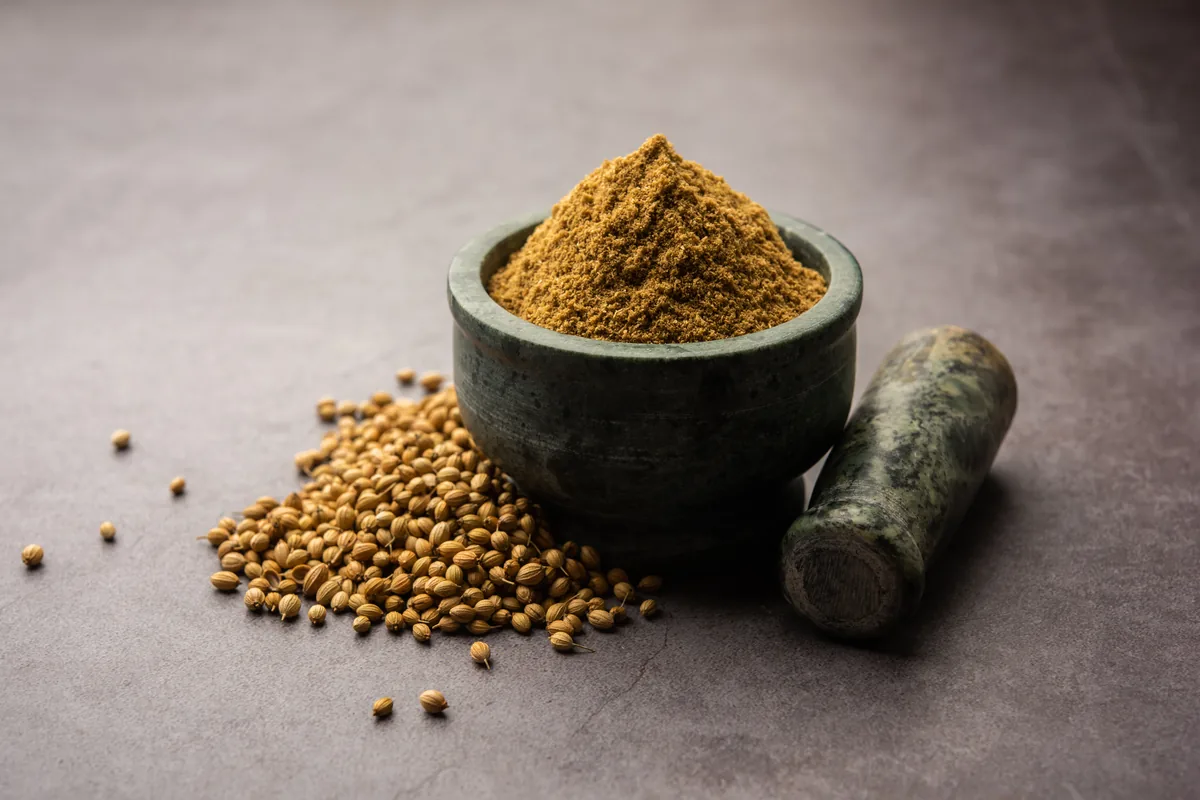
Keep the test comparable
If the question is whether toasting improves a particular dish, divide one batch of the same seeds into two weighed portions. Toast one and leave the other alone. Grind and use each portion with the same other ingredients and preparation. This isolates the toasting decision more clearly than making two recipes with several changes.
Let hot spices cool in a safe dish before sealing them in a storage jar. Do not put very hot ingredients directly into an unsuitable grinder or closed container. Cleaning and drying equipment matters because leftover moisture and oil can change how ground spices behave later.
The point of the step
Toasting can be useful, but it is not a universal flavor upgrade. The useful finding is what happens in your recipe with those particular seeds and that degree of heat. Use the recipe’s intended flavor as the standard rather than treating a darker toast as automatic improvement.
How to toast whole spices
- Measure the spices and set a cool, heat-safe dish beside the stove.
- Use a clean, dry skillet and a shallow layer of seeds. Keep the heat modest.
- Stir or shake the pan frequently. Watch for a stronger aroma and a light change in color.
- Transfer the seeds out of the hot pan promptly. If they smell acrid or look burned, start again.
- Cool before grinding, following the grinder’s instructions.
Toast different sizes separately when they are cooking unevenly. Small seeds may scorch while larger pieces are still warming. A timer can remind you to check, but it cannot replace watching the pan.
Sources
Related guides
Found an error or an outdated detail? Send a correction for this article.