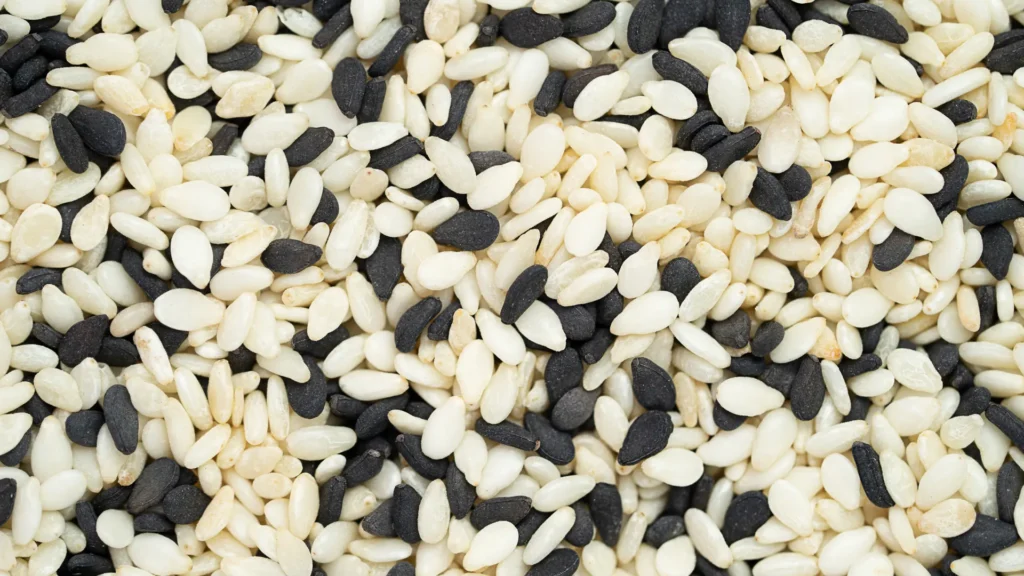

Black and white describe the seeds. Raw and toasted describe their preparation. A jar of black sesame isn’t automatically toasted, and a pale seed isn’t automatically raw. Check both parts before adding it to a recipe.
That small distinction helps when a dish needs a finishing sprinkle, ground sesame, or a more noticeable toasted flavor. It also keeps a color substitution from becoming an unintended change in preparation.
Pick the form the recipe needs
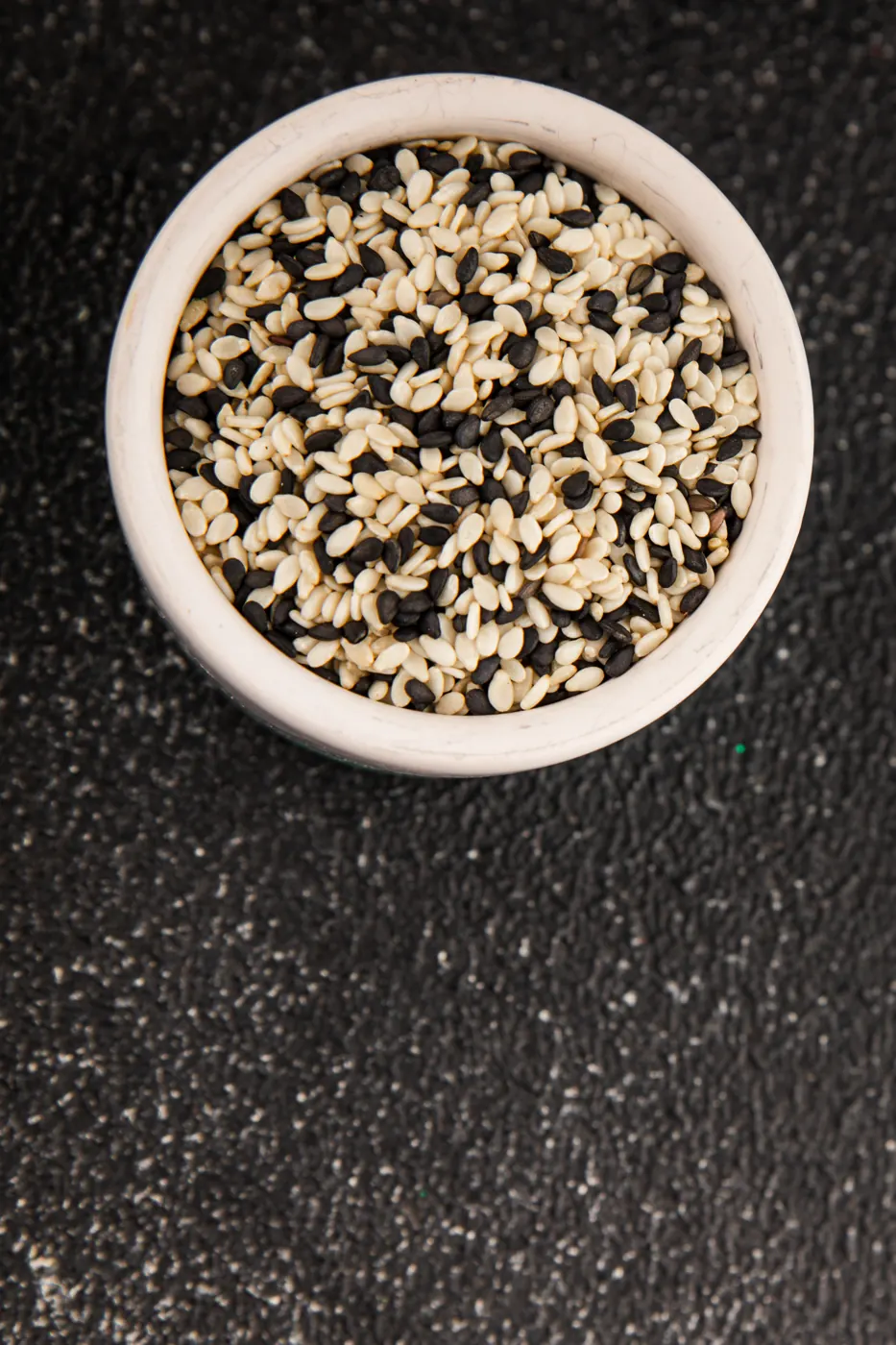
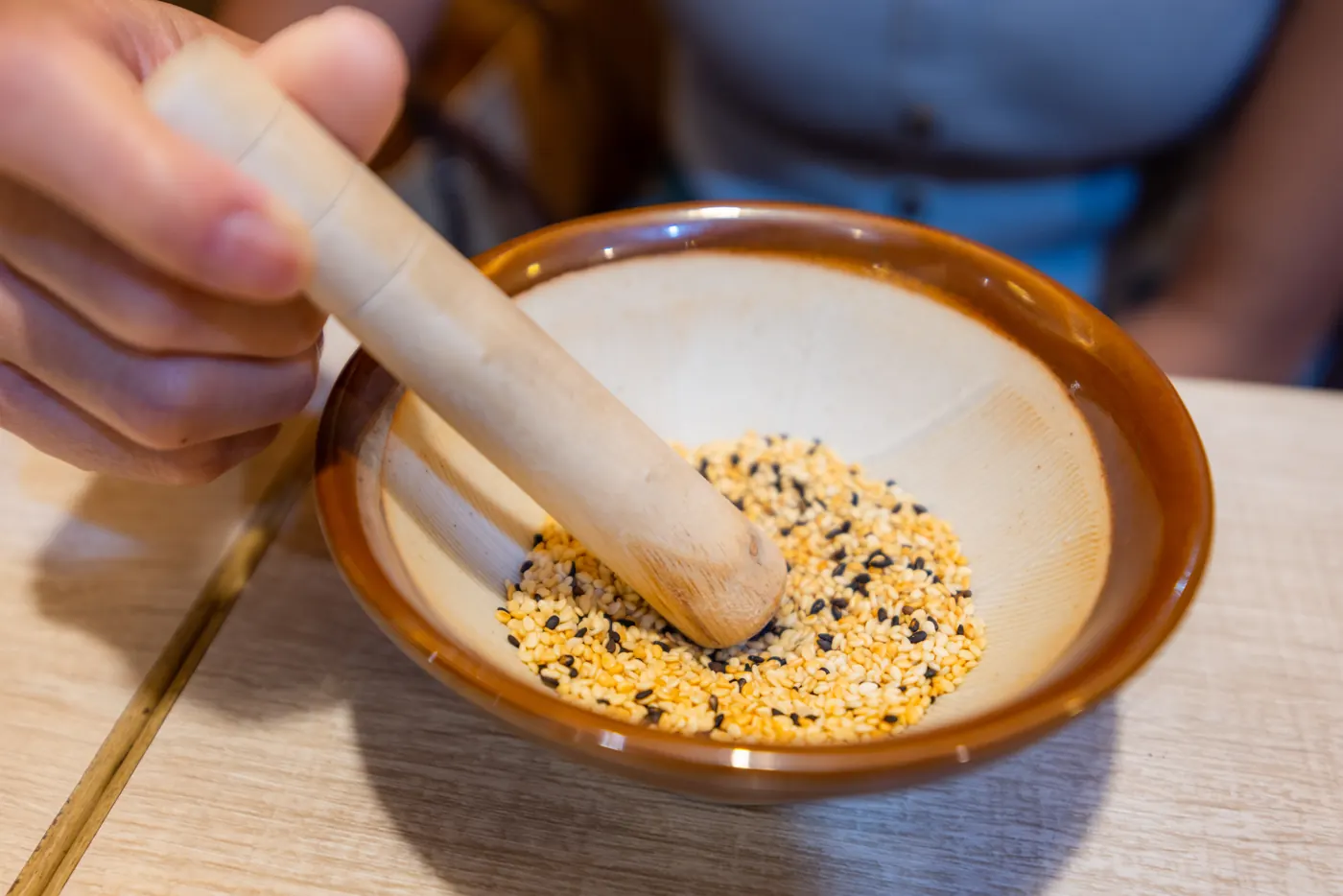
Whole seeds add visible detail and texture. Ground seeds distribute differently through a sauce or mixture. Kikkoman’s ground-sesame guide discusses using a mortar or sesame grinder for freshly ground sesame. If a recipe calls for ground seeds, simply scattering whole seeds over the plate won’t do the same job.
For a color choice, start with the dish rather than a rule that one seed is better. Kikkoman’s white and black sesame glossary describes different culinary uses and flavor characteristics. Follow the source recipe first, then decide whether a different appearance or flavor would suit your own version.
Check whether the seeds are already toasted
A prepared toasted product can be ready for the use described on its package. For example, McCormick’s toasted sesame product lists uses including noodle dishes, salads, and baking without an additional preparation step.
That isn’t a reason to toast every jar again. Read the label before heating a product that already has the preparation you want. If your recipe specifically starts with raw seeds and toasts them, record that starting point when you make notes.
When a recipe includes both toasting and grinding, keep those steps in order. Record the starting product, too. Replacing raw seeds with a ready-to-use toasted product changes the work you need to do, even when the seeds look similar.
Keep the useful information on the jar
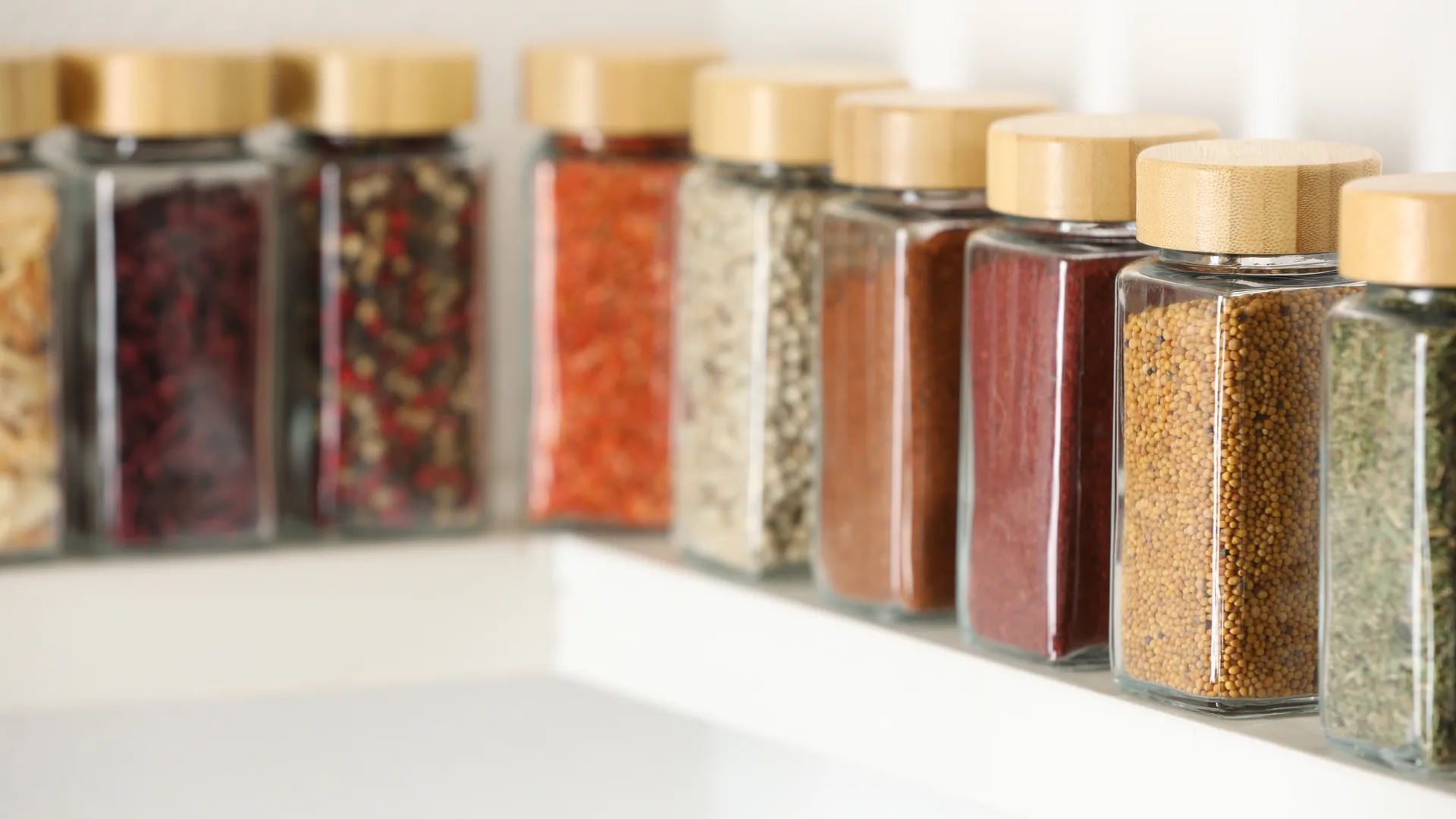
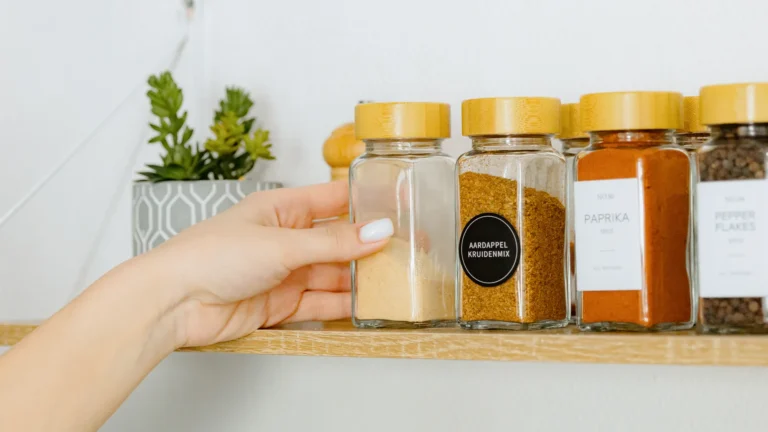
When transferring seeds to a storage container, keep the product name, color, preparation, and package storage instructions with it. Preserve ingredient and allergen information, too. If you’re cooking for someone with an allergy, confirm the actual product and recipe with them; changing seed color doesn’t remove sesame from the dish.
For recipe notes, “white sesame, toasted, whole” is more useful than “sesame.” If you grind it, add that step. The next time you make the dish, you’ll know which choices you meant to repeat.
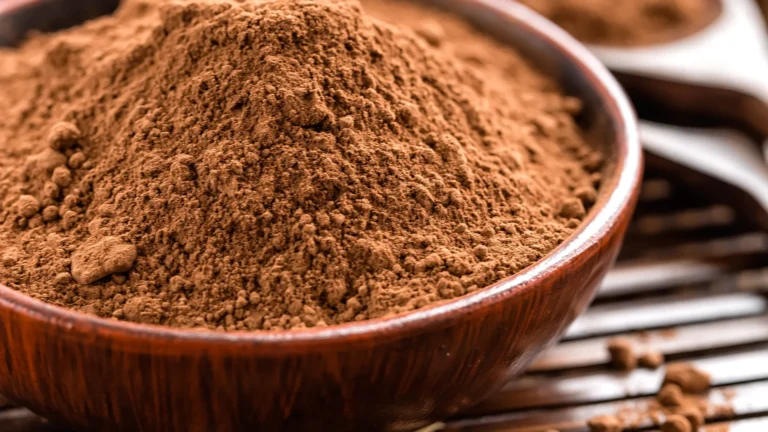
For another label distinction that matters in a recipe, see natural versus Dutch-process cocoa.
Source note
Researched ingredient guide, with sources checked October 21, 2026. This does not report a Replicate Kitchen comparison or prescribe a universal toasting time. Photos illustrate seeds, grinding, and pantry storage.