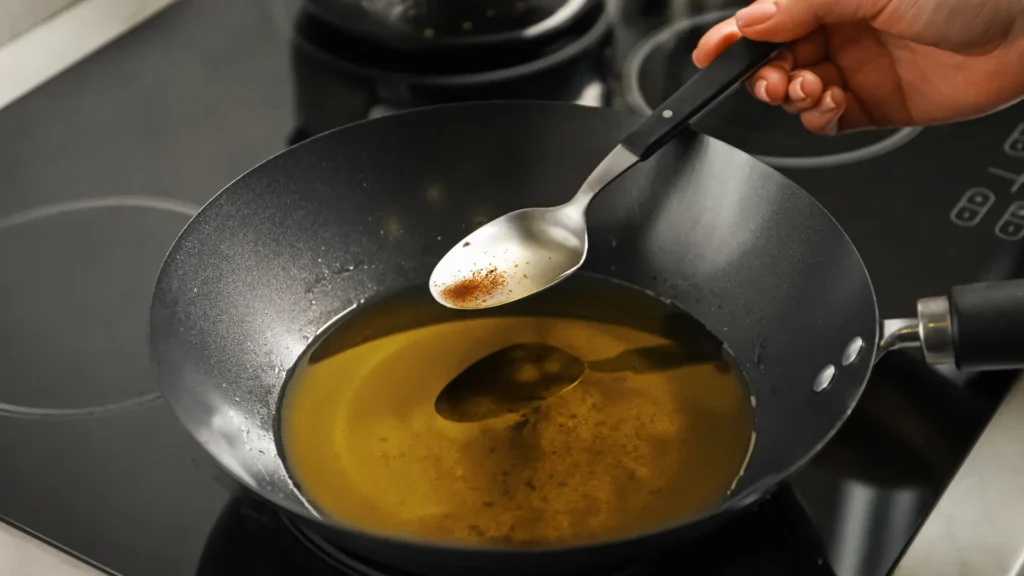

To bloom spices, briefly stir ground spices into the cooking fat before adding the next moist ingredient. The technique helps carry spice flavor through dishes such as chili, curry, and beans. Keep the heat controlled and the next ingredient ready: fine powders can scorch before the rest of the recipe reaches the pan.
Where blooming fits
A practical example is the beginning of a curry, chili, bean dish, or sautéed vegetable preparation. Aromatics are often heated in fat; ground spices are added briefly, and then a moist ingredient such as tomatoes, broth, or other liquid follows. The hot fat helps carry the spice aroma into the dish. Serious Eats describes this technique as a way to bring out ground-spice flavor while warning against overheating it.
Blooming is not a license to leave fine powders over high heat. Small particles can burn quickly, especially in a thin layer of hot oil. Have the next ingredient ready before the spices go in and follow the actual recipe’s heat and sequence. If a recipe uses delicate herbs or a finishing seasoning, applying this technique may not serve its goal.
Sho Spaeth’s explanation at Serious Eats describes why heating ground spices in fat helps distribute their flavor. It is a cooking technique, not a requirement for every seasoning.
How to evaluate the difference
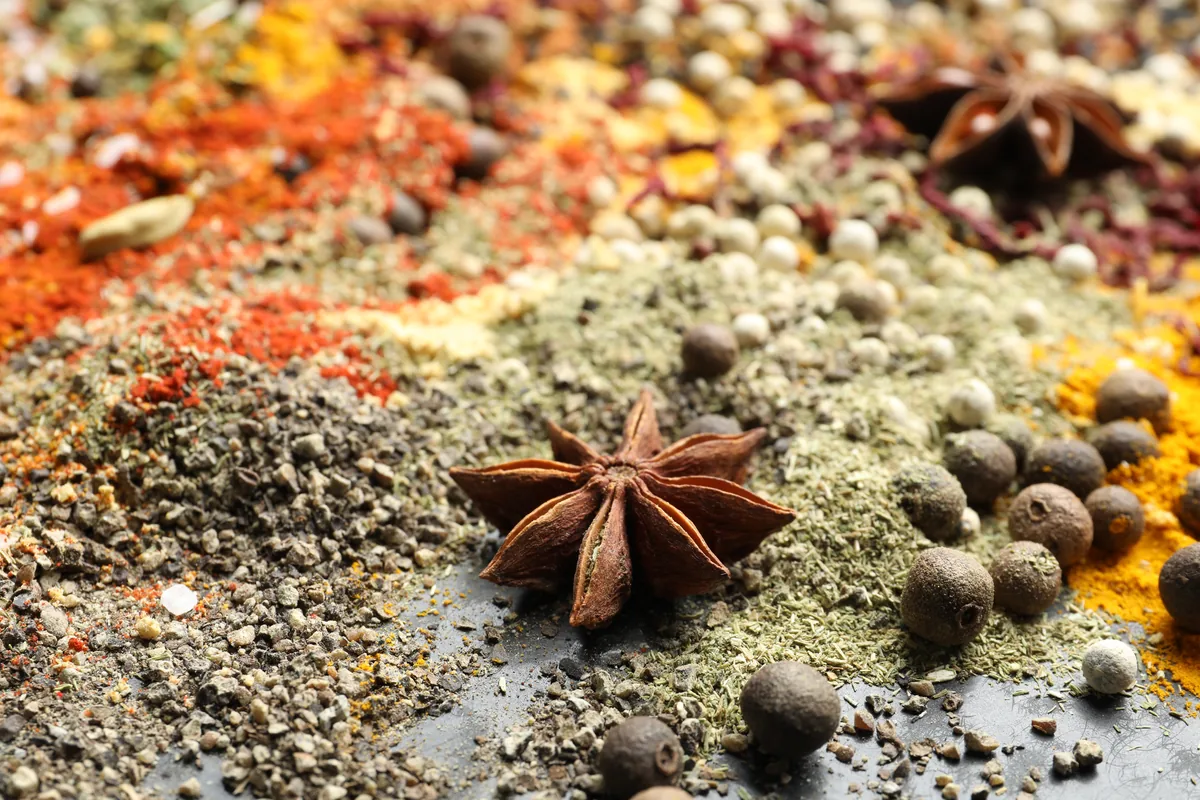
A meaningful comparison holds the spice source, total amount, fat, salt, and final recipe constant. In one version, bloom the spices as directed; in the other, add them with the moist ingredients. Record taste and aroma without assuming that louder means better. Some dishes benefit from an early blended aroma, while others need the distinct freshness of a finishing spice.
What we can reasonably say
The technique changes the path flavor takes through a recipe, but a single home comparison cannot identify the specific chemical responsible for a difference. This article explains the cooking principle and a fair way to assess it. Judge the finished dish, including whether the spice tastes harsh, muted, or well integrated.
A practical sequence for blooming spices
- Measure the spices and prepare the next ingredient before heating the pan.
- Cook the recipe’s aromatics in its specified fat.
- Lower the heat as needed, add the ground spices, and stir so they do not sit in one hot spot.
- Add the prepared moist ingredient promptly, following the recipe’s sequence.
Dry-toasting warms spices without added fat; blooming heats them in fat. Neither technique is required for every dish. Follow a recipe designed for the method rather than adding extra oil or a second heating step automatically.
Sources
Related guides
Found an error or an outdated detail? Send a correction for this article.