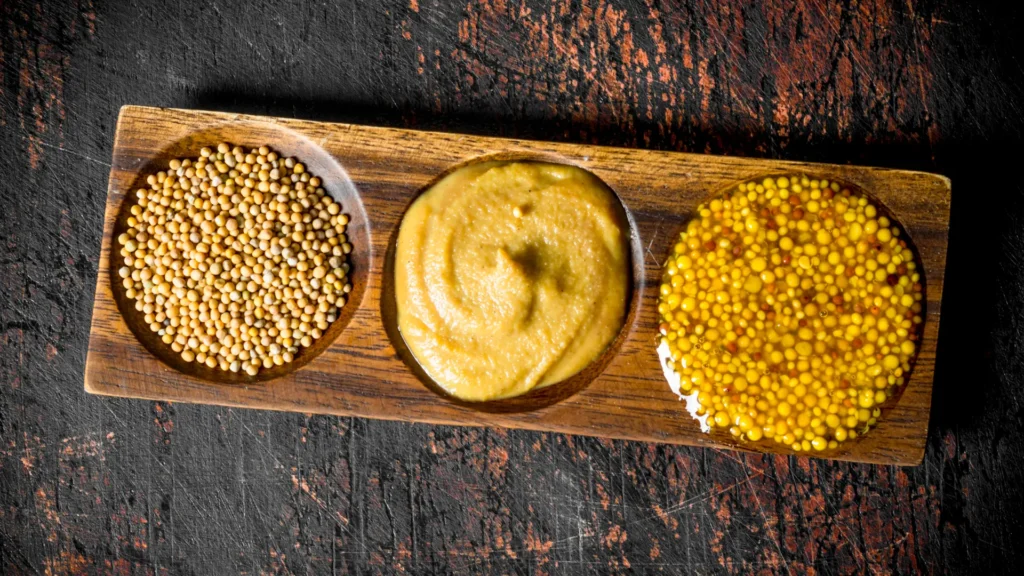

The mustard in a recipe might be a smooth condiment, a grainy condiment, or a dry powder. Read that word before reaching for a jar. Changing the form can change the texture and the ingredients you add, even when all three products belong to the mustard shelf.
A useful starting point is simple: keep smooth mustard for a smooth result, keep the grains when their texture matters, and treat dry mustard as a seasoning rather than a ready-made sauce. Then check the particular product and recipe.
The quick comparison
| Form | What you are adding | What to check before switching |
|---|---|---|
| Smooth Dijon | A prepared condiment with finely crushed mustard seeds | Flavor, salt, acidity, and how the sauce will look |
| Whole-grain mustard | A prepared condiment with visible seeds and a grainy texture | Whether those seeds belong in the finished dish |
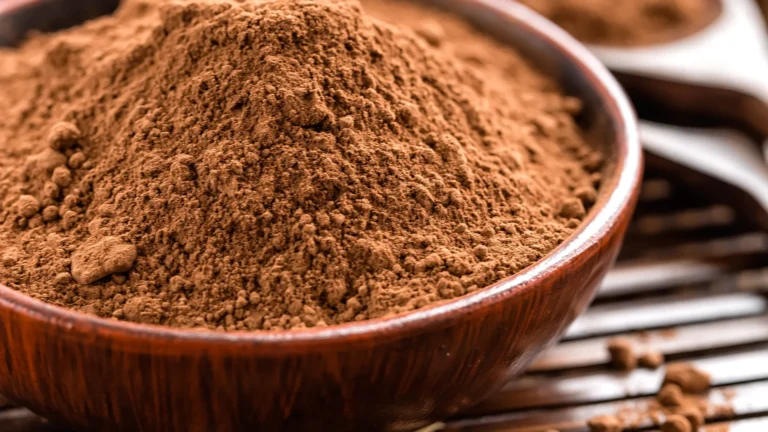
| Ground or dry mustard | Mustard seed ground into powder | The recipe’s liquid balance and any other ingredients a prepared mustard would bring |
These are categories, not promises that every brand tastes alike. Maille describes its Dijon Original as smooth and its Whole Grain as grainy. Those product descriptions help establish the distinction; they aren’t a Replicate Kitchen taste test.
When the smooth texture matters
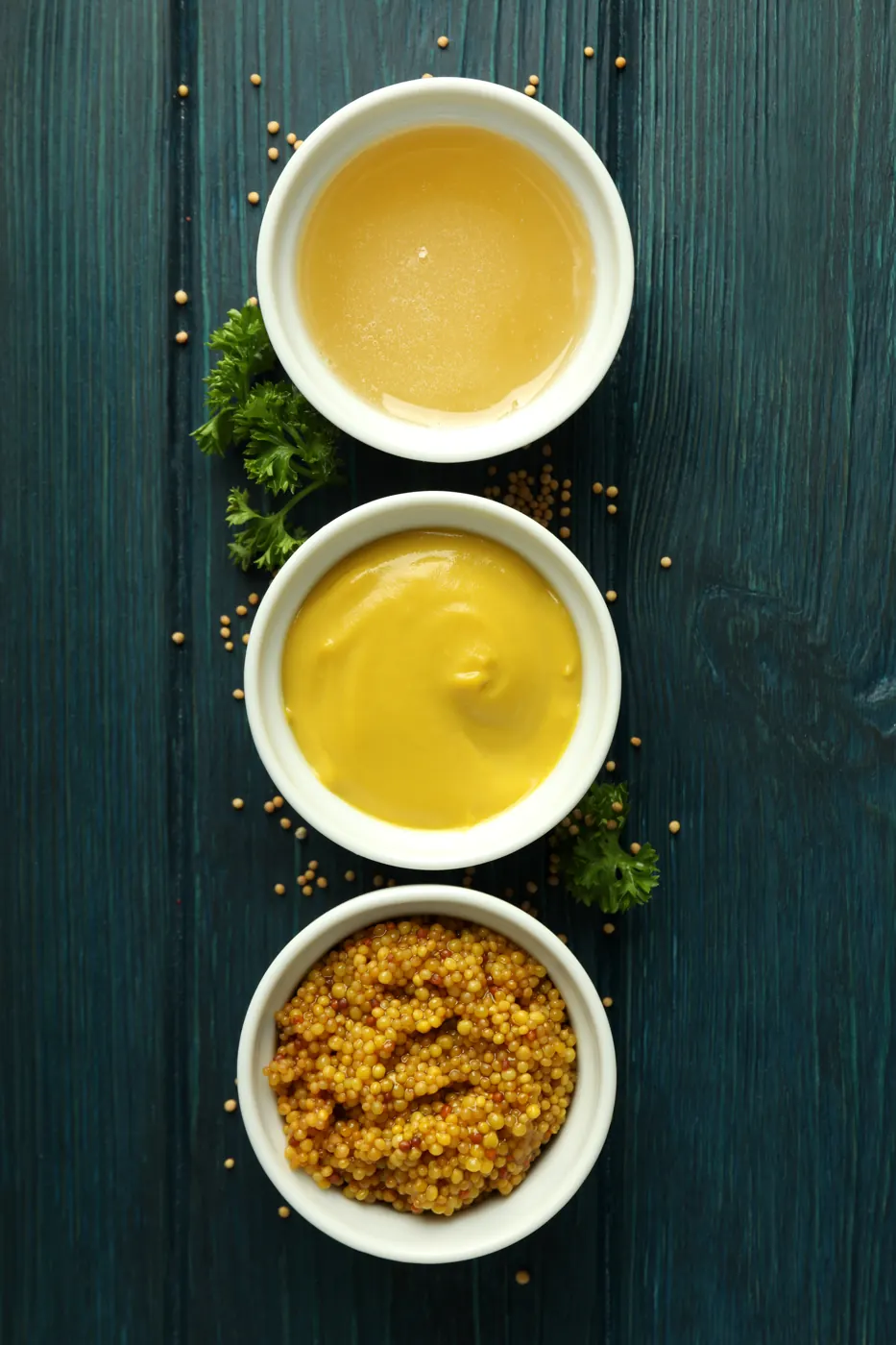
If a recipe calls for Dijon in a smooth dressing or sauce, visible seeds may be a meaningful change. Whole-grain mustard can give you a speckled, textured result instead. Decide whether that is a variation you want before adding it to the full bowl.
Read beyond the front label, too. A honey mustard, a flavored Dijon, and an original Dijon aren’t interchangeable descriptions. Added sweetness or another flavor can shift the direction of the dish. The name tells you where to start looking; the ingredient list tells you more about what is in the jar.
For an unfamiliar substitution, a small portion of a forgiving dressing is a more useful place to compare than an entire finished dish. Note what you used and whether you like the change. Keep that personal preference separate from a claim that one type is universally better.
When you want the grains
Visible mustard seeds can be part of the appeal of a spread, dressing, or sauce. If a recipe uses whole-grain mustard for that texture, a smooth condiment won’t reproduce it. Adding more smooth mustard changes the amount of seasoning, not the missing grains.
Whole seeds in a spice jar are another form again. They are not the same finished product as seeds suspended in a prepared condiment. Follow instructions written for the form you have, particularly when the recipe includes a separate preparation step.
Dry mustard brings a different balance
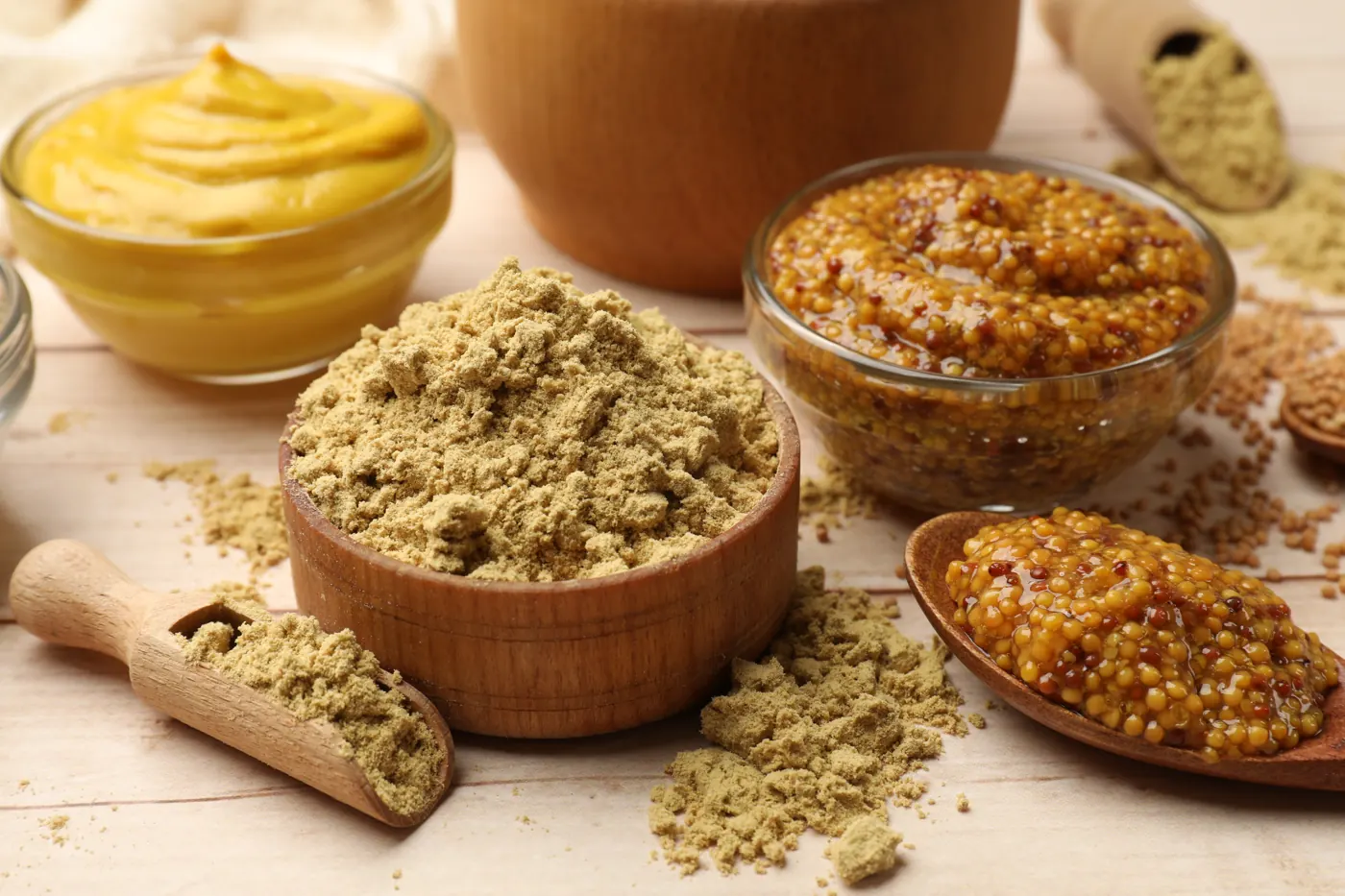
McCormick’s ground-mustard guide identifies ground, powdered, and dried mustard as names for the ground spice. A prepared mustard also contains other ingredients. For example, Maille’s linked product lists include water, vinegar, and salt.
That is why a spoonful of powder and a spoonful from a condiment jar aren’t an automatic one-for-one exchange. A substitution needs to account for the recipe around it. For a dish where proportions matter, use the recipe author’s stated substitution or choose a recipe designed for the mustard you own.
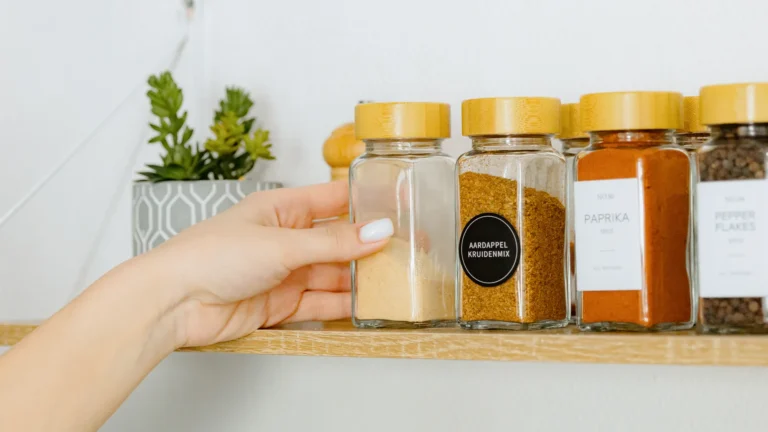
Keep the original package information when transferring a spice to another jar. Label the form clearly so dry mustard doesn’t become an unidentified yellow powder on the shelf. Follow the product’s storage instructions, including any instructions that apply after opening a prepared condiment.
What to buy for this recipe
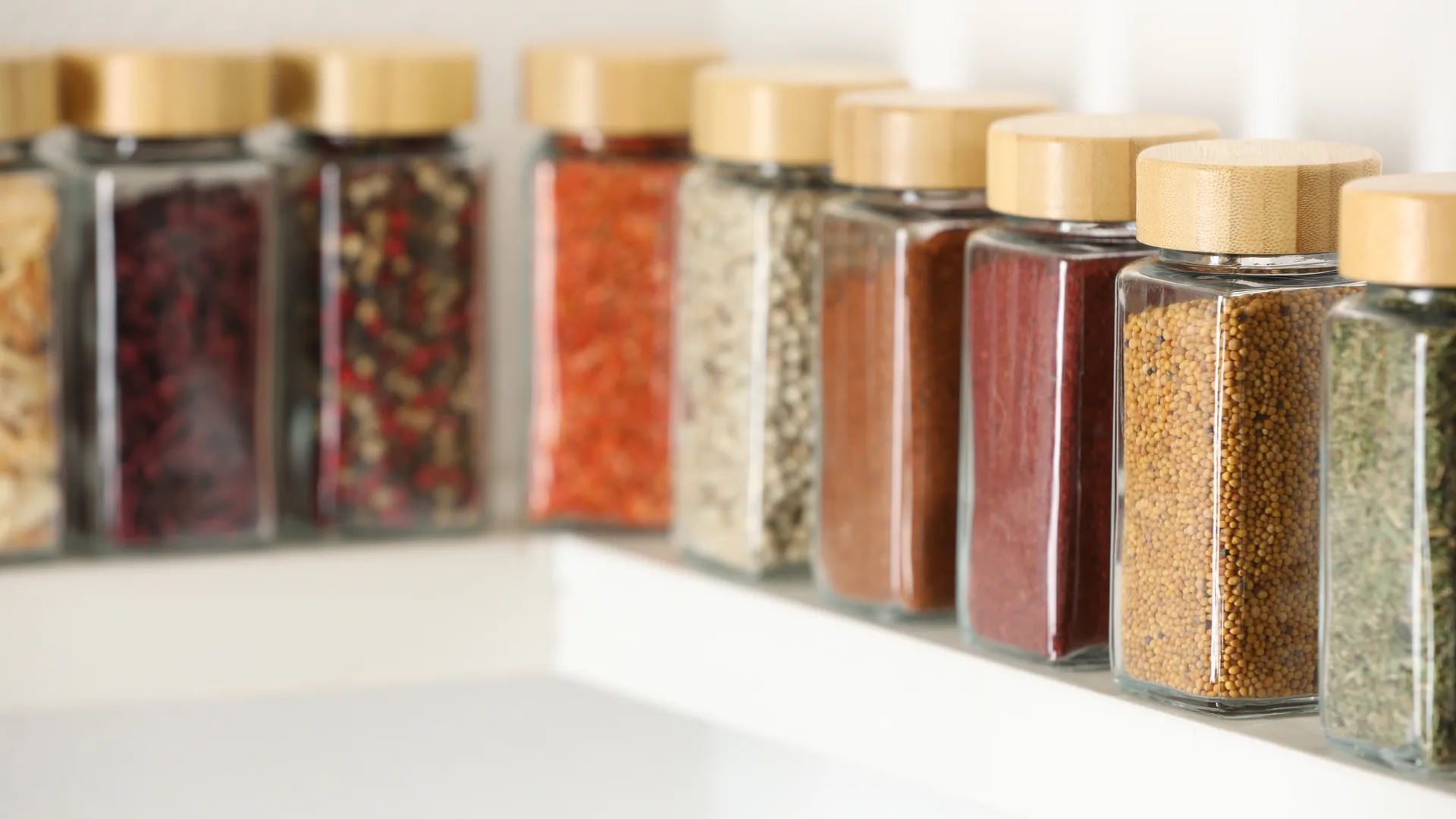
Read the ingredient line and the method together. Does the author ask you to stir in a condiment, whisk in powder, or prepare whole seeds? Buy that form first. If you want to experiment later, change one thing and record the result.
The same habit helps with other ingredient choices. Our sesame-label guide separates seed color from preparation, so choosing the right jar starts with the detail that affects the dish.
Source note
This researched ingredient comparison uses the manufacturer references linked above, checked October 21, 2026. No side-by-side cooking or tasting test is claimed. Stock photographs illustrate mustard forms and pantry organization; they do not identify the pictured condiments as particular brands.