
Small-space Christmas decorating starts with the surface you can spare. Choose one existing table, cabinet top, or shelf, measure its usable area, and build a compact display there. A miniature tree and a few repeated details can establish a holiday corner without occupying the walking space needed for everyday life.
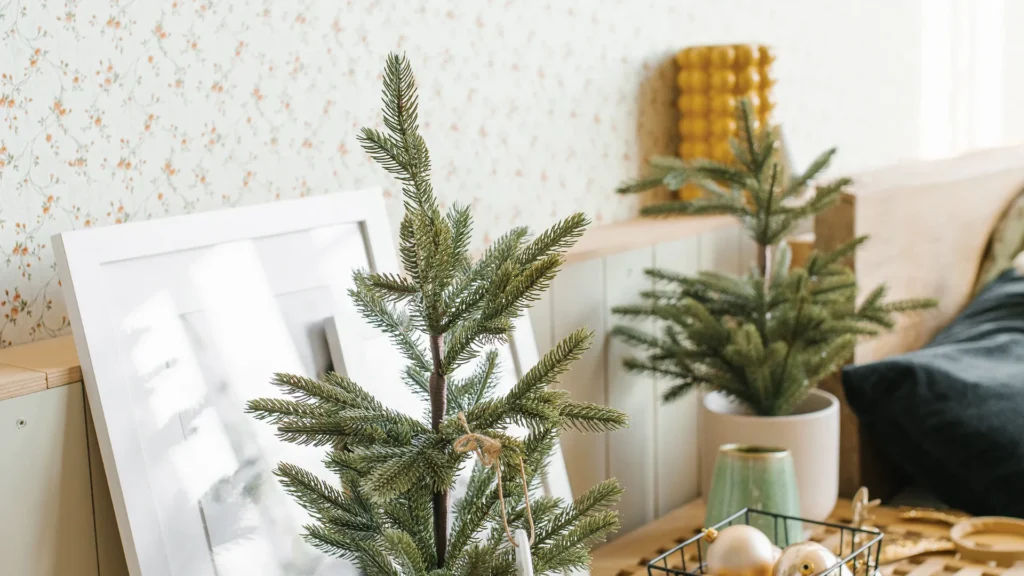
Borrow the structure of the tabletop-tree photo
The photograph pairs small trees with ordinary room furnishings. The useful idea is scale: the trees belong to a surface rather than taking over the floor. Use it as a visual reference, then check what your own table can hold and how the room functions around it.
Choose a stable, level surface. Do not balance a plant or tree on stacked books, an unstable box, or a narrow ledge to make it taller. A decorative container should hold the item securely and protect the furniture from moisture if a live plant needs watering.
Measure the space people still need
Look at the room when it is being used, including pulled-out chairs, opened cabinets, and the route to doors. A display that fits an empty room can interfere with dinner or a visiting mobility aid. Preserve the clearances people in the home actually need, and choose a different surface if the display gets in the way.
The CPSC’s holiday guidance calls for keeping trees out of traffic and away from heat sources. Check those constraints before deciding where a small tree looks good. A decorative display should not become a reason to move an essential lamp, block an exit, or hide a control someone needs.
Choose one anchor and two supporting details
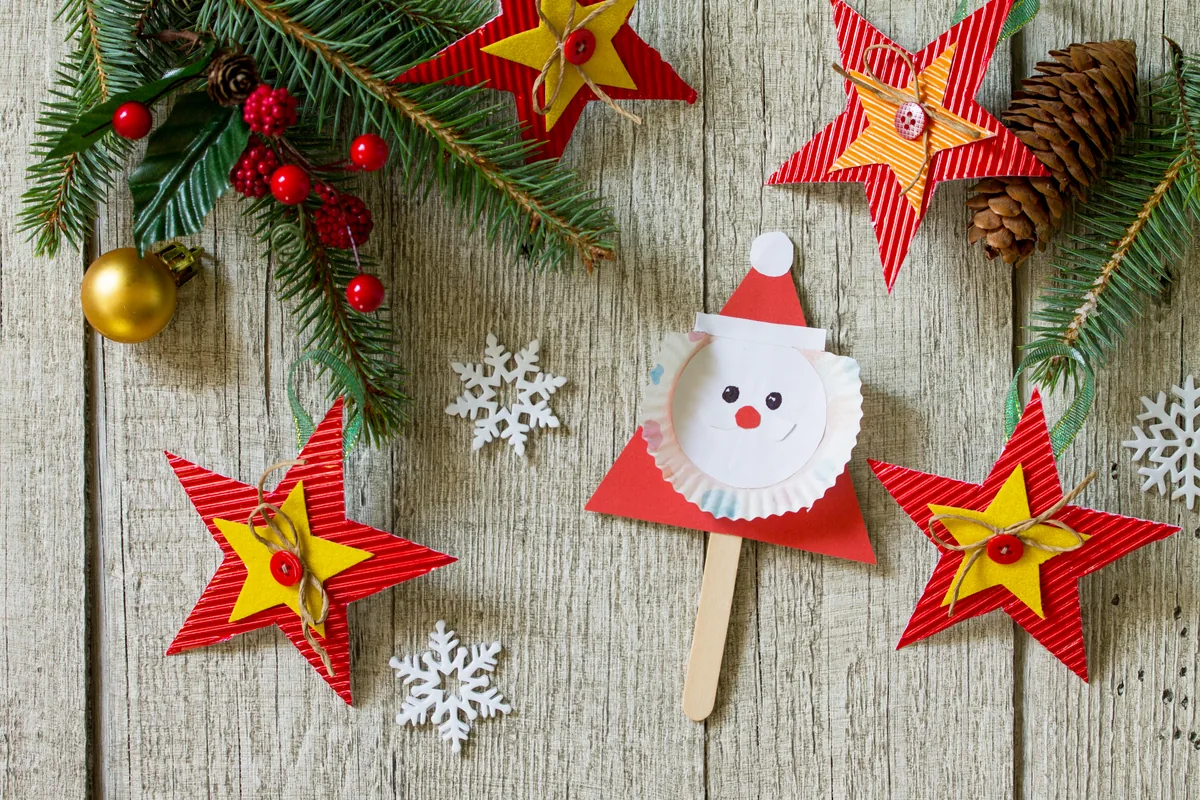
A practical starting arrangement is one small tree, one low object, and one repeated material. The low object might be a closed gift box or a tray already owned. The repeated material could be a paper star, a ribbon color, or a small group of plain ornaments. Set the anchor down first and add the others one at a time.
Keep the arrangement low enough to see and use the room around it. If the surface is also a dining table, leave the space needed for plates, serving dishes, and conversation. If it is a working desk, a single small object may be the appropriate limit.
Use repetition instead of adding more objects
Repeat one detail elsewhere only if that second spot has a purpose. A matching paper tag on a gift near the display can be enough. You do not need miniature versions of every decoration in every room. Limiting the palette also makes it easier to use pieces from previous years that might otherwise look unrelated.
Try the display in ordinary daylight and in the lighting used at night. If the shapes disappear against the background, change the placement or remove an object before buying another light. A photograph taken from the doorway can help you see the arrangement at the scale guests will experience.
Keep lighting straightforward
Use only lighting suitable for its location and follow the manufacturer’s instructions. The NFPA’s winter-holiday guidance says to replace damaged light strings and turn off lighted decorations before leaving or going to bed. Keep cords out of walking routes, and do not use a light strand as a structural tie.
Flameless decoration avoids adding an open flame to the arrangement, but battery products still require their own instructions and secure battery compartments. Skip lighting entirely if there is no suitable place to run it.
Plan where the display will go in January
Before adding another ornament, identify the box or shelf where it will live afterward. Keep a simple inventory: item, quantity, approximate size, storage location, and any care instructions. A photograph of the finished arrangement can serve as a setup reference next year.
For a suggested stopping rule, keep only what fits the chosen surface and the available storage. That makes the project a manageable seasonal change rather than an expanding collection. The display has done its job when the room feels festive and still works for the people using it.
Sources
Related projects and guides
- Paper Christmas Decorations: Make a Small Set That Works Together
- Reusable Christmas Gift Wrapping: Fabric, Bags, and Boxes
- More from Replicate Workshop
Found an error or an outdated detail? Send a correction for this article.