
Reusable Christmas gift wrapping works when the next use is easy. Start with a clean bag, box, or piece of fabric you already have, choose a gift it can comfortably hold, and decide whether the wrapping stays with the recipient or comes home with you. Buying a new reusable item for every present is not the only way to make packaging last longer.
Match the material to the gift
- Saved gift bag: useful for awkward shapes and several small items. Check the bottom, handles, and seams before adding weight.
- Sturdy box: useful when the gift needs a regular shape. Choose one close to the gift’s size and keep any internal protection it needs.
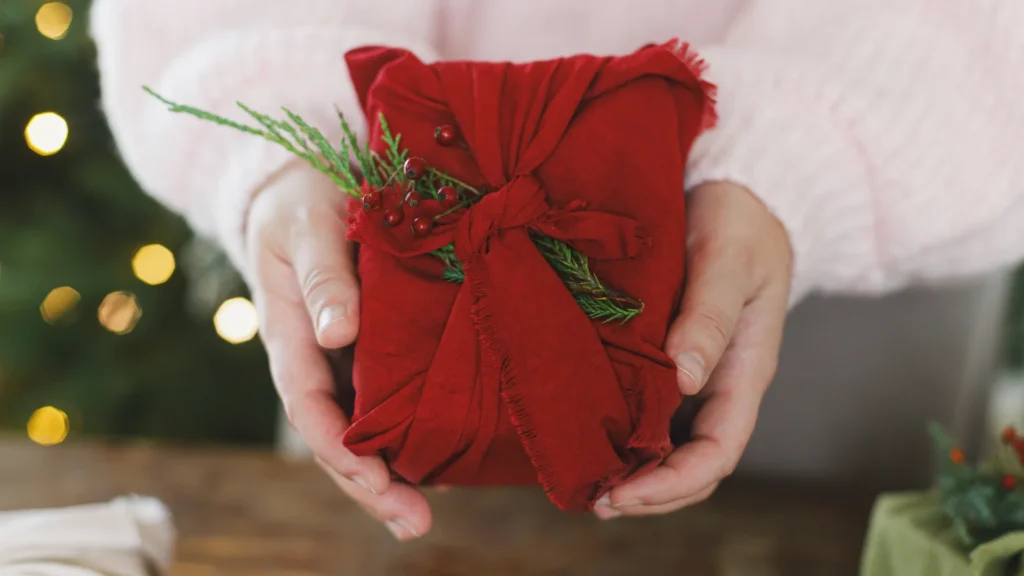
- Fabric: useful for a boxed item or a soft gift, provided the cloth covers it without straining the knot.
- Reused paper: useful for another flat-sided parcel when the sheet still has a clean, usable area.
A decorative cloth or bag does not replace protective shipping packaging. For mailed gifts, follow the carrier’s current packing instructions and separate the presentation layer from the outer shipping box.
Try fabric without hiding the practical questions
Use a clean cloth with finished edges and no loose embellishments. Lay out the gift first and check whether the fabric can cover the corners and close without pulling tightly. A bulky item may need a larger cloth than expected. Test the arrangement with the actual gift before deciding the cloth is the right size.
For established folding methods, the Japanese Ministry of the Environment provides a furoshiki wrapping guide. Follow its diagrams for the particular shape instead of assuming every fabric knot has the same construction. A fabric-wrapped gift should still be supported underneath when carried, especially if it contains something fragile.
If the cloth is a tea towel or scarf intended as part of the gift, say so. If it is part of a family wrapping collection that you hope to reuse, ask for it back after opening. Neither arrangement should be a surprise.
Make saved bags and boxes feel intentional
Remove old recipient names and price labels without damaging the container. Choose one repeated detail, such as a paper tag or a length of saved ribbon, rather than adding several new accessories. A handwritten name can be enough. Do not cover a needed product warning or ingredient label inside the package.
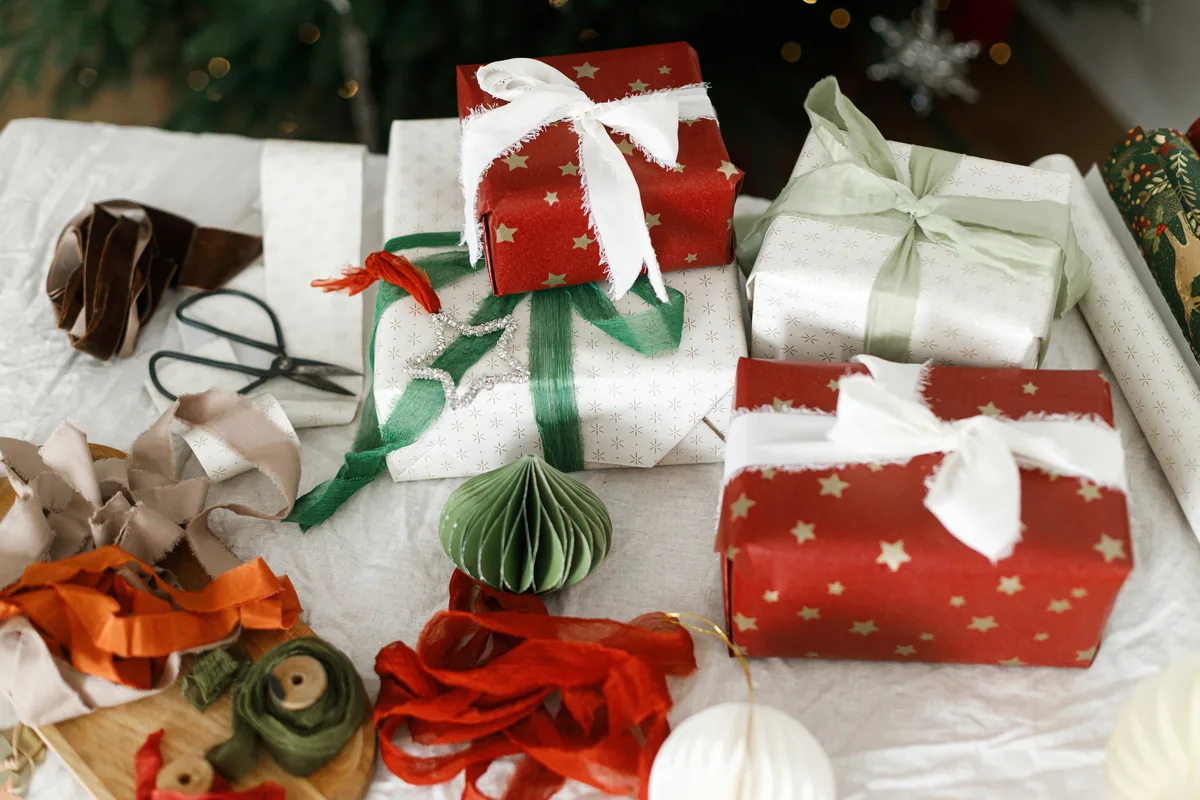
A useful packing order is gift first, protection second, closing third, and decoration last. That keeps a beautiful bow from disguising a box that does not shut or a bag that is too heavy for its handles. Leave a little space to open the package without cutting near the gift.
Give the wrapping a clear next job
Set out a place to collect reusable bags, flattened boxes, and ribbons after gifts are opened. Keep them separate from damaged material and food waste. Fold cloth only when it is clean and dry, and keep tags in a small envelope so they do not disappear between seasons.
The EPA’s recycling guide encourages reusing gift bags, boxes, and tissue paper. It also notes that shiny or laminated gift wrap often cannot be recycled. Check the local collection program before putting decorative paper in the recycling bin. Reusable, recyclable, and made from recycled material describe different things.
Set a wrapping budget, not just a gift budget
For an illustrative ten-gift plan, buying ten new $4 fabric wraps would add $40 before tax. Reusing five cloths or bags already available and buying five $4 wraps would mean $20 in new purchases. These are arithmetic examples, not market prices or proof of a particular environmental saving.
Count the supplies you have, identify the gifts that still need packaging, and buy only the missing sizes. If a reusable wrapper is more expensive than you want to spend, a saved bag can be a better fit for this year. The practical goal is packaging you and the recipient will use again, without turning the wrapping into an obligation.
Sources
- Japanese Ministry of the Environment: furoshiki wrapping diagrams
- EPA: gift-wrap recycling and reuse
Related projects and guides
- Holiday Gift Exchange Ideas: White Elephant, Name Draws, and Favorite Things
- How to Host a Family Favorite Things Party Without Budget Surprises
- More from Replicate Workshop
Found an error or an outdated detail? Send a correction for this article.