
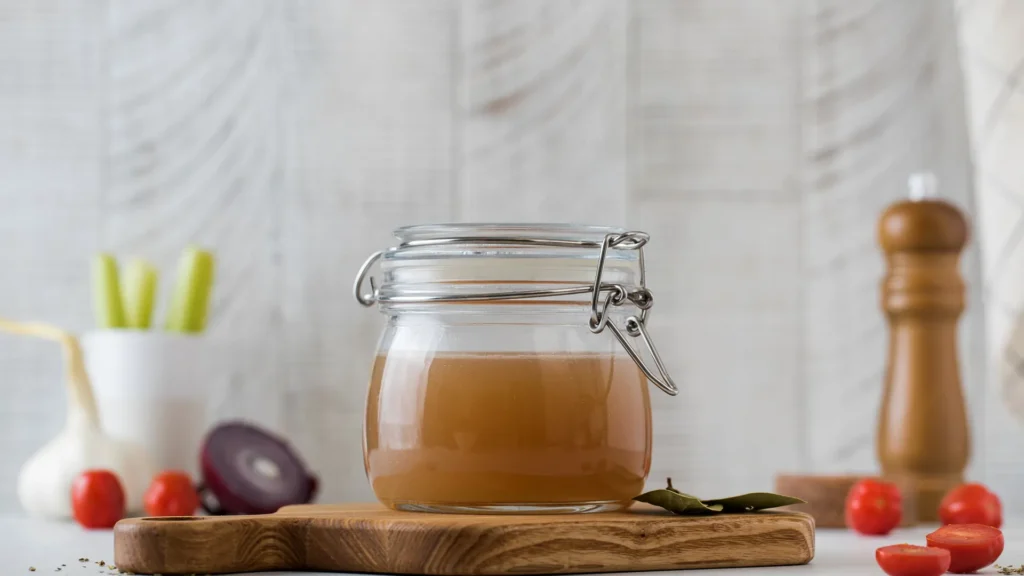

When a recipe calls for cups of broth, check whether the product in your hand is ready-to-use liquid or a concentrate that needs preparation. A spoonful of base supplies flavor, but it doesn’t supply the cup of liquid the recipe expects.
Read the package directions before adding anything to the pot. The useful comparison is the amount of prepared broth, not the size of the jar or the number of cubes.
Start with the product’s dilution
Better Than Bouillon’s FAQ gives a specific example: dissolve one teaspoon of its base in eight ounces of hot or boiling water to replace an eight-ounce can of broth. That instruction belongs to that product; check the directions on another paste, powder, cube, or condensed product rather than carrying the ratio over automatically.
Using that stated ratio, use three teaspoons with 24 fluid ounces of water. This is dilution arithmetic, not a tested soup recipe or a reason to change the liquid in a recipe that already has its own concentrate instructions.
The company also says its bases aren’t ready to eat and must be dissolved in warm or boiling water or cooked with heat. Follow the product’s preparation directions rather than treating a spoonful from the jar as ready-to-use broth.
Don’t add the liquid twice
If you’re preparing broth separately, measure the amount the recipe requests from that prepared liquid. If the recipe itself directs you to add base and water, follow that complete instruction. Don’t then add another full quantity of broth because “broth” also appears in your shopping notes.
The reverse mistake is easy too: adding base to a recipe that needs several cups of liquid, then leaving out the water. Keep the flavoring and liquid quantities together when you write down the substitution.
For a recipe you want to repeat, a note such as “base prepared according to its label, then measured for the recipe” is clearer than “used bouillon.” Keep the brand, variety, and any change you actually made beside it.
Treat cubes as another product to check
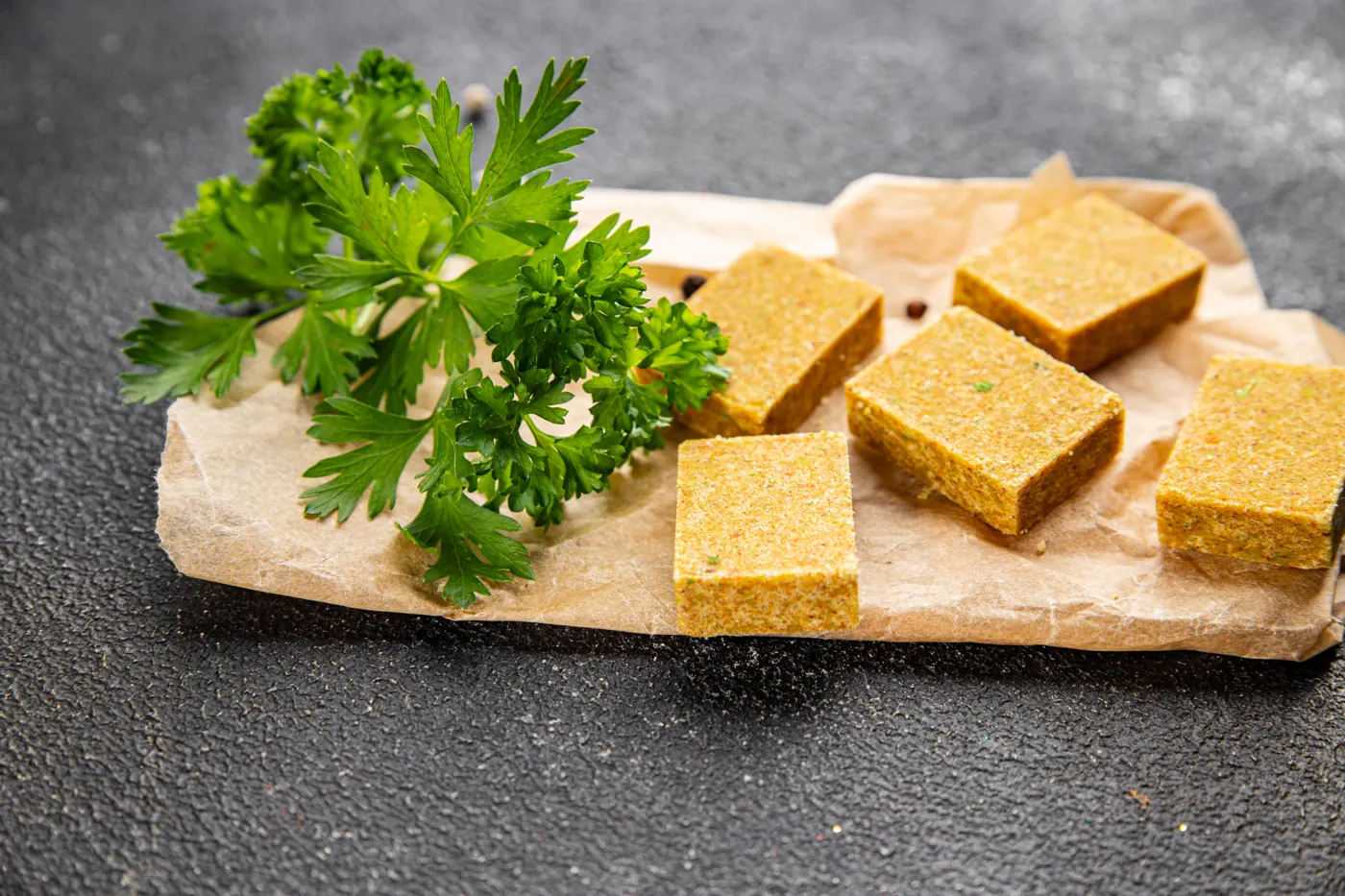
A cube is a portion of a particular product, not a universal unit of broth. Read how much water that package specifies and whether the recipe wants the prepared liquid or the concentrate itself.
Before starting, check:
- The exact product and variety you’re using.
- Its dilution and preparation directions.
- The quantity of prepared liquid the recipe needs.
- Whether the recipe already accounts for the concentrate and water.
Keep seasoning decisions separate from the dilution calculation. If you’re deliberately changing the concentration, record that change too. Otherwise, the next batch starts with a different ingredient while your notes suggest you repeated the same recipe.
Sources and photographs
Better Than Bouillon guidance checked October 22, 2026. The numerical example follows its stated dilution, and no Replicate taste comparison is reported. Licensed stock photographs illustrate a jar of broth and bouillon cubes; they don’t identify the named brand, a dilution ratio, or a storage method.
Found an error or an outdated detail? Send a correction for this article.