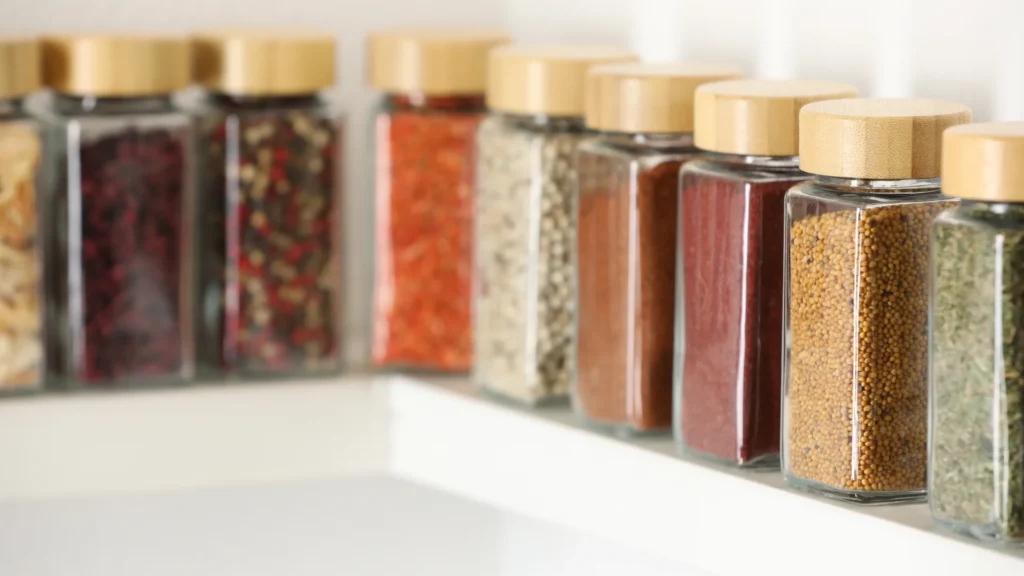

Store spices in tightly closed containers in a cool, dry place away from direct sunlight. A cabinet or drawer away from the stove, sink, and dishwasher is usually a practical choice. Keep dry measuring spoons nearby, and measure spices away from steaming food so moisture stays out of the jar.
The attractive spot is not always the best one
The shelf above a range can be convenient, but it is exposed to more warmth and cooking moisture. A location away from the stovetop and strong sunlight is generally kinder to dried spices and herbs. The University of Minnesota Extension recommends airtight containers, away from heat and light, for dried herbs. A cabinet or drawer is often more practical than a display in full sun.
Do not shake a spice jar directly over a vigorously steaming pot. Spoon out what you need first and close the jar. This keeps moisture from settling into the remaining contents. If powder clumps, check for signs of dampness or spoilage rather than assuming it only needs a harder shake.
McCormick’s storage guidance specifically recommends tightly capped containers away from heat, moisture, and sunlight. University of Maryland Extension also recommends labeled, airtight containers for dried herbs.
Build a replacement system around use
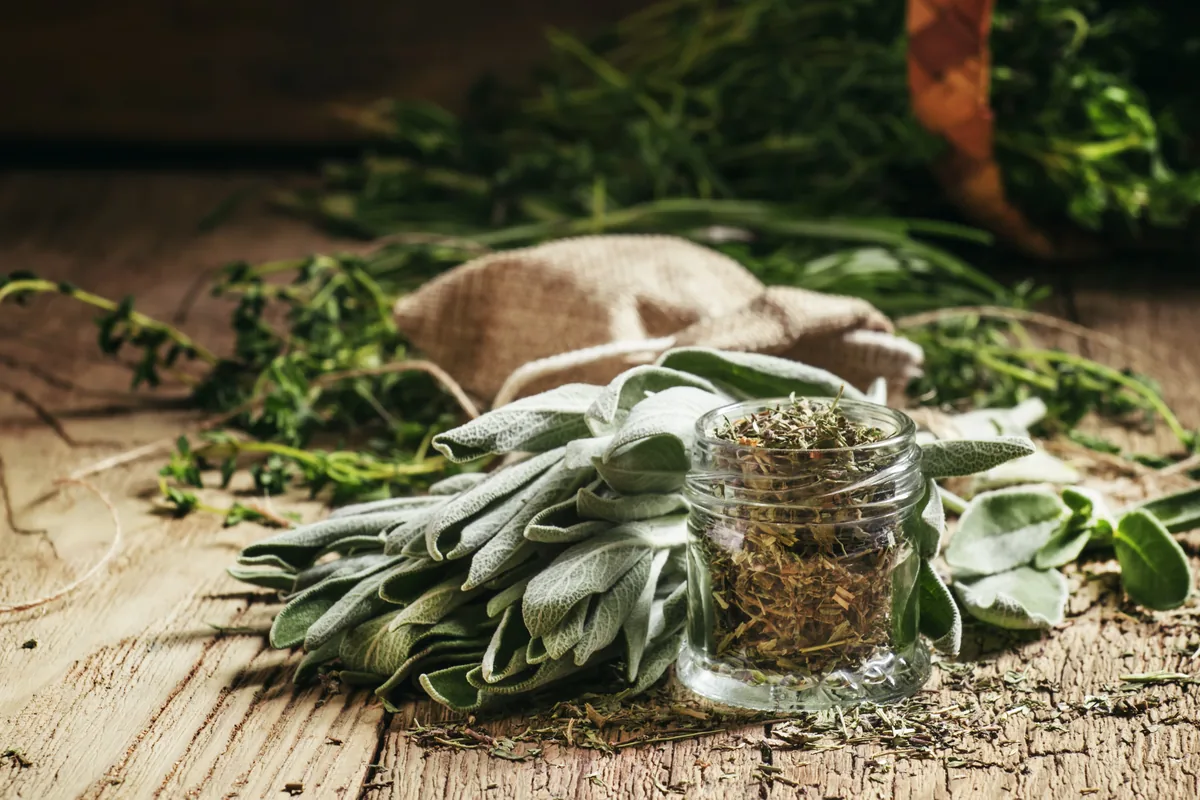
Label the ingredient accurately, including whether a blend contains salt or allergens. Add a purchased, opened, or refilled date, depending on what your records can support. A date is a prompt to inspect; it is not proof that a spice is still aromatic or that it has spoiled. Color and fragrance, compared with a fresh reference when practical, help decide whether it is worth replacing.
What not to do
Avoid publishing blanket expiration claims for all dried herbs and spices. Plant parts, processing, grind size, and storage differ. The objective is to make seasonings easy to find while protecting their flavor and their true identity.
A simple spice-drawer setup
- Choose a cabinet or drawer away from heat, steam, and sun.
- Use clean, dry containers with lids that close securely.
- Label the ingredient, physical form, and the date you opened or refilled it.
- Keep original packaging details for blends, allergens, and special formulations.
- Buy quantities you can use while their aroma is still useful.
A weak aroma is a reason to replace a seasoning for flavor. It is not a safety assessment. Discard contents showing mold, insects, or evidence of contamination rather than trying to fix them by drying or grinding.
Sources
Related guides
Found an error or an outdated detail? Send a correction for this article.