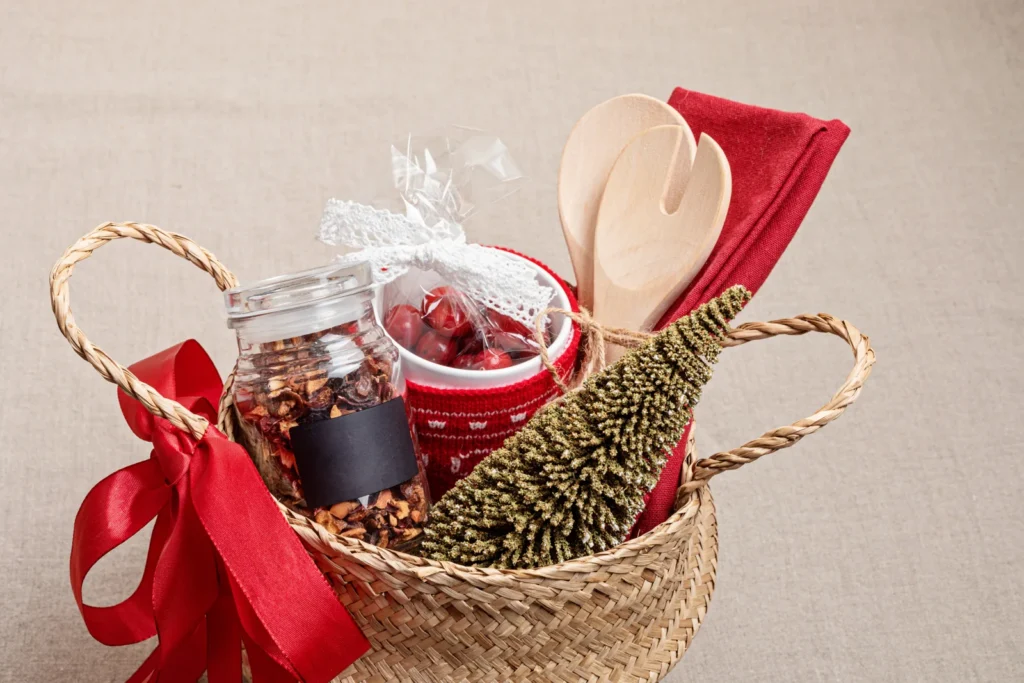

A favorite things gift bag party turns everyone’s small discoveries into one shared collection. Each participant chooses one favorite item and brings an identical copy for every person taking part, including themselves. At the party, everyone adds one copy to each bag, basket, or stocking. Every person leaves with the same assortment.
There are no names to draw and no gifts to steal. The activity is introducing the favorites and assembling the kits together. The host provides the containers; the guests provide their chosen contributions. A Christmas stocking works, but so does a Halloween treat bucket, a Valentine’s gift bag, or a small summer picnic tote.
The most important invitation detail is the actual shopping commitment. An item that costs $3 to $6 can become a substantial purchase when someone needs eight or ten copies. Choose the head count and a narrow price target before anyone shops.
How the everyone-gets-one format works
Imagine eight participants, including the host. One person chooses a small notebook, another brings chocolate, and another brings a compact kitchen tool. Each person brings eight identical copies of their own choice. The host puts eight containers on the table, and everyone places one contribution in each.
At the end, each bag contains eight contributions: one from each participant, including the bag owner’s own favorite. Nobody needs to buy eight different presents, and nobody goes home missing one person’s pick.
- Bring: one chosen item, repeated for the full participant count.
- Spend: the agreed per-copy amount multiplied by that count, plus any stated extras.
- Receive: one complete kit containing everybody’s contribution.
- Host provides: one container per participant, labels, and a place to assemble them.
The examples below illustrate the counting and design choices; they aren’t a priced product shopping list. For a family-focused discussion of household entries and lower budgets, see the family favorite things party budget guide.
Choose a $3-$6 item target, then show the full total
Use $3 to $6 as the range to consider while planning. On the actual invitation, choose a narrower expectation, such as about $4 per copy, with a $5 ceiling. Otherwise, one person could contribute double what another spends while both follow the rules.
| Total participants | At $3 per copy | At $4 per copy | At $6 per copy |
|---|---|---|---|
| 6 | $18 | $24 | $36 |
| 8 | $24 | $32 | $48 |
| 10 | $30 | $40 | $60 |
These totals cover the contributed items only, before tax, delivery, or other purchases. With eight participants and a $4 target, each person buys eight copies for $32. At the $5 ceiling, their item cost could reach $40. State both figures rather than calling it “a $4 exchange.”
Two people participating separately buy sixteen items between them. If that household total is uncomfortable, make households the entries, reduce the per-copy target, or use fewer participants. Decide which before anyone commits. A gathering can include friends who aren’t participating in the gift activity.
Shopping in multipacks is fine when each recipient receives a complete, usable item with the information they need. Check the checkout total as well as the unit price: a pack of twelve still costs twelve units even if the party needs eight.
Set the count and item size before shopping
Send an invitation first, collect RSVPs, and then confirm the final purchase instructions. “Eight participants, eight copies” is much clearer than asking people to buy now and promising a head count later.
Choose the container before giving guests a size limit. Measure its usable opening, depth, and height, then allow space for every contribution. A suggested starting limit might be an item small enough to fit in one hand, with no glass and no need for refrigeration. The right dimensions depend on your actual basket or bag.
If identical kits matter, ask each contributor to bring the same item, size, and quantity in each copy. A variety pack of different flavors makes similar bags, not identical ones. That’s fine only if you’ve agreed on the variation.
Small favorite-things ideas to consider
Ask guests to choose something they can explain, rather than something selected only because it was near the checkout. These categories may offer options around your planned price point, but prices and availability need checking before purchase.
- For a desk: a pocket notebook, a complete pen set, bookmarks, or small stationery supplies.
- For a kitchen: bag clips, a compact spatula, a dishcloth, or a small measuring tool.
- For a snack break: sealed chocolate, tea, coffee, or another individually labeled favorite.
- For making: useful clips, a small mending item, or supplies that don’t require a specific machine.
- For everyday use: a compact reusable bag or another small, self-contained item.
Check restrictions privately before encouraging food, scents, or skin products. Keep ingredients and instructions attached; don’t split packaging if recipients lose information they need. For a mixed group, avoid size-dependent clothing and accessories that work with only one device.
A simple category sign-up can prevent eight people from bringing chocolate. Ask for “stationery,” “kitchen,” or “food” rather than making everyone reveal the exact item. If someone can’t find enough identical copies within the budget, let them change their choice.
Let the container carry the theme
The container is the host’s contribution to the presentation. It doesn’t need to cost more than the contents. Use one style and size for every participant, add clear name labels, and choose handles or closures that make the finished kit easy to carry.
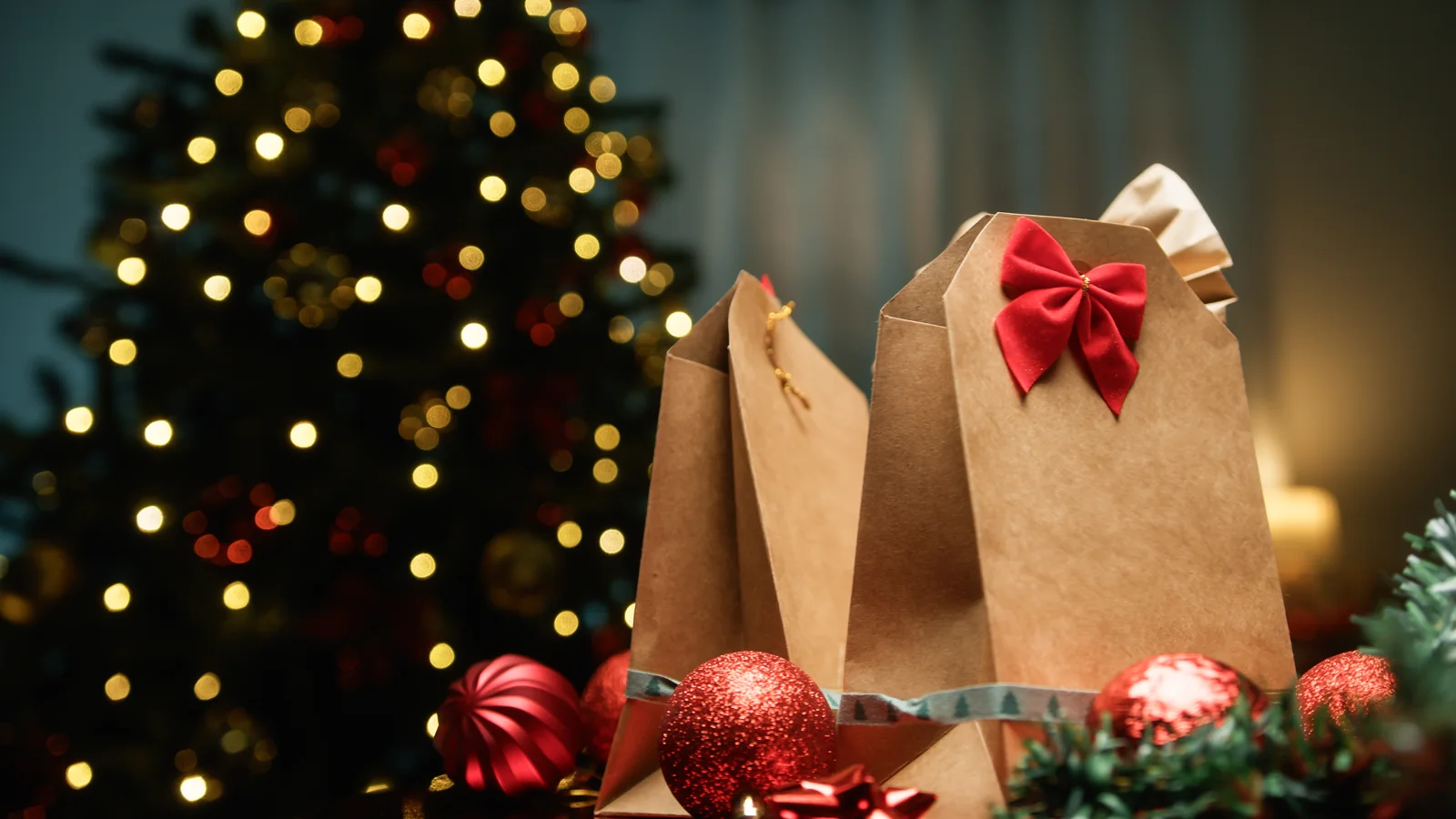
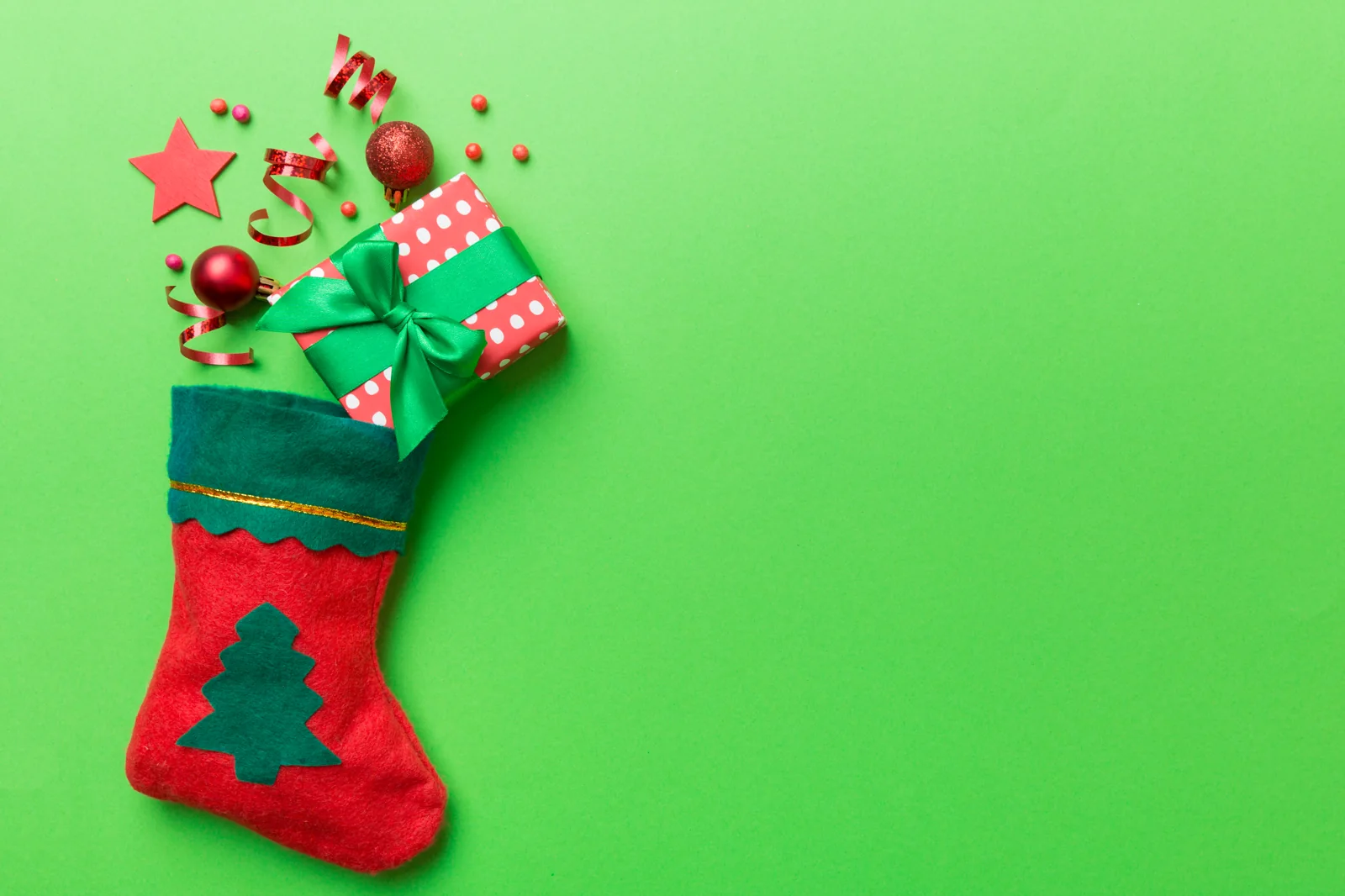
Christmas: stockings or reusable gift bags
Use stockings for genuinely small items, or reusable bags when the contributions need more room. Keep stockings on the assembly table rather than trying to hang them as they fill. A flat name tag and one ribbon are enough to tie the set together.
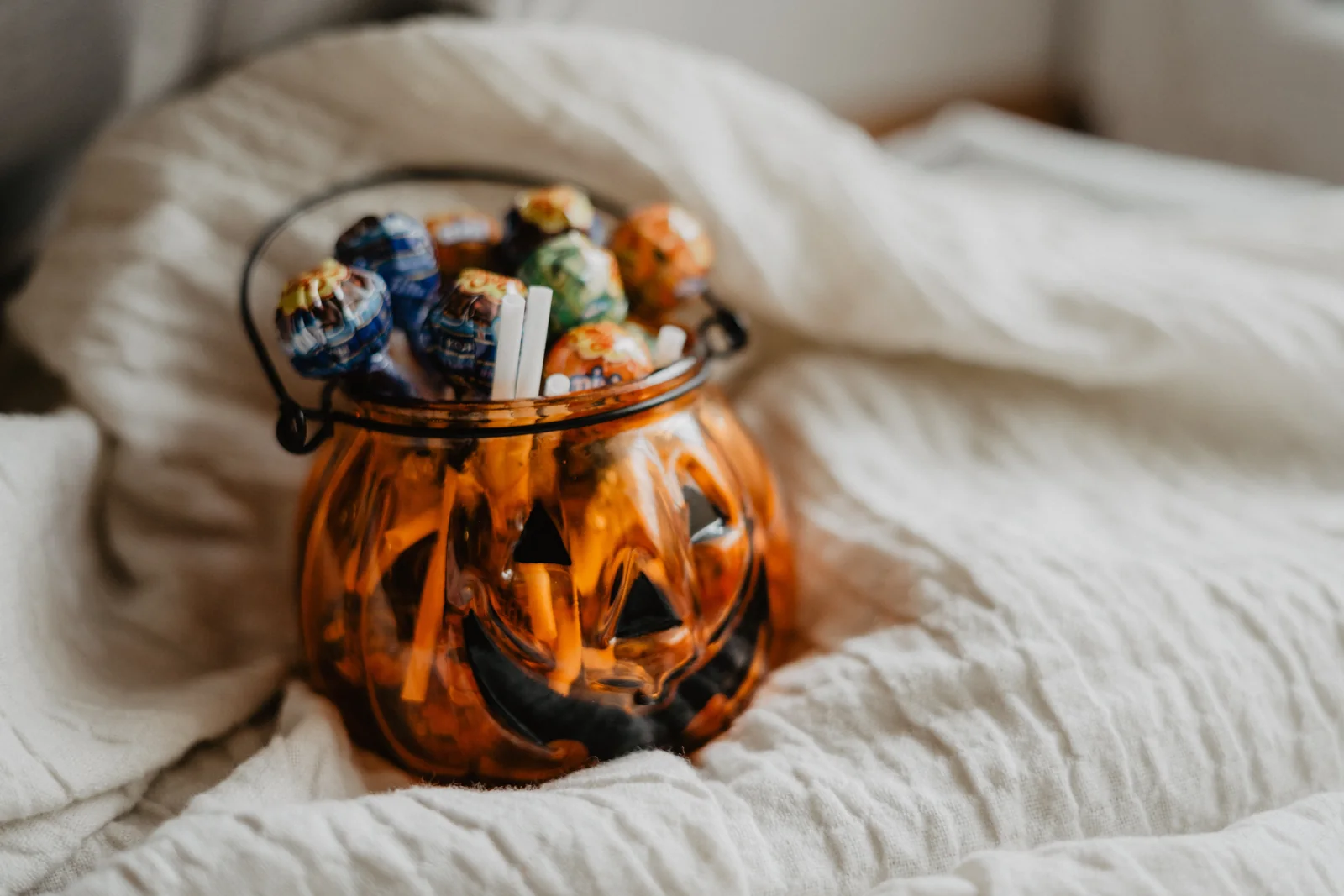
Halloween: treat buckets or spooky bags
Black bags, pumpkin buckets, or small cauldrons can hold the collection. Try a “small things that make October better” theme, leaving room for stationery, snacks, and household favorites. Keep the spooky part in the presentation if guests would rather receive useful things than novelty decorations.
Valentine’s Day: candy-shop bags or friendship boxes
Choose pink or red bags, small boxes, or reusable pouches. A candy theme works when the group agrees on food restrictions; a broader “little things to share” theme leaves room for nonfood gifts. Label treats clearly so the container doesn’t hide important packaging.

Spring, birthdays, and summer gatherings
Small baskets can suit a spring table, while a reusable tote fits a picnic theme. For a birthday gathering, frame this as an optional shared activity rather than quietly adding a gift exchange to an invitation that already asks for a birthday present. Choose containers people can use again.
Set up an assembly table that makes counting easy
Give each participant a labeled container. Arrange the containers in one line or a reachable loop, with contributions staged separately. Keep refreshments off the assembly surface so spills don’t become part of the take-home kit.
- Count first. Match the containers to the confirmed participant list and check every stack has the right number of copies.
- Share one favorite at a time. Let the contributor describe what it is and why they chose it. Keep speaking optional.
- Fill every container. Add one copy to each, including the contributor’s own container. A seated guest can have the host pass items for them.
- Finish one contribution before starting another. This makes a missed bag easier to spot.
- Check against a master list. Every kit should contain one of each contribution before adding tissue or closing it.
Don’t assemble a separate “host basket” after filling the guests’ bags. The host is already on the participant list, contributes the full number of copies, and receives the same kit.
Invitation wording with the count and cost included
We’re making favorite-things gift bags together. Once RSVPs are confirmed, I’ll send the final participant count before anyone shops. Plan on eight participants, including you: bring eight identical copies of one small favorite, with one copy for yourself. Aim for about $4 per copy, with a $5 ceiling. That’s about $32 in items, up to $40 at the ceiling, plus your tax or delivery. I’ll provide the matching take-home containers. Please keep your contribution compact and let me know privately about food or scent restrictions. You’re welcome to join the gathering without participating in the bags.
Add the date, location, RSVP deadline, theme, and the actual size limit after measuring your containers. Then send a final note: “The count is confirmed at eight participants. Please bring eight copies.” If the final count changes, update the total cost before people buy.
What if someone cancels or joins late?
Once shopping begins, don’t add another participant without checking with everyone who would need an extra copy. A late guest can still come to the party; participation in the bags is a separate commitment.
If someone cancels after buying, agree whether their kit will be assembled for pickup and how their contribution will arrive. That can preserve the original count. If they withdraw entirely, tell the group what changes and whether extra purchased copies stay with their buyers. Don’t silently redistribute someone’s contribution.
For a missing or short contribution, pause assembly and decide openly whether the host has a planned spare, the contributor can supply the remaining copies later, or the group will omit that item from all kits. Avoid filling the first few bags and leaving the last person with less.
Common questions
Do I really bring one for myself?
Yes. Including yourself makes every finished kit identical. With eight participants, bring eight copies. Bringing seven creates a different exchange where each person skips their own item.
Does everyone bring a whole gift basket?
No. Each person brings one selected favorite in multiple identical copies. The host supplies the empty containers, and the group assembles the complete kits together.
What if $3-$6 each costs too much for our guest list?
Lower the per-copy amount, reduce the number of entries, or choose the three-copy favorite things exchange. Keep the cost decision ahead of the shopping request.
For the broader choice between games and gift formats, see the gift-exchange comparison. This version works when the goal is one shared collection: a small favorite from each person, packed into a container that fits the occasion.
Inspiration: KariAnne Wood’s Favorite Things party guide at Thistlewood Farm describes a three-gift drawing. This article follows an everyone-gets-one assembly format, with matching take-home kits.
Photography: licensed stock images from Envato Elements, used to illustrate gift ideas and hosting setups. These images do not document a Replicate Workshop party.
Featured photo: OksaLy / Envato Elements.
Found an error or an outdated detail? Send a correction for this article.