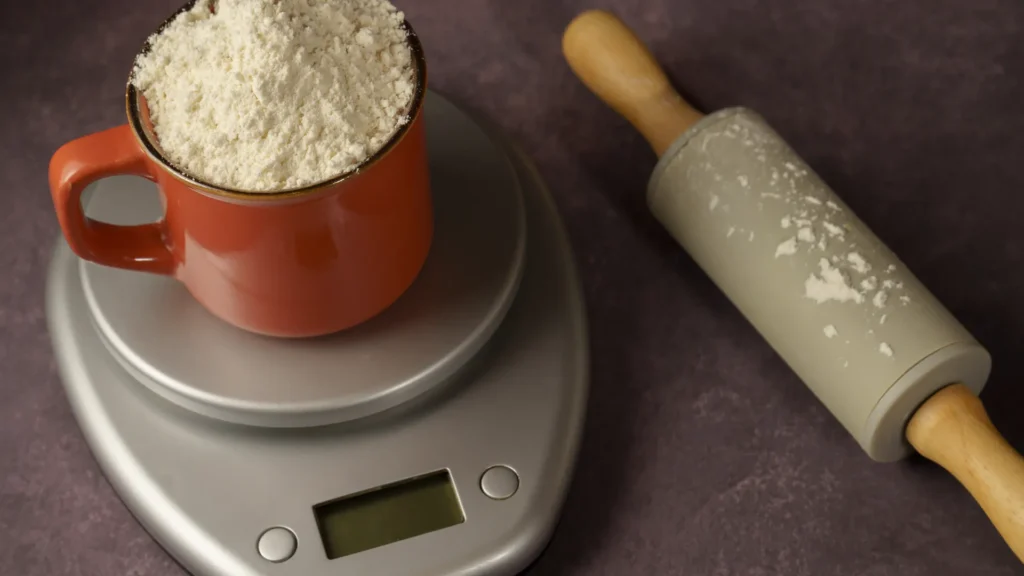

A cup measures volume. A scale measures weight. With flour, the amount packed into that volume depends on how you fill the cup. That is why two apparently similar cups can put different amounts of flour into a recipe.
When the recipe supplies a flour weight, use that weight and the specified flour. If it gives only cups, look for the author’s measuring instructions before choosing a conversion from somewhere else.
The way you fill the cup matters
King Arthur Baking’s flour-measuring guide explains that densely packed all-purpose flour can weigh more than flour that has been fluffed and gently added to the cup. Its volume method is to fluff the flour, spoon it into the measuring cup, and level the top with a straight edge.
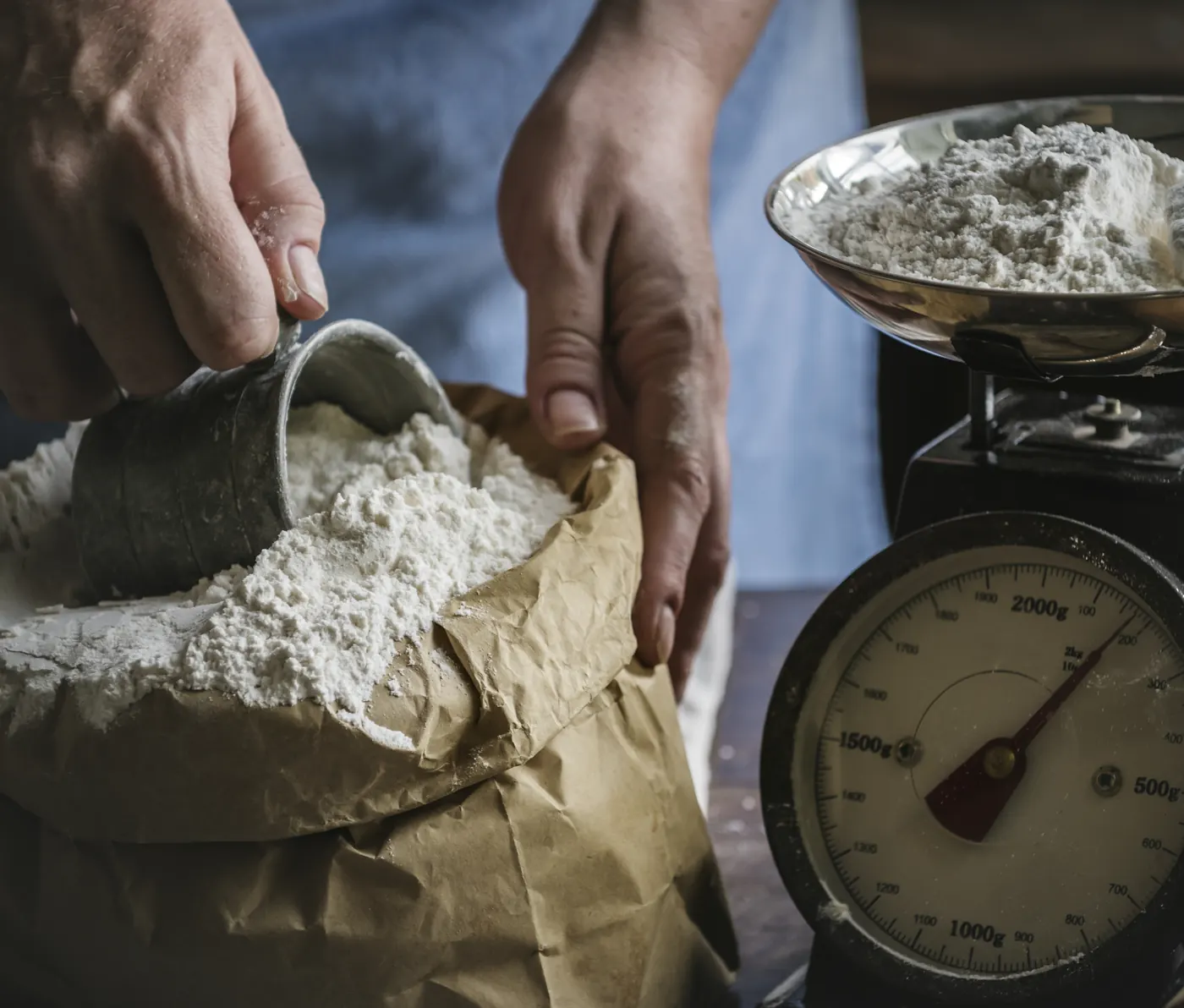
Scooping straight from the bag and spooning loosened flour into a cup are different actions. If the recipe was developed with one method, silently switching to the other introduces a variable before the mixing begins.
A heaped cup also isn’t the same measure as a level cup. Use the actual measuring tool and method the recipe calls for; a drinking mug is not a substitute simply because it looks about the right size. King Arthur’s recipe-success guide distinguishes dry measuring cups from graduated liquid measures and explains how to fill each.
Use the recipe’s grams before a general chart
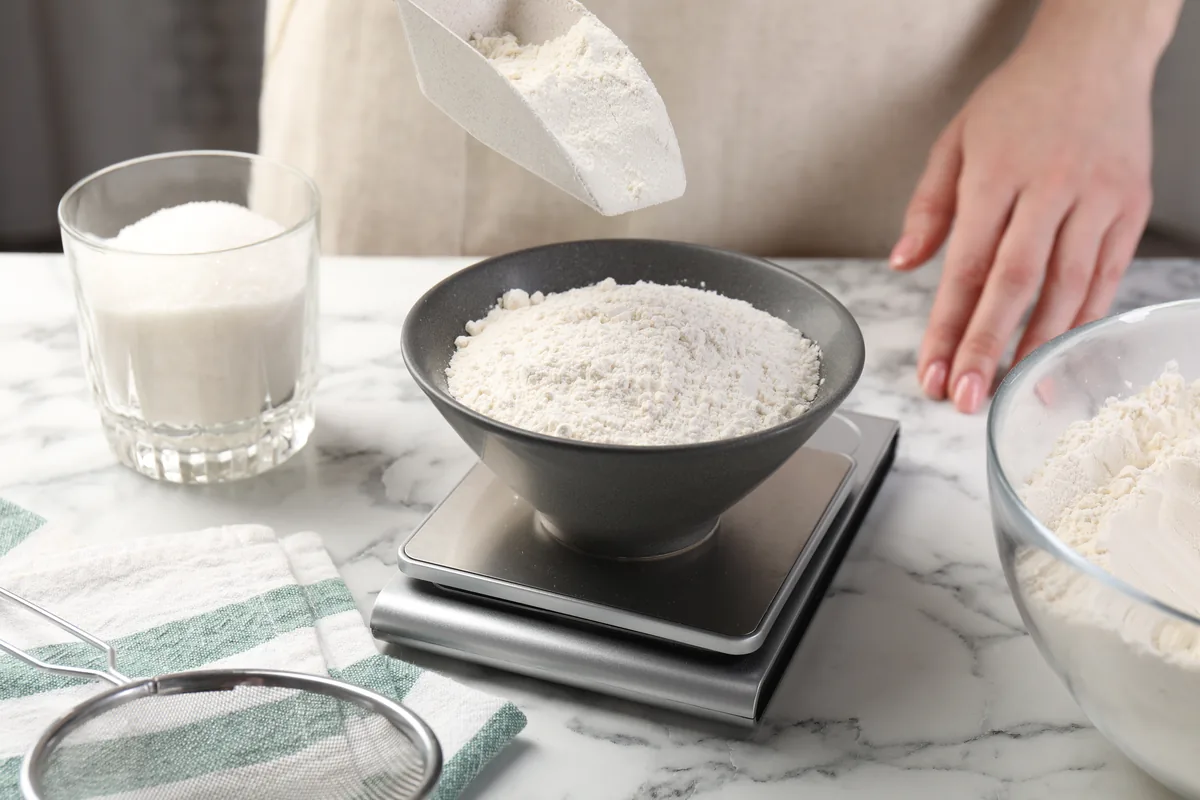
King Arthur’s ingredient-weight chart lists 120 grams for one cup of all-purpose flour. That is a useful reference for its stated ingredient and convention. It isn’t a universal weight for every cup of every flour.
The chart lists other ingredients separately because volume-to-weight conversions depend on the ingredient. Keep almond flour, all-purpose flour, and any other flour identity attached to the number. Don’t use a conversion to erase an ingredient change.
For a recipe that already gives grams, there is no need to convert its cups again. Follow its stated weight. If the author provides only volume, check for a measurement note or ask for clarification when the quantity is important to the result.
Weigh the flour, not the bowl
Use the scale’s gram setting and tare function so the empty vessel’s weight isn’t included. Add the flour until the display reaches the recipe’s requested amount. Check your scale’s instructions if you’re unsure how its controls work.
For a simple arithmetic example, three cups at a stated conversion of 120 grams per cup would be 360 grams. That calculation doesn’t establish that 360 grams is correct for a different author’s three-cup recipe. It only applies the conversion you’ve chosen.
Keep the method with your recipe notes
Write down the flour, the amount, and whether you weighed it or used a specified cup method. If you’re adjusting an old family recipe, record the change instead of replacing the old instruction without a note.
When a bake differs from what you expected, the measurement record gives you one useful thing to investigate. It doesn’t prove flour quantity caused the result. Keep the rest of the recipe and process in view before changing several things at once.
The goal is repeatability. Once you know what the recipe means by its flour quantity, make that meaning easy to recover the next time you bake it.
Source note
This researched explanation uses the King Arthur Baking references linked above, checked October 21, 2026. The arithmetic is an example, not a measured cup comparison or Replicate Kitchen baking test. Stock photographs illustrate flour handling, weighing, and recipe notes.