
When a recipe specifies a pan, match its material and finish as well as its size. A glass dish and a light metal pan can share a nominal measurement without baking the same way. A dark metal pan introduces another difference, even before you change the batter.
For a first bake, the pan used by the recipe’s author is a useful starting point. If you substitute, treat that as a change to the recipe setup and use guidance suited to the actual pan and recipe.
What changes with the material?
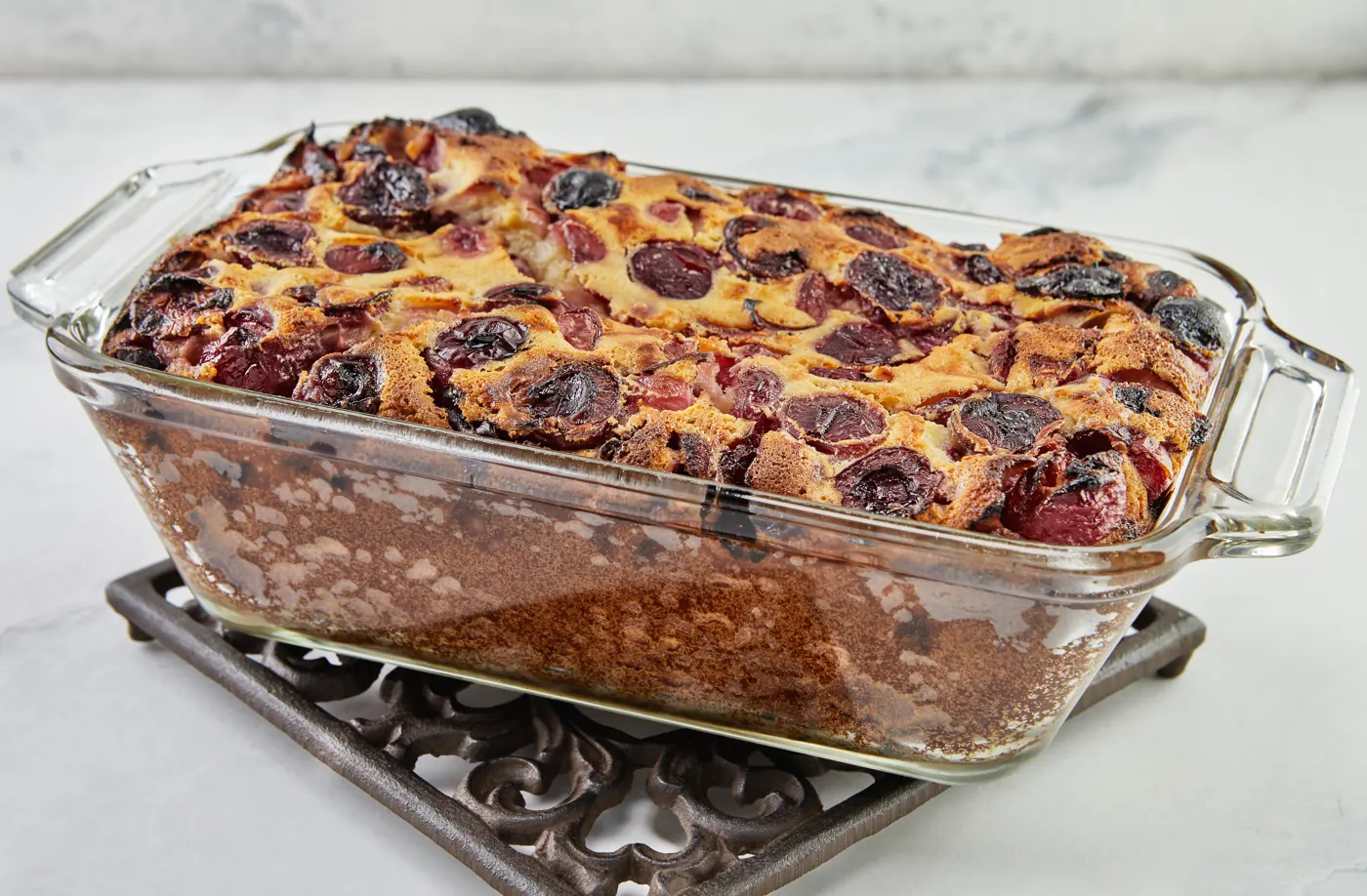
King Arthur Baking’s pan-material comparison explains that glass transfers heat more slowly than metal and holds heat longer once hot. In its brownie comparison, the glass-pan brownies developed harder, crunchier outer edges than those from the metal and stoneware pans.
That is King Arthur’s reported result, not a Replicate test. The pans also differed in dimensions and shapes, so the comparison doesn’t isolate material as the only variable.
The same article explains that stoneware’s composition and manufacture affect heat transfer. Check the particular dish rather than treating every ceramic or stoneware pan as identical.
| Pan characteristic | What to consider before choosing it |
|---|---|
| Light-colored metal | King Arthur identifies an efficiently conducting, light-colored metal pan as a useful general baking choice. Match the recipe’s specified size and style too. |
| Glass | Heat transfer and heat retention differ from metal. Look for instructions that account for the glass pan rather than assuming identical timing. |
| Stoneware or ceramic | The particular dish matters. Check its dimensions and the recipe and manufacturer’s guidance. |
| Dark-colored metal | Color affects heat absorption and browning. It’s a separate consideration from the word “metal.” |
Dark and light metal aren’t the same setup
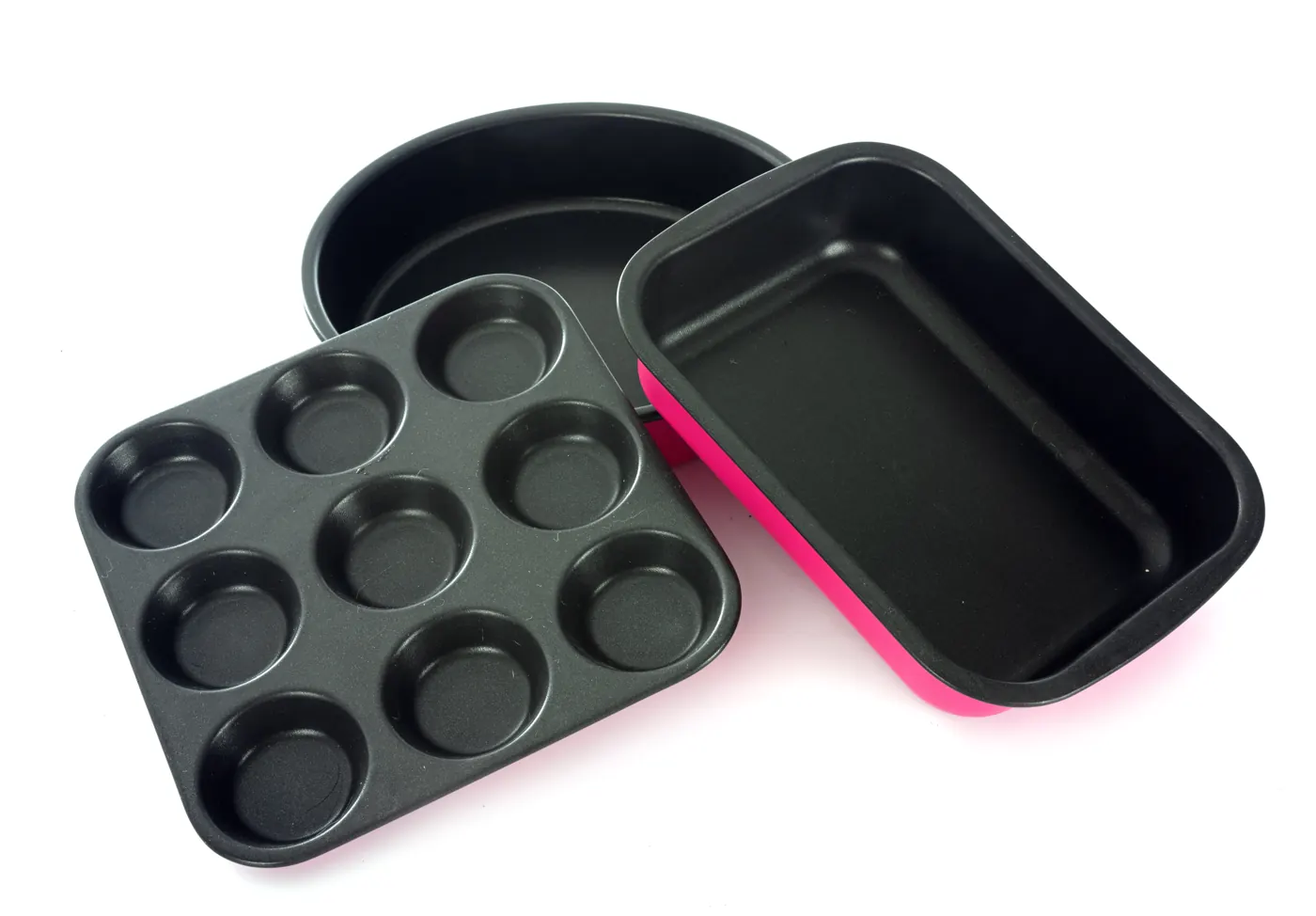
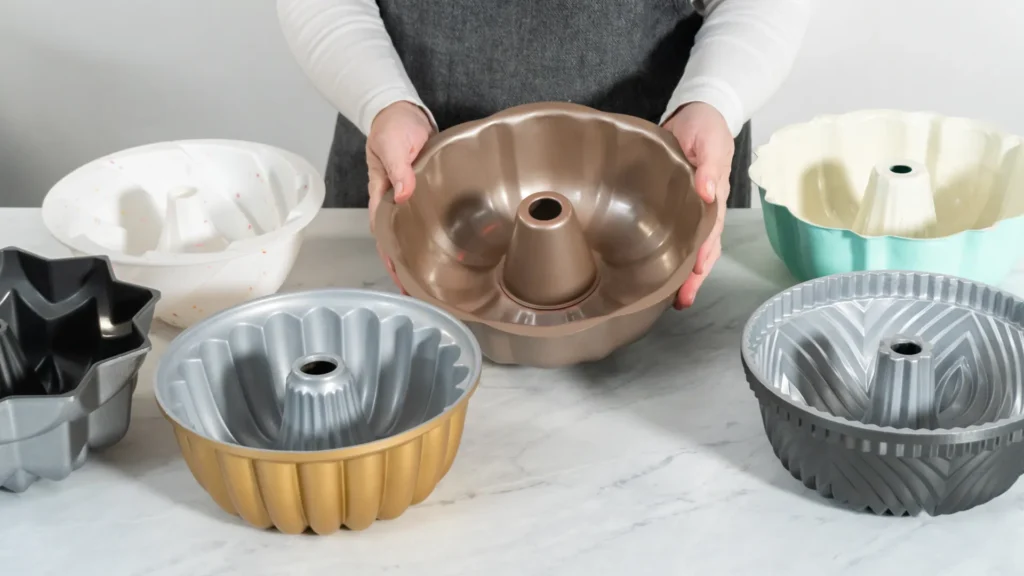
In its dark-pan cake trials, King Arthur explains that dark metal absorbs heat more readily than lighter-colored pans. It reports darker crust from a darker Bundt pan and recommends medium- to light-colored metal pans for cakes when there is a choice.
Its temperature adjustment in that article is specifically for a truly dark, black or nearly black cake pan: reduce the oven setting by 25°F, and begin checking for doneness before the stated time. Read the full guidance alongside the recipe. Don’t add an adjustment again if the recipe already accounts for the pan you’re using.
The article also makes a useful distinction about parchment: it helps release the cake, but it doesn’t turn a dark pan into a light pan by blocking the heat. Lining the pan and choosing its finish solve different problems.
Check the inside dimensions, not the handles
The label on the cupboard shelf isn’t the whole specification. King Arthur’s baking-pan guide says a recipe calling for a 9-inch round cake or pie pan means the top inside measurement. Its guide also distinguishes loaf pans that look similar but have different dimensions and capacities.
Compare the actual pan with the recipe before mixing. A wider or deeper vessel changes the setup too, so don’t describe a substitution as “only the material” when the dimensions changed along with it.
Use cookware the manufacturer approves for the intended use, and follow its care and use instructions. A recipe’s suggested adjustment doesn’t replace those limits.
If you’re trying to understand a disappointing bake, keep the pan in the notes alongside ingredients, oven setting, and the recipe’s doneness checks. Record the material, finish, and inside dimensions rather than just “square pan.” Then decide which change to make on the next attempt instead of changing the pan, ingredients, and temperature all at once.
References
King Arthur Baking’s material comparison, dark-pan cake trials, and baking-pan guide checked October 21, 2026. Findings are attributed to that publisher. Stock photographs illustrate bakeware and cakes; they are not before-and-after evidence from those trials or a Replicate bake.
Found an error or an outdated detail? Send a correction for this article.