
Seasoned rice vinegar brings more than acidity to a dish. Check for sugar and salt before using it in a recipe that calls for plain rice vinegar, especially when that recipe already includes its own seasoning.
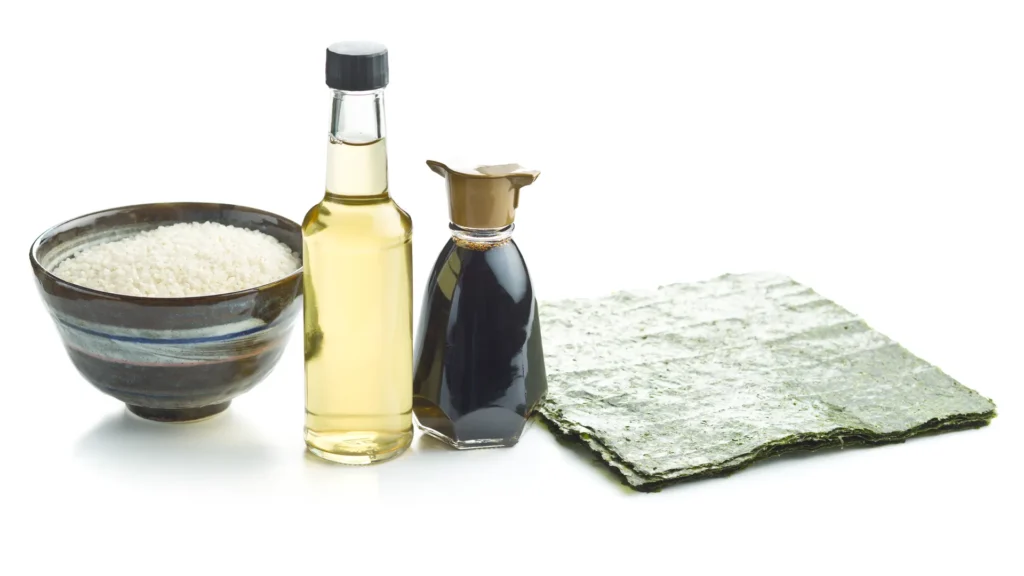
The bottles may sit beside each other, but buying the right one starts with reading the full product name. Then turn it around and read the ingredients. The word “rice” doesn’t settle the choice.
What is different in the bottle?
Kikkoman’s U.S. Rice Vinegar ingredient list names rice vinegar diluted with water to 4.2% acidity. Its Seasoned Rice Vinegar lists rice vinegar, water, sugar, and salt, with 4.1% acidity. Those are the manufacturer’s current specifications for these particular products, not a formula for every brand.
The useful distinction for a dressing or dipping sauce is that one bottle includes seasoning the other doesn’t. Don’t assume that two pale liquids will contribute the same sweetness or saltiness at the same spoonful.
Kikkoman lists both products for salad dressings and other cooking uses. The seasoned product is also marketed for sushi rice. That makes it a convenient option when the recipe is written for it, rather than an automatic upgrade to any dish containing rice.
If the recipe asks for plain vinegar

Use plain rice vinegar when you want to follow the recipe’s stated sugar and salt amounts. If seasoned vinegar is what you have, recognize that you’re changing more than one ingredient. Simply using the same volume doesn’t account for the seasoning already in the bottle.
For a flexible dressing, make a small portion before dressing the whole salad. Write down the vinegar you used and any changes to the separate sugar or salt. Taste that dressing before it contacts raw meat, poultry, or seafood. A substitution note is more useful next time if it names the actual product rather than just “vinegar.”
If reproducing a particular published recipe is the goal, using its specified ingredient gives you a clearer starting point. You can choose to adapt it later without confusing an ingredient swap with the original method.
If the recipe asks for seasoned vinegar
Plain rice vinegar won’t bring the same added sugar and salt as a seasoned product. Follow the recipe’s own alternative or the bottle’s directions if it provides them. Don’t reverse-engineer a universal spoon-for-spoon blend from the word “seasoned.”
Before buying a bottle, make these three checks:
- Match the full product name to the recipe, including “seasoned” when specified.
- Read the ingredient list for added sugar, salt, and any other seasonings.
- Keep the bottle or a label photo available until you’ve recorded what you used.
A pantry note can be short: product name, recipe, amount, and the adjustment you made. Leave the result blank until you’ve actually made and tasted the dish. That keeps a plan separate from an observation you can use again.
Research checked October 22, 2026. Product details above refer to the linked Kikkoman U.S. listings. This comparison does not report a Replicate Kitchen recipe test.
Found an error or an outdated detail? Send a correction for this article.