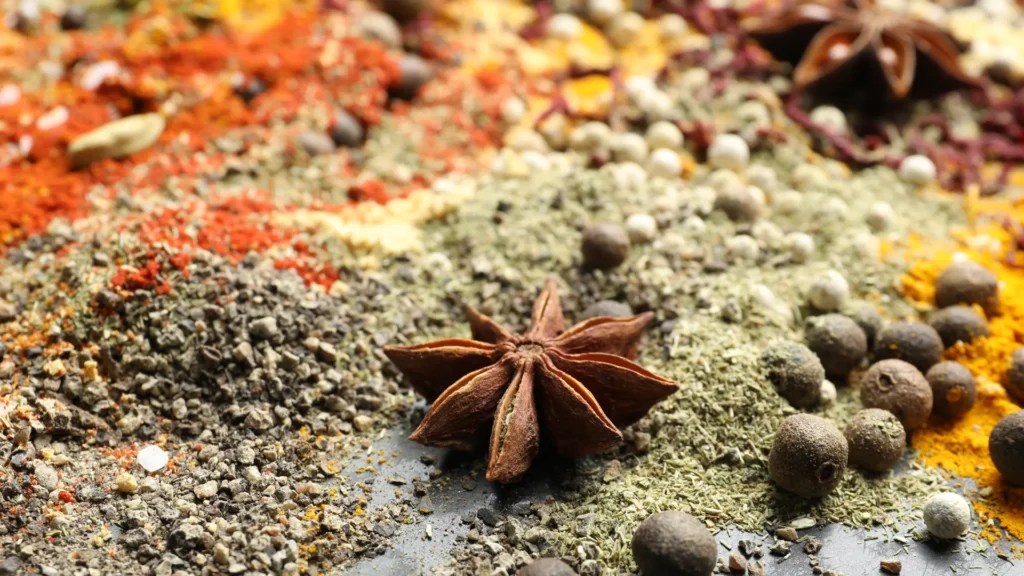

Use whole spices when you want distinct seeds, a spice you can remove after infusing, or control over the grind. Use ground spices when flavor needs to spread evenly through a sauce, rub, or batter. Neither form is always better: the useful choice depends on texture, cooking method, and how often you use the jar.
Decide where the spice needs to end up
A cinnamon stick can spend time in a simmering liquid and be lifted out. Ground cinnamon stays in the drink or sauce. Whole cumin can provide little bursts of aroma and texture; ground cumin distributes its earthy flavor more evenly. Those differences matter when making a smooth dressing, a long-cooked broth, or a rice dish where visible seeds are welcome.
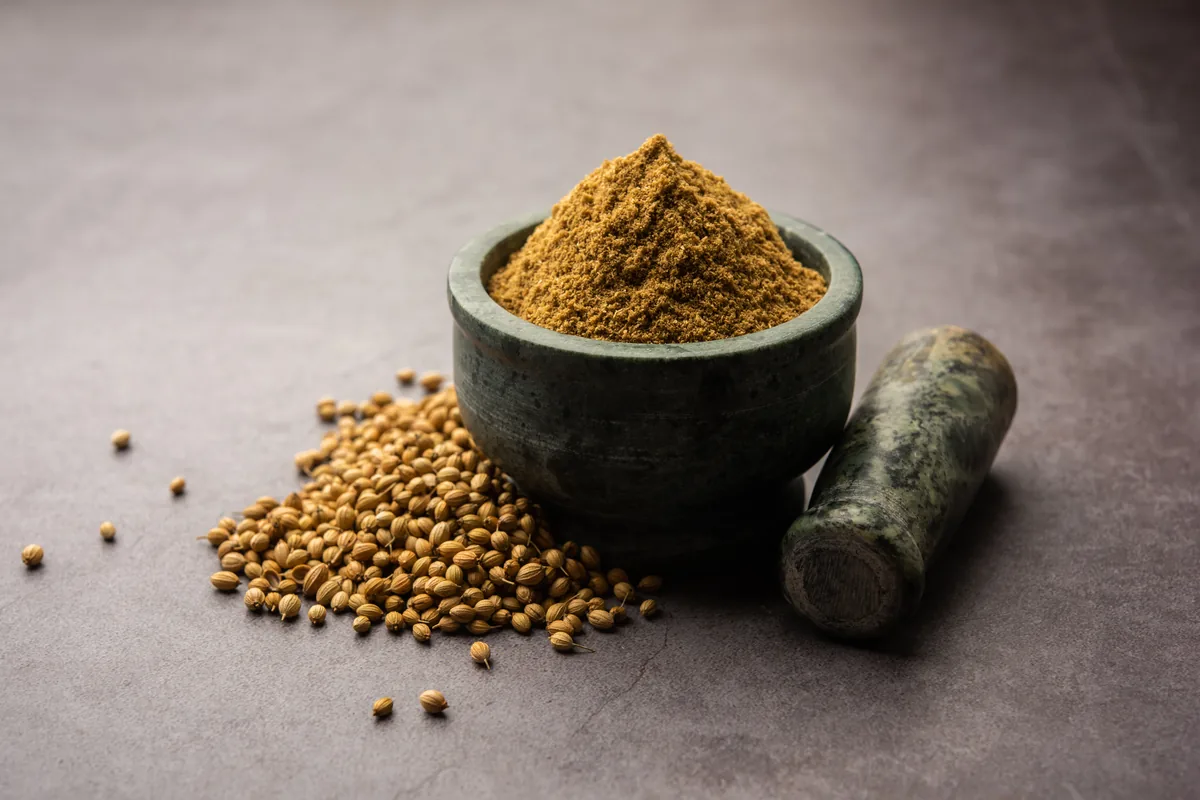
For an ingredient such as coriander or cumin, grinding whole seeds shortly before use offers another way to control aroma. Ground spices have more exposed surface area and can lose aroma during storage. The practical approach is to buy the form you use often and keep specialized whole seeds for recipes that genuinely benefit from them.
For specific ingredient and storage references, see McCormick’s whole cumin guidance and its spice-storage recommendations.
A useful first decision for a new recipe
Ask whether the final dish should contain the spice itself. If the recipe calls for a whole spice to steep, remove it when instructed. If it calls for a ground powder, do not assume whole seeds will produce the same result without grinding or changing the technique. The reverse is also true: a ground substitute may make an otherwise clear liquid cloudy or leave sediment.
Store either form in a tightly closed container away from heat and direct light. Date the jar and check aroma before committing an older spice to an expensive batch. Freshness has more to do with aroma and storage than the date alone.
Can you substitute whole and ground spices?
Whole and ground versions are not interchangeable teaspoon for teaspoon across every spice or recipe. Grind size, packing density, source variety, and age vary. For a repeatable test, weigh what goes into the dish and change only the form before concluding which you prefer.
Choose by the finished texture
- Infused broth or milk: whole spices can be lifted out or strained away.
- Smooth sauces and dressings: use a fine grind, allowing for any remaining sediment.
- Dry rubs and batters: ground spices spread more evenly through the mixture.
- Rice and textured dishes: whole seeds can be part of the eating experience when the recipe calls for them.
Sources
More from Replicate Kitchen
Explore more Replicate Kitchen recipes and ingredient guides.
Found an error or an outdated detail? Send a correction for this article.