
Canada first. Counterclockwise is my favorite direction to walk EPCOT’s World Showcase, so that’s the direction I’m taking this trip, too. This time, each pavilion is a starting point for finding the real place behind a familiar piece of architecture.
There’s one fairly substantial difference: this version needs more than comfortable shoes. We’re leaving the lagoon for Ottawa, London, Paris, Marrakech, Miyajima, Philadelphia, Venice, Rothenburg ob der Tauber, Beijing, Oslo, and Chichén Itzá. Think of it as a reading trip around the world, rather than a route to squeeze into one vacation.
Why EPCOT has a World Showcase
EPCOT opened in Florida on October 1, 1982, as EPCOT Center. Its name came from Walt Disney’s Experimental Prototype Community of Tomorrow, but the park that opened was a different undertaking from his proposed living city. Imagineers developed two areas, Future World and World Showcase, as Disney’s official history explains.
World Showcase takes a world’s-fair approach: architecture, landscapes, food, art, and cultural encounters arranged so visitors can explore several countries in one park. It offers a point of introduction, not a complete portrait of a nation. A pavilion can make a building familiar before you know where the real one stands.
That’s the thread for this walk. Some of these connections are replicas, some are scaled interpretations, and others are a mixture of architectural influences. Disney’s guide to the landmarks behind World Showcase identifies many of those connections. I’ll keep the distinction clear as we go.
1. Canada: Château Laurier, Ottawa
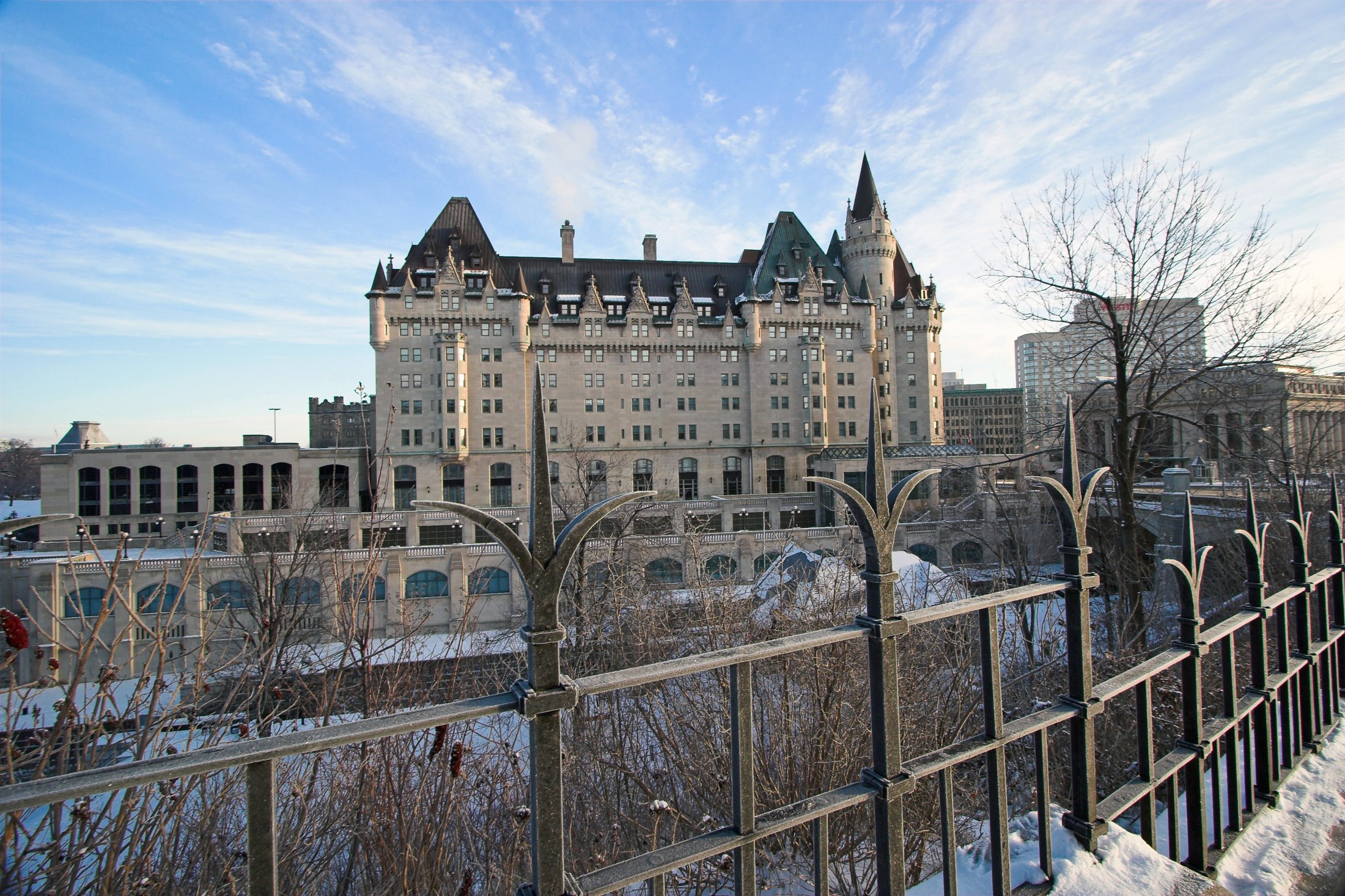
Canada first. At EPCOT, the château roofline rises above a pavilion that also borrows from mountain landscapes and formal gardens. The building called Hotel du Canada takes its cue from Château Laurier in Ottawa. It’s a hotel-inspired facade in Florida; the original is a working hotel in Canada’s capital.
The real Château Laurier opened in 1912. Its railway connection matters: Charles Melville Hays commissioned it during an era when grand hotels helped make long-distance rail travel a destination in itself. The limestone, copper roof, and steep silhouette make the building look much older than its opening date. The hotel’s own history explains the architecture and the people behind it.
Canada is known for immense landscapes, from the Rockies to its Atlantic coast, but this stop puts the city in the picture. Ottawa gives that familiar pavilion silhouette a real address, beside the Rideau Canal locks and near Parliament Hill. A country that stretches across a continent deserves more than one mountain backdrop. This is a good place to start widening the frame.
2. United Kingdom: Hampton Court Palace, England
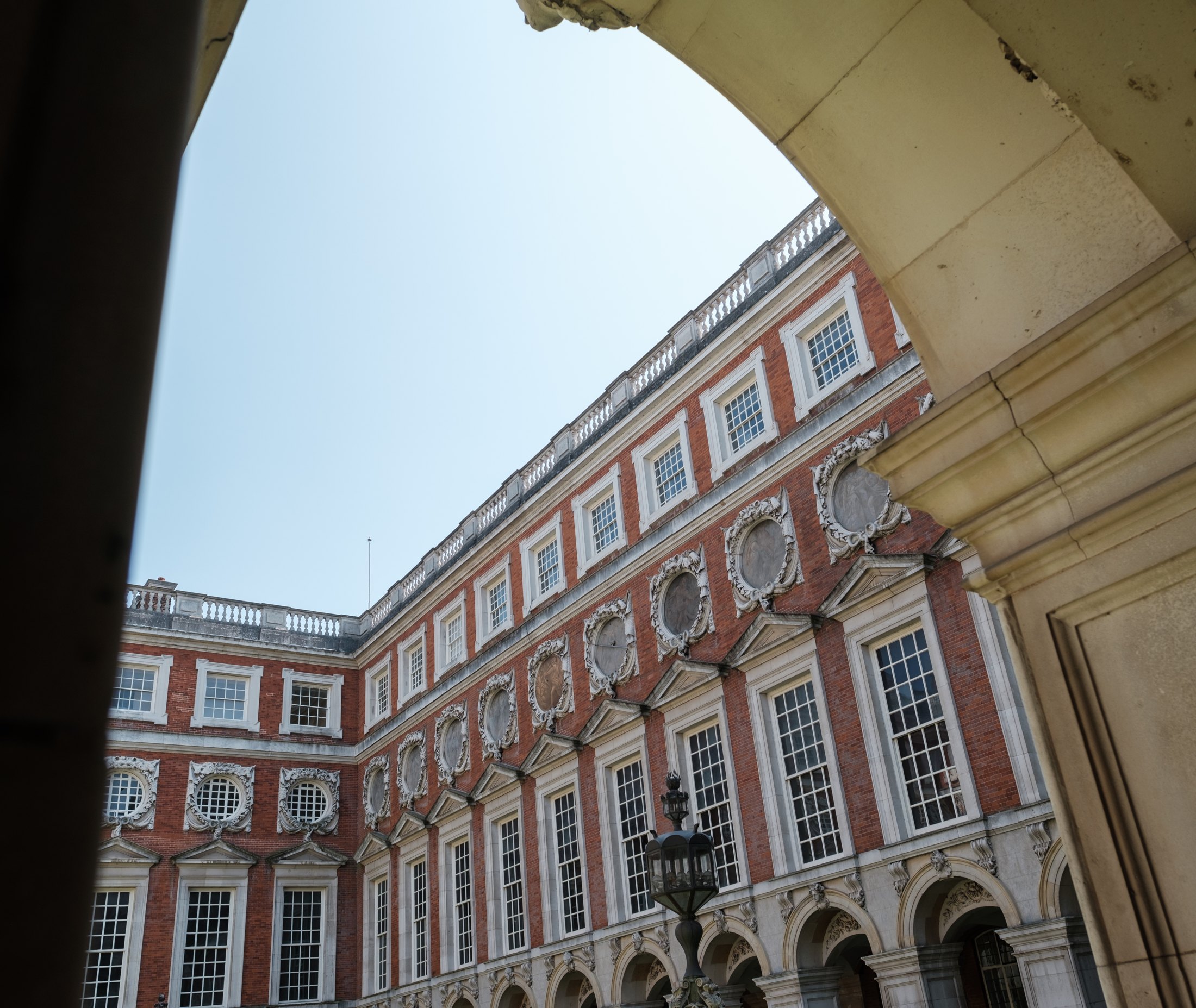
The United Kingdom pavilion is a small architectural time jump. Timber framing, cottage details, brickwork, gardens, and pub architecture sit close together. There isn’t one real British street that Disney lifted intact and dropped beside the lagoon. Hampton Court Palace is one of the places Disney identifies among the pavilion’s influences.
At the real palace, that mixture of periods comes with a particularly clear explanation. Cardinal Thomas Wolsey began the Tudor palace in the early 1500s; Henry VIII expanded it. Later, William III and Mary II commissioned a very different Baroque palace from Christopher Wren. Historic Royal Palaces traces those changes. The courtyard in the photo shows that later architectural layer.
Britain’s castles, gardens, theater, and pub culture are familiar starting points. But the United Kingdom includes England, Scotland, Wales, and Northern Ireland, and an English palace can only represent one part of it. For this walk, Hampton Court makes the useful connection: the pavilion’s different building styles have real histories behind them, rather than belonging to one timeless version of ‘old England.’
3. France: the Eiffel Tower, Paris
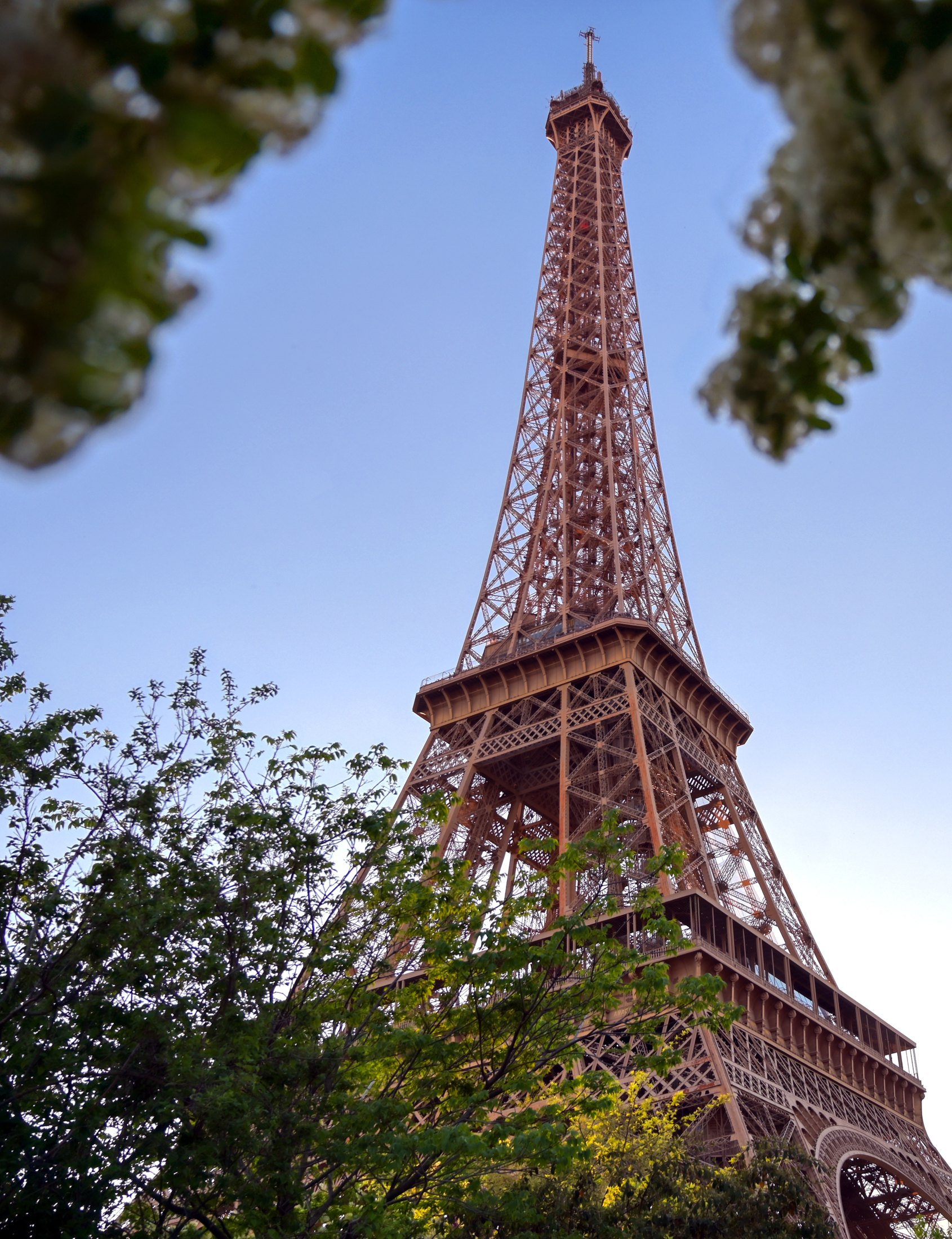
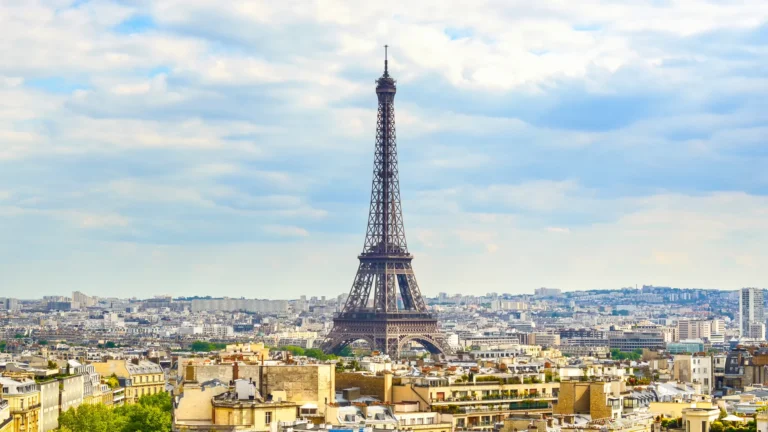
France is the easiest silhouette to match. Look above the pavilion’s Parisian roofline and there’s the Eiffel Tower. Disney’s version is a distant-looking architectural accent; the original is a structure you can walk beneath and look up through.
The tower was built for the 1889 Exposition Universelle, marking the centenary of the French Revolution. That makes it a fitting connection to a park with a world’s-fair sensibility. Its lattice is iron, and its survival was helped by its usefulness for scientific work and radio transmission. The Eiffel Tower’s official history is worth reading before treating it as only a photo backdrop.
France is known for food, wine, art, and architecture, with enormous differences between its regions. EPCOT concentrates the view around Paris. In the real city, the space around the tower changes the encounter: the Seine, bridges, streets, and Champ de Mars give that familiar shape scale. A picture above a roofline and a view from directly underneath are two very different ways of meeting the same landmark.
4. Morocco: Koutoubia Mosque, Marrakech
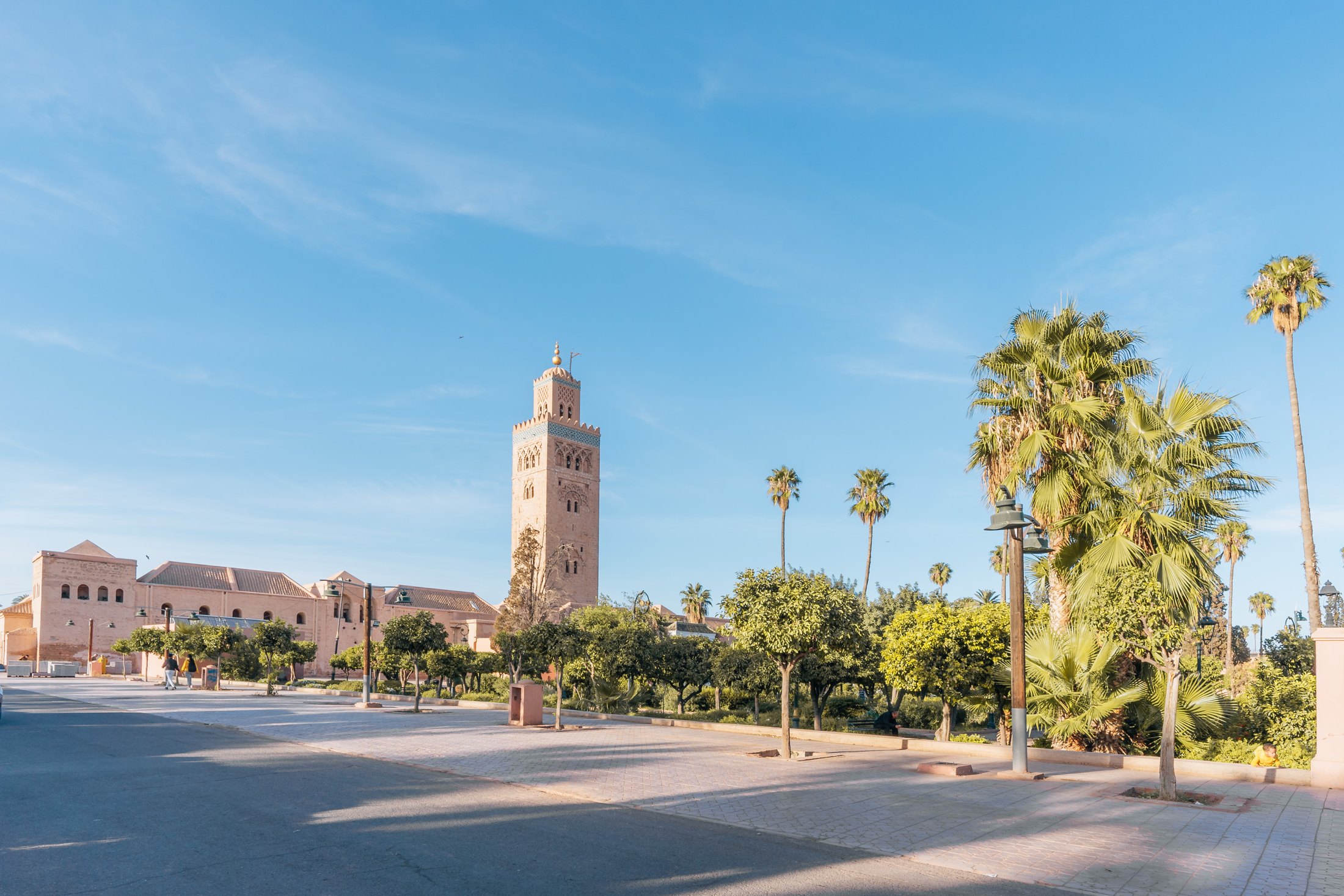
The square minaret in EPCOT’s Morocco pavilion points toward Marrakech. Its real-world reference is the Koutoubia Mosque, one of the city’s defining landmarks. The tower is a minaret, part of a place of worship, rather than a castle tower or an observation attraction.
UNESCO describes the 77-meter minaret as a major feature of the Medina of Marrakesh. It belongs to the city’s Almohad architectural heritage. The square form, patterned surfaces, and strong proportions explain why the connection remains recognizable even when the surrounding setting changes.
Morocco is known for its medinas, craft traditions, mountain landscapes, and food such as couscous and tagines. The real city gives the pavilion’s courtyards and tilework a broader context: these details belong to inhabited streets, businesses, homes, and religious life. The photo shows the mosque from outside. That is the right starting point for appreciating the architecture without assuming a theme park’s visitor access carries over to a sacred site.
5. Japan: the great torii at Itsukushima Shrine

At EPCOT, Japan’s vermilion torii frames the lagoon. In the real world, the comparison leads to Itsukushima Shrine on Miyajima, in Japan’s Seto Inland Sea. The gate marks an approach to sacred space. Its location in the water is part of the composition, not just a convenient reflection for photographs.
UNESCO’s account of Itsukushima describes the relationship between the shrine buildings, sea, and mountain landscape. The shrine’s history reaches back many centuries, and its architecture reflects a tradition shaped around the island’s sacred setting. The tide changes how the gate meets its surroundings, so that apparently floating view is only one version of the scene.
Japan is known for both dense modern cities and longstanding craft, garden, food, and religious traditions. EPCOT brings several architectural references into one compact pavilion. Miyajima asks for a narrower, more attentive look: one shrine, one shoreline, and the landscape around them. It’s a useful reminder that a familiar shape can have a meaning beyond being a symbol of an entire country.
6. USA: Independence Hall, Philadelphia
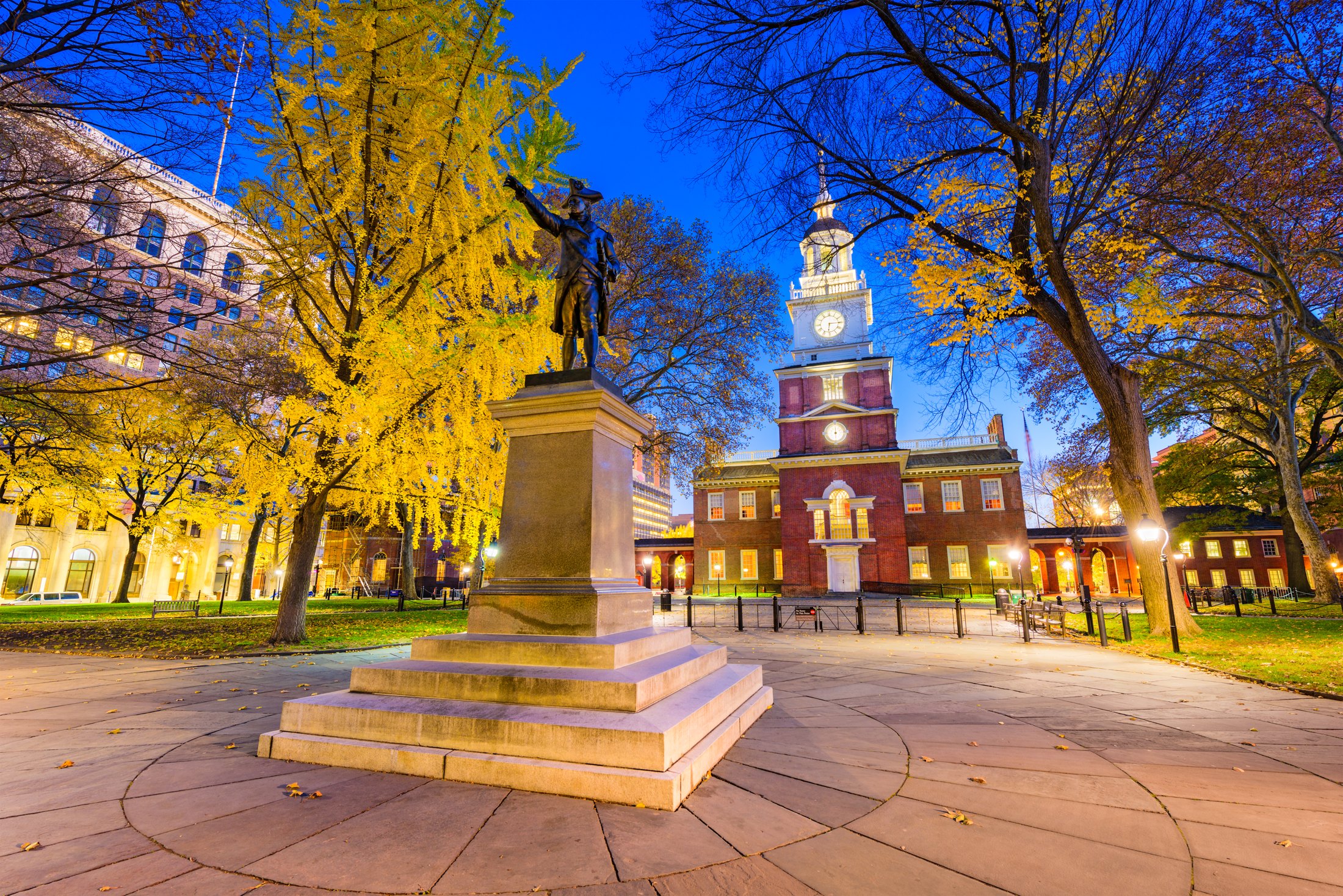
The American Adventure occupies the middle of this walk. Its brick facade and Georgian architecture evoke early American civic buildings, including Independence Hall in Philadelphia and Boston’s Old State House. This is another place where ‘inspired by’ is more accurate than ‘an exact replica of.’
The real Independence Hall began as the Pennsylvania State House, with construction starting in 1732. The Declaration of Independence and the U.S. Constitution were debated and signed inside. The National Park Service’s history also points beyond those famous events to the building’s courtrooms and later uses.
The United States is known for national parks, music, cities, and food traditions that vary by region and community. This stop deliberately focuses on one part of that much larger story. In Philadelphia, the building is evidence you can examine, rather than an architectural shorthand around a theater. The ideals discussed inside and the people excluded from their promises are both part of understanding the place.
7. Italy: St. Mark’s Campanile, Venice
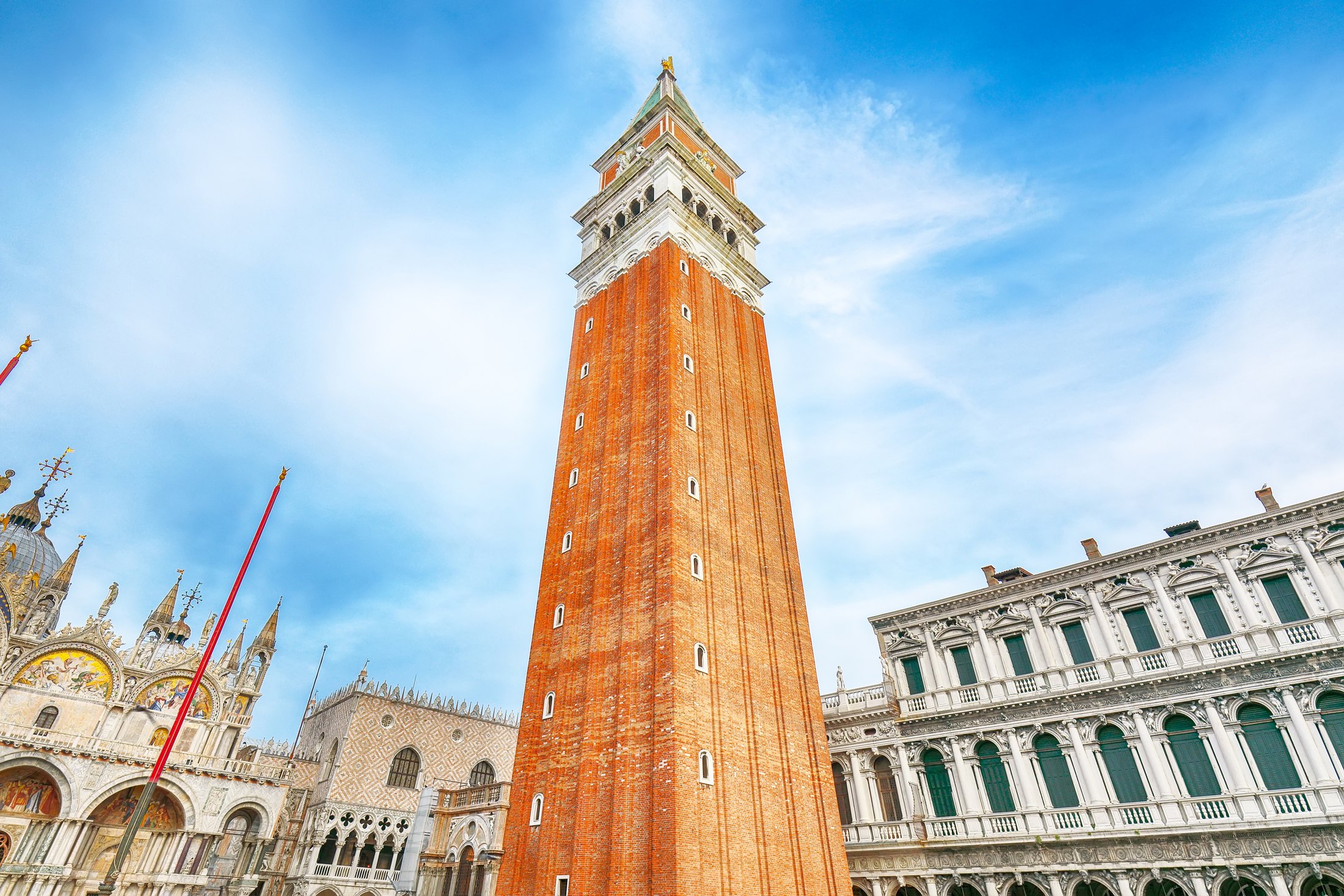
Italy’s tall brick campanile makes the Venice connection before you reach the pavilion. A campanile is a bell tower, and this one draws on the tower in Piazza San Marco. The wider pavilion gathers other Italian references, but the tower gives it an unmistakably Venetian anchor.
The real St. Mark’s Campanile stands 98.6 meters high. The building visible today is itself a reconstruction: the earlier tower collapsed in 1902, and its replacement opened in 1912. The official basilica website tells that longer history, including the tower’s earlier roles and rebuilding. So even the ‘original’ in this comparison needs a little explanation.
Italy is known for art, regional cooking, ancient sites, and very different local landscapes. Venice adds its own practical reality: canals, footbridges, boats, and a city organized around water. The pavilion lets you recognize the tower in a few steps. The real square gives it neighbors, scale, and a setting that cannot be carried over with the roofline alone.
8. Germany: St. George’s Fountain, Rothenburg ob der Tauber
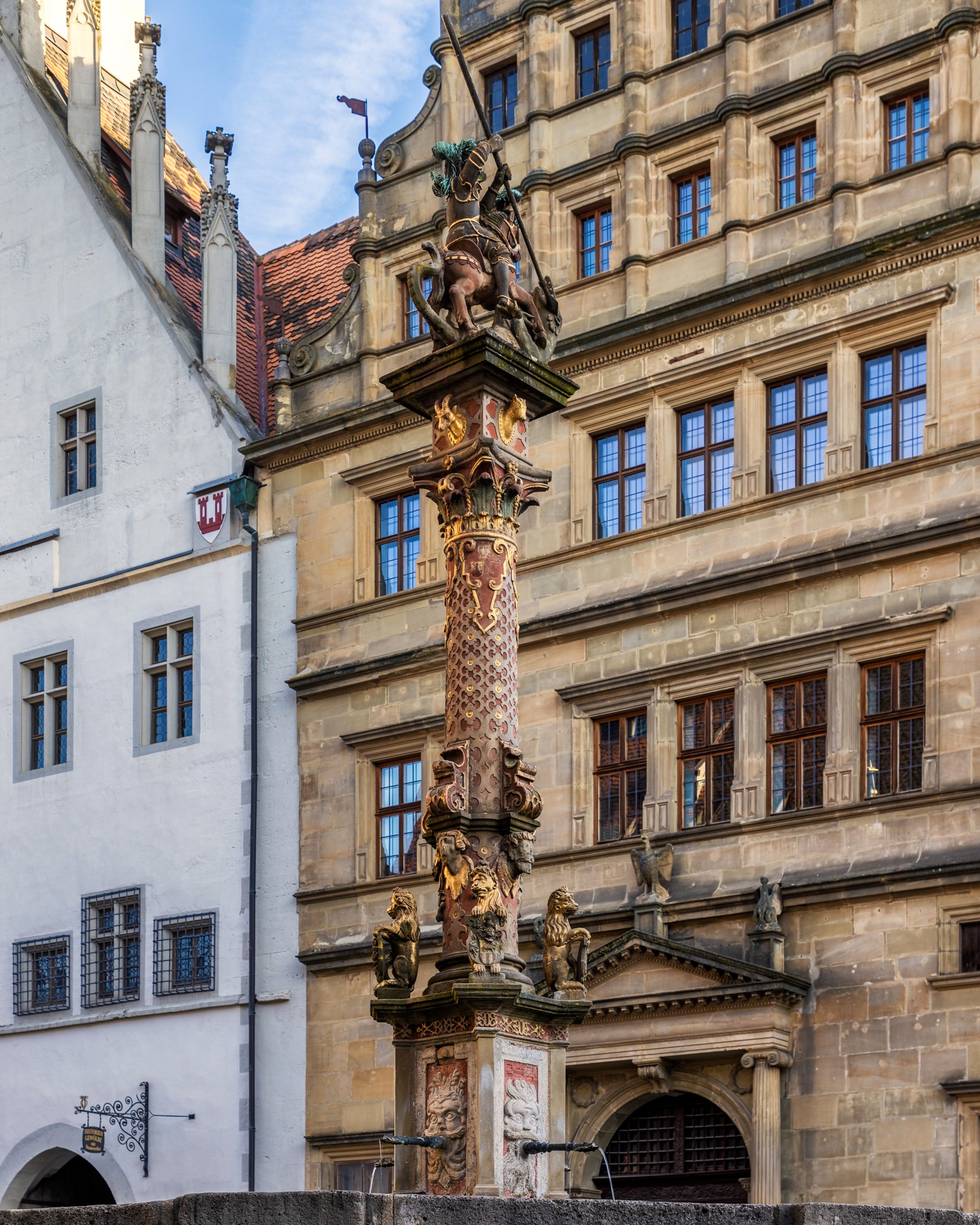
Germany’s connection is smaller than the Eiffel Tower, and easier to walk past. The pavilion’s central St. George and the Dragon statue draws on the fountain in Rothenburg ob der Tauber. Look up at the figure, rather than only at the surrounding facades, and the comparison becomes much more specific.
The real fountain stands in the town’s Marktplatz. The Rothenburg tourism office lists it as St. George’s or Herterichsbrunnen. The figure tells the legend of St. George fighting a dragon. Look closely at the sculpture and the elaborate column beneath it: the small detail at EPCOT turns into a much larger piece of the real square.
Germany is known for castles, engineering, classical music, bread, and regional beer traditions, among much else. The pavilion leans toward a particular old-town image. Rothenburg supplies an actual town around that image, with streets and buildings that continue beyond a single square. Bavaria is one part of Germany, so this is a point of entry rather than a stand-in for the whole country.
9. China: the Hall of Prayer for Good Harvests, Beijing
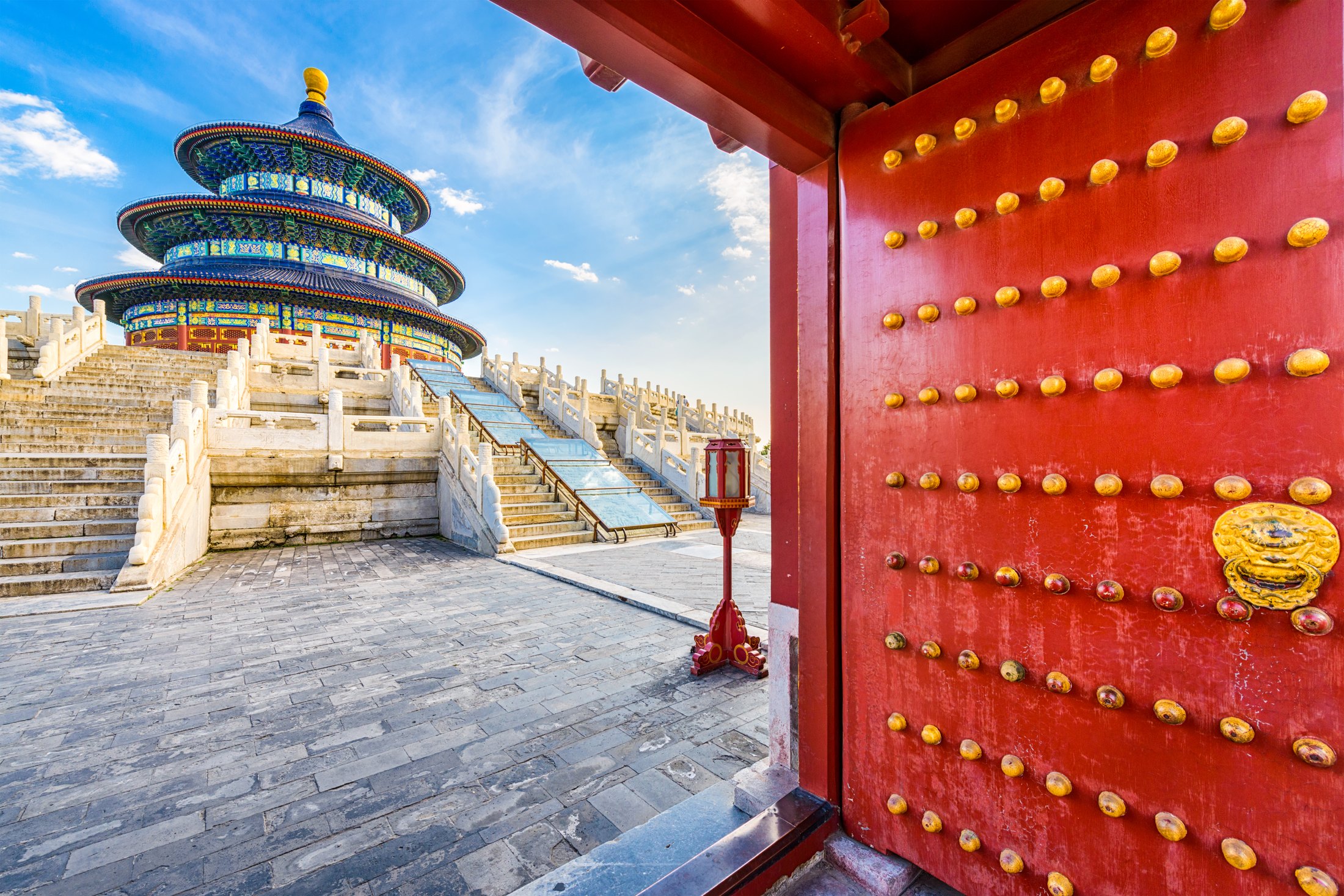
The blue, circular, tiered roof in China’s pavilion takes us to Beijing. The more precise name of the real landmark is the Hall of Prayer for Good Harvests, within the much larger Temple of Heaven complex. ‘Temple of Heaven’ names the whole site, not just the one building most people recognize.
The complex’s original Altar of Heaven and Earth was completed in 1420. Ming and Qing emperors used the site for ceremonies connected with heaven and agricultural harvests. UNESCO describes an arrangement of halls, altars, connecting routes, and wooded enclosures. A single pavilion-sized building cannot convey that entire layout.
China is known for a long architectural and artistic history, large modern cities, and distinct regional cuisines. Here, the thread is imperial Beijing and the relationship between ceremony and space. The photo’s gateway, paving, terraces, and roofline help show that relationship. The recognizable roof is the beginning of the visit, rather than the whole thing.
10. Norway: Gol Stave Church, now in Oslo
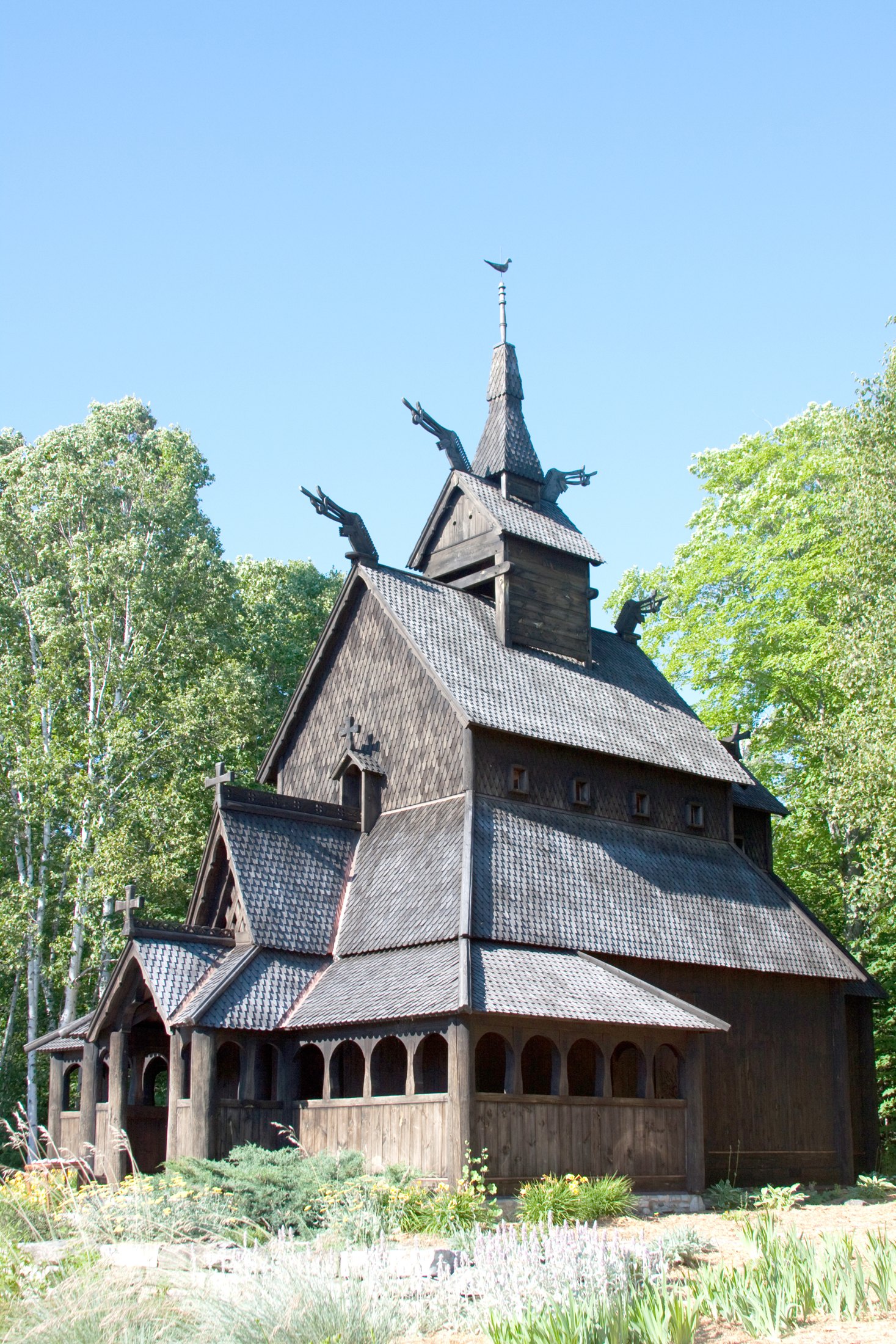
Norway’s wooden church leads to a real building with a surprising address. Gol Stave Church comes from Gol, but the historic structure now stands at Norsk Folkemuseum on Bygdøy in Oslo. Going to the town alone would not take you to the same building shown here.
The museum dates the church to approximately 1200 and explains that it was re-erected at Bygdøy in 1884. The restoration used Borgund Stave Church as a reference for missing medieval parts. This is a surviving historic building, but its present appearance also reflects decisions made during its preservation.
Norway is known for fjords, maritime history, and timber architecture. Stave churches add a different kind of detail to that broad picture: load-bearing wooden posts, carved portals, and roof shapes that reward a closer look. At EPCOT, the church is a compact cultural stop. The Oslo museum gives you the history of the real structure, including what was moved and what was reconstructed.
11. Mexico: El Castillo at Chichén Itzá
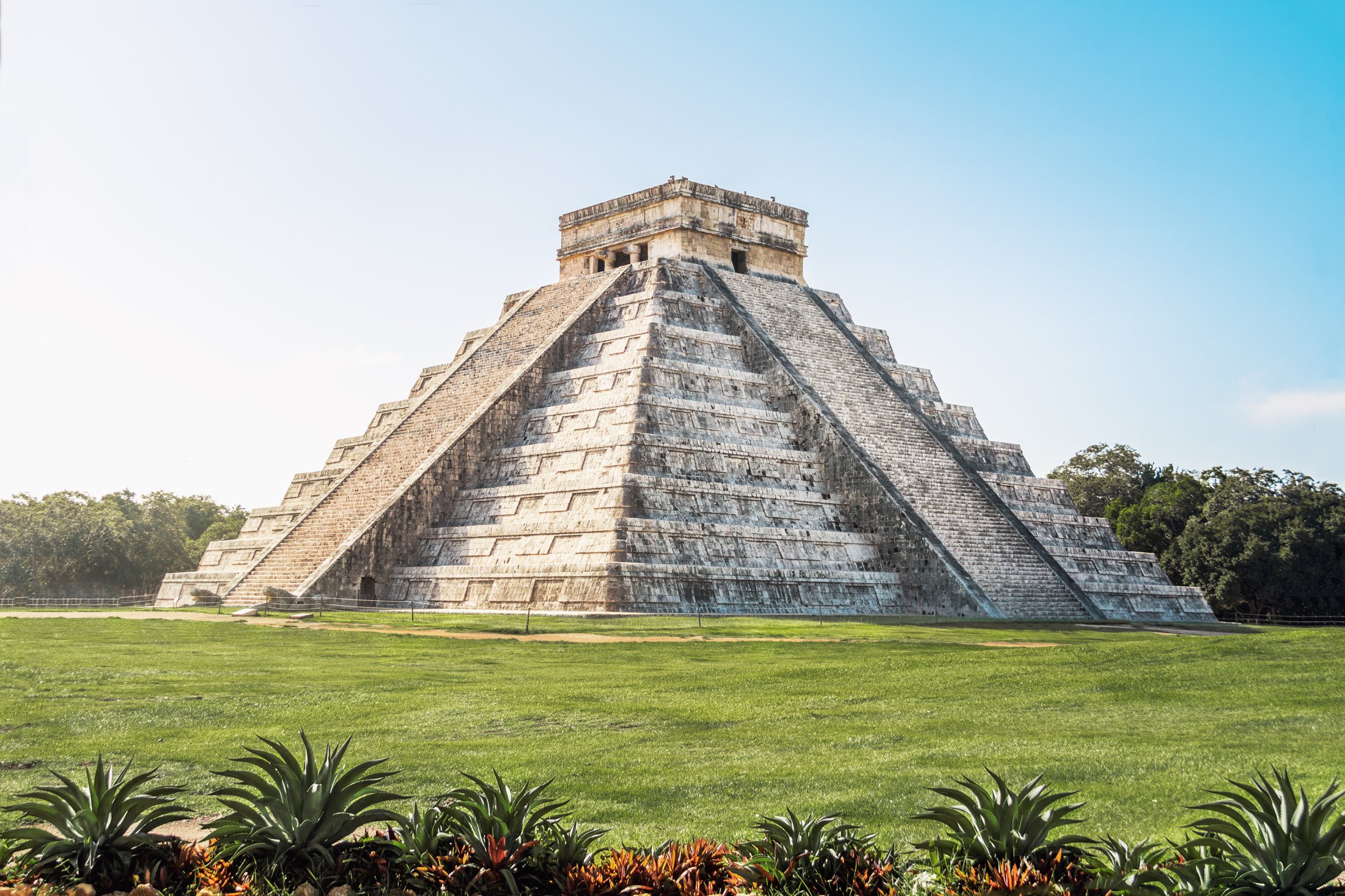
Mexico closes the loop. EPCOT’s pyramid draws on Mesoamerican architecture, including El Castillo at Chichén Itzá. It is a themed interpretation, rather than a complete reproduction of the archaeological site. The real pyramid is also called the Temple of Kukulcán.
UNESCO’s record of Chichén Itzá places the pyramid within a much larger city that includes a Great Ball Court, the Temple of the Warriors, and the observatory known as El Caracol. The Maya site’s history has several layers. The pyramid is an anchor for understanding that city, not a substitute for it.
Mexico is known for living Indigenous cultures, regional cooking, art, historic cities, and landscapes ranging from deserts to tropical coasts. The Yucatán connection makes this final stop specific. At EPCOT you enter a pyramid-shaped building to find an interior world; at Chichén Itzá you encounter an archaeological landscape outdoors. The silhouette carries over. The purpose, scale, and experience change completely.
Back around the lagoon
The pleasure of this route is recognizing something, then finding out how much of it you haven’t seen yet. A bell tower turns into Venice. A fountain becomes a town square in Bavaria. A wooden church leads to a museum in Oslo, and then to questions about how the building got there.
World Showcase puts those first connections within walking distance. The real places give them room to become something larger. I’m still starting with Canada.
For more park stories and planning, explore our Theme parks hub.
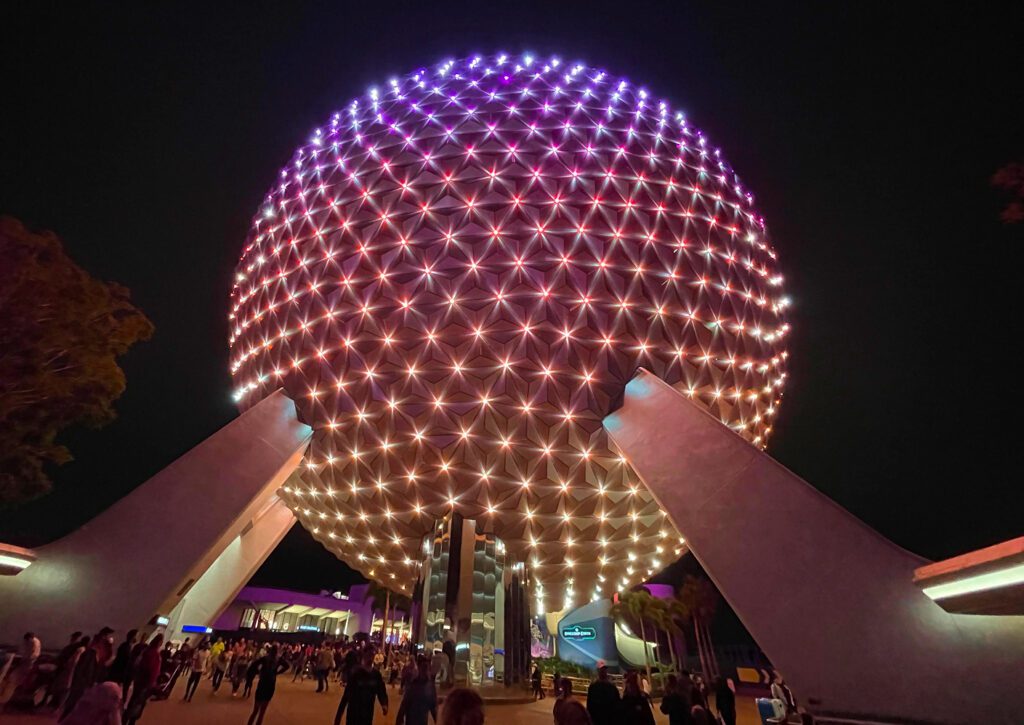
About this article: This is a researched architectural tour, not a claim that I visited every landmark. Historical and architectural references were checked October 23, 2026. Landmark photos show the real locations, not the EPCOT versions. The featured photo shows EPCOT’s Spaceship Earth from the existing Replicate the Magic photo library.
For an actual visit, check each destination’s official information for access, opening hours, and pricing. The country order here follows a walk around EPCOT, not geographic proximity.
Found an error or an outdated detail? Send a correction for this article.