
Before arranging a folded card on a sheet, find out which way the paper’s grain runs. A layout that saves paper can still put the main fold across the grain. Check that relationship while you can change the layout, not after printing a stack.
Paper grain describes the predominant alignment of its fibers. Mohawk’s Paper Basics guide explains that most fibers align with the direction of the moving web during manufacture. Once the paper is cut into sheets, the grain may follow either the long or short dimension.
Long grain and short grain describe this sheet
Grain long means the fibers follow the sheet’s longer dimension. Grain short means they follow its shorter dimension. “Long” isn’t a paper size, and turning the sheet on your desk doesn’t change its grain.
Ask the supplier for the grain direction of the specific stock and cut size you’re buying. Keep that information with the paper. If the seller cuts a larger sheet down for you, ask how the grain will run in the delivered pieces. The name of the larger sheet alone doesn’t answer that question.
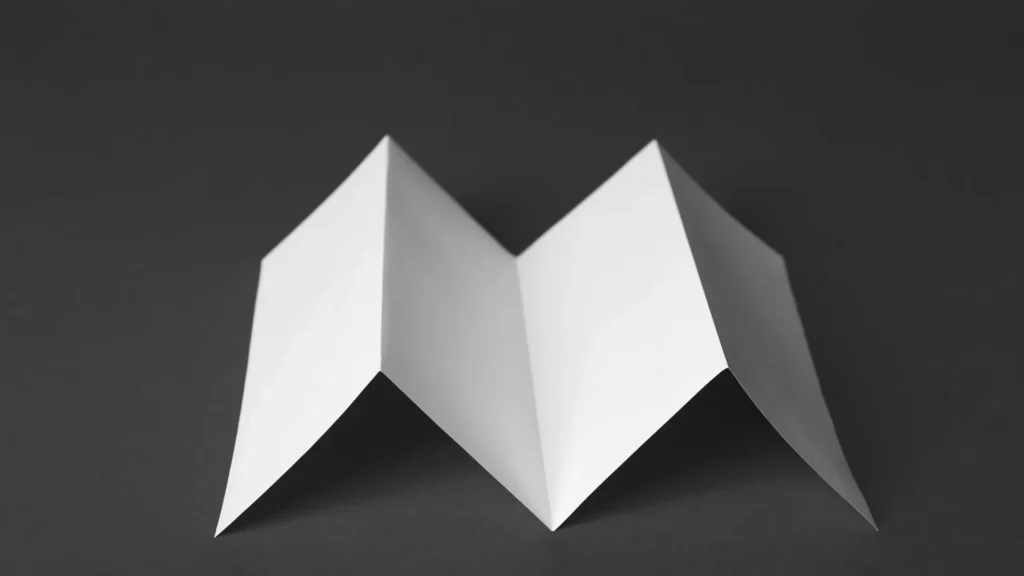
Mohawk’s Envelope Basics guide recommends folding parallel to the grain. Treat the main fold as a line on the layout: compare that line with the grain direction, rather than trying to interpret “with the grain” from the movement of your hands.
A card example, before printing
Imagine an 8-by-10-inch sheet with confirmed grain along its 10-inch dimension. This is a geometry example, not a tested card design.
- Fold line parallel to the 10-inch edge: Folding halfway across the width produces a 4-by-10-inch piece. The fold runs parallel to the stated grain.
- Fold line parallel to the 8-inch edge: Folding halfway along the length produces an 8-by-5-inch piece. The fold runs across the stated grain.
Both folds halve the sheet, but only the first runs parallel to this example’s grain. If you need the second shape, you might choose stock with a different grain direction or revise the flat layout. Don’t let an efficient arrangement of rectangles silently make that decision.
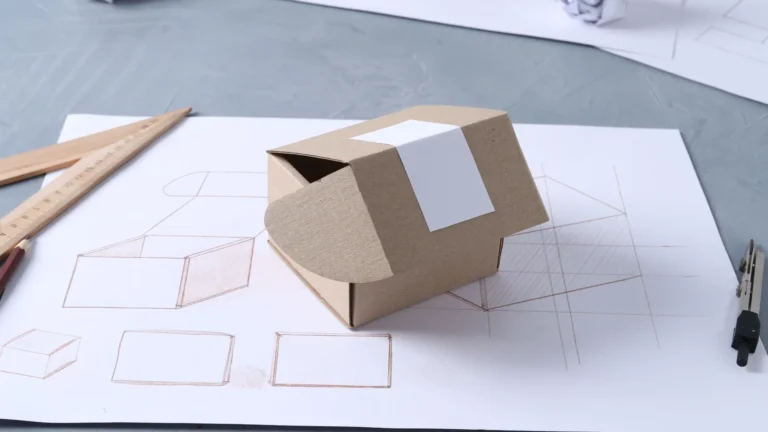
Mark the grain and fold on the same working copy as the finished dimensions. Add the front, back, and inside orientation before printing. The paper-mockup guide explains how a physical draft can reveal layout questions before committing to the final material.
Grain direction doesn’t replace a folding check

The paper and finishing method still matter. For its Folding Board range, Neenah’s production guidance recommends a letterpress channel score parallel to the grain and gives different tooling specifications for different board thicknesses. Those are product and process instructions, not universal settings for a desktop scoring tool.
Follow the relevant stock, printing, and tool guidance. Make a representative sample using the intended paper and artwork before producing the full quantity. Check the fold, surface, alignment, and how the finished piece opens. Record the actual result rather than assuming that a parallel fold guarantees the finish you want.
Keep the approved sample with the paper specification and layout revision. That gives the next batch a clear starting point: the same stock, the same orientation, and a record of what was accepted.
References
Mohawk’s Paper Basics and Envelope Basics, and Neenah’s Folding Board production tips, checked October 21, 2026. The Mohawk PDFs are manufacturer publications hosted by the City Tech OpenLab. This guide explains layout planning; it doesn’t report a Replicate Workshop folding trial. Stock photography illustrates paper work and print inspection, not a verified grain-direction comparison.