

In a bread recipe, a substitution may be workable, but start with the flour the recipe names. Bread flour and all-purpose flour aren’t identical ingredients, and the result can change when you swap them.
The useful question is more specific than “Will it work?” Ask which flour the recipe was written for, which product you have, and whether the developer offers an adjustment.
What’s different about bread flour?
Protein content is a major distinction. King Arthur’s guide to flour protein lists its bread flour at 12.7% protein and its all-purpose flour at 11.7%. Higher protein gives flour more potential to form gluten and strengthen dough.
Those percentages describe King Arthur’s products. They aren’t fixed definitions for every bag labeled “bread flour” or “all-purpose.” Check the actual product rather than attaching one brand’s numbers to another brand’s flour.
“All-purpose” also doesn’t mean bread is off limits. King Arthur describes its all-purpose flour as suitable for bread as well as cakes, biscuits, and other baking. A recipe calling for it may be making a deliberate choice.
Can I make a one-for-one swap?
King Arthur’s bread flour substitution guide allows bread flour and all-purpose flour to replace each other in its bread recipes in a pinch. It still recommends the specified flour for the intended result, and notes that dough consistency and bread structure can vary.
Keep that advice within its scope: bread recipes and the flours discussed by that developer. It doesn’t establish one interchangeable pair for every cake, cookie, or pastry, or an identical outcome across brands.
If the recipe provides no substitution guidance and you want its intended result, using the named flour avoids adding that uncertainty. If you’re choosing to try another flour, keep a record of the change rather than silently rewriting the ingredient list.
Should I change the flour amount at the same time?
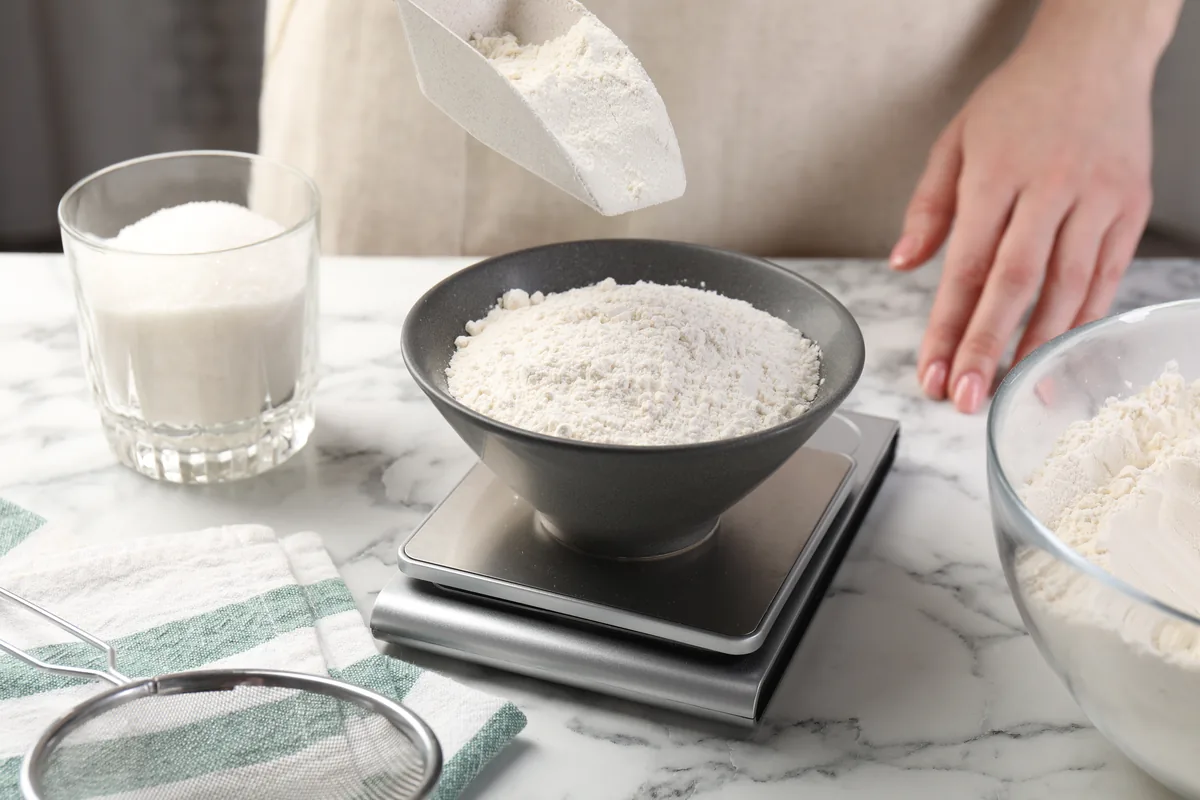
Follow any amount and liquid adjustments supplied by the recipe developer. Don’t also change the measurement method without noting it. Switching flour type while scooping a cup differently makes the comparison harder to interpret.
Our guide to why a cup of flour can weigh different amounts covers that separate measurement issue. Use the recipe’s stated weight when it supplies one, and record any further adjustment as you make it.
A useful batch note includes the recipe and version, original flour, replacement brand and type, flour weight, any liquid adjustment, and the baked result. Describe what you observe before deciding whether you prefer it. One changed loaf can help you choose a next attempt; it doesn’t prove a rule for every bread.
Sources and photographs
King Arthur Baking references checked October 22, 2026. The substitution advice is attributed to that developer; this article doesn’t report a Replicate comparison bake. Licensed stock photographs illustrate bread dough preparation and weighing flour. The pictured flour’s brand and protein percentage aren’t identified.
Found an error or an outdated detail? Send a correction for this article.