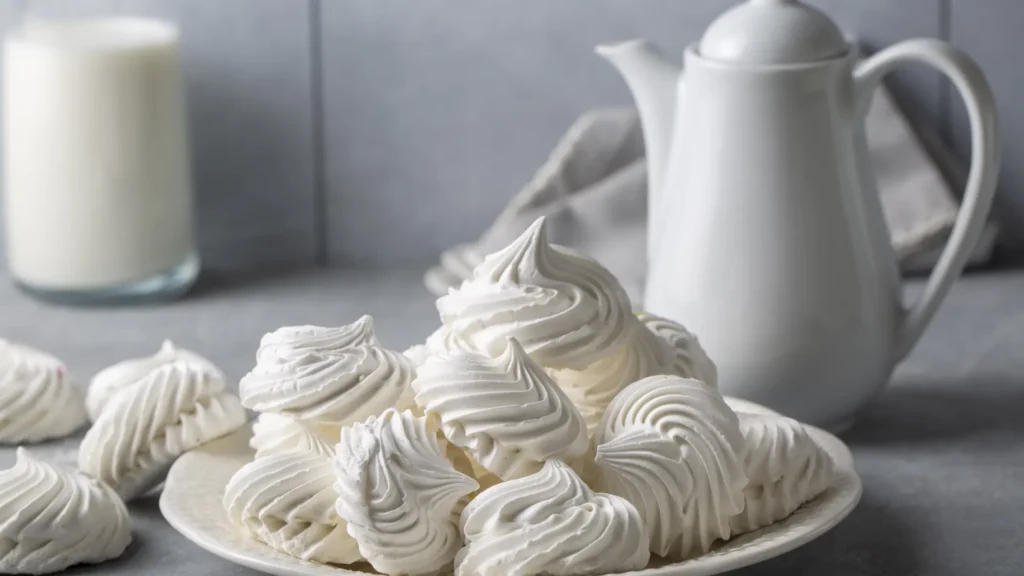

Cream of tartar helps whipped egg whites hold their structure. If a meringue recipe calls for it, that small amount has a purpose. It isn’t there to make the mixture creamy, and adding more isn’t a shortcut to better peaks.
Here are the questions to settle before you leave it out, substitute something else, or change the amount.
What is in the jar?
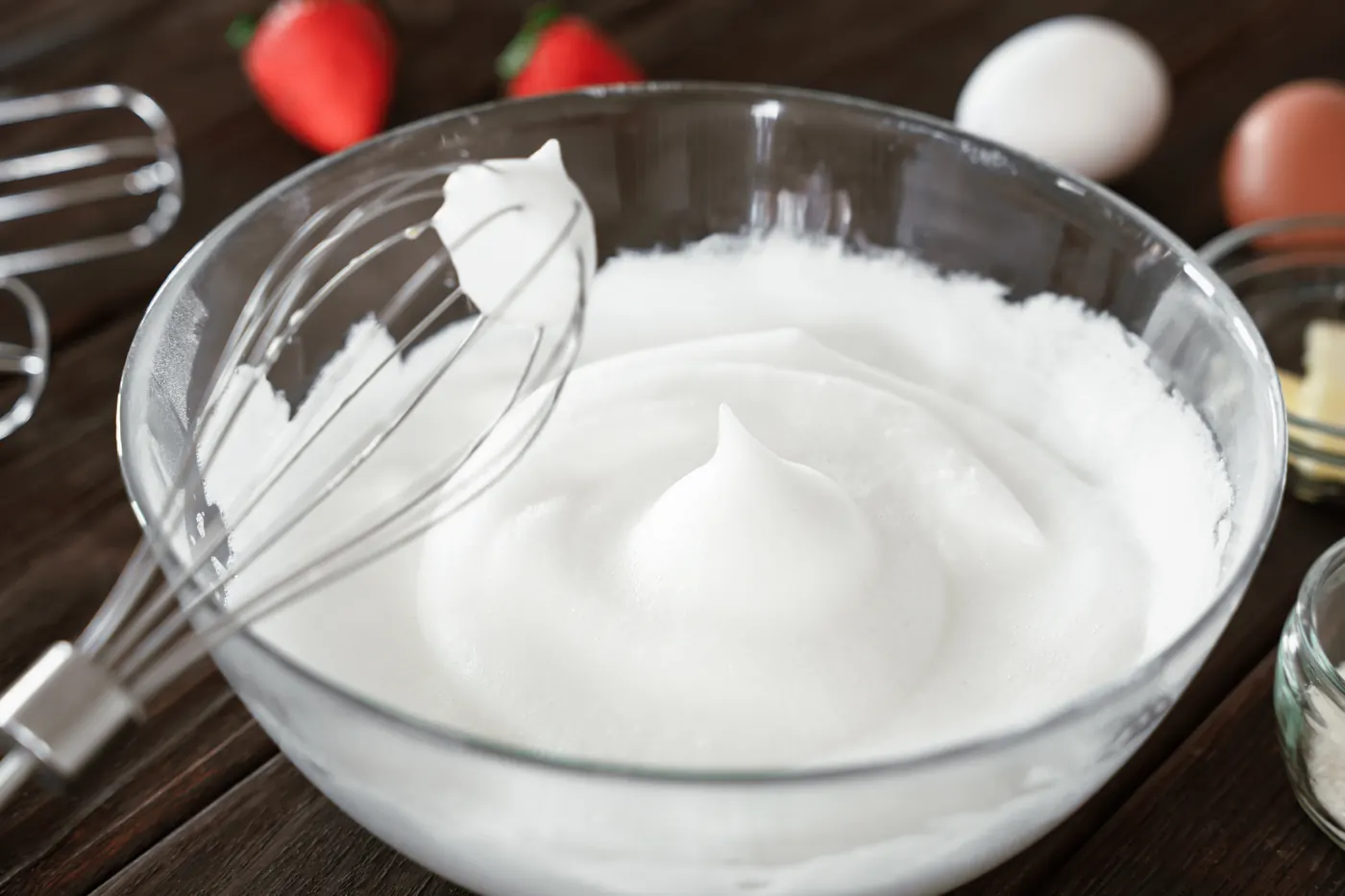
Cream of tartar is potassium bitartrate, an acid salt sold as a fine white powder. King Arthur Baking’s ingredient explanation describes how its acidity helps stabilize egg-white foam.
That role is different from whipping air into the whites. Egg whites can form peaks without cream of tartar, but the stabilizer gives the foam additional support. It is also a different job from baking soda or baking powder. Don’t swap those jars because they all appear in baking recipes; our baking soda and baking powder guide explains that distinction.
Does the difference show up in a comparison?
King Arthur’s 2024 meringue trials compared batches with no stabilizer, cream of tartar, lemon juice, and white vinegar while keeping the whipping process consistent.
All four produced acceptable meringue in that test. The cream-of-tartar batch held its piped shape best and retained more of its crisp texture the next day. Those are King Arthur’s results for its method, not a Replicate Kitchen test or a promise about every meringue recipe.
The useful takeaway is to treat the stabilizer as part of the formula. A mixture looking white and fluffy in the bowl doesn’t tell you everything about how it will hold a shape afterward.
How much should you use?
Follow the amount in the recipe you’re making. King Arthur’s trial recommends 1/8 teaspoon per large egg white, while its separate Meringues recipe uses 1/4 teaspoon for six whites. Those are different formulas, not permission to combine the largest quantity with whichever method you prefer.
Read the addition step, too. In that Meringues recipe, cream of tartar goes into the whites before the sugar is added gradually. Keep the quantity and sequence with their source recipe.
King Arthur’s ingredient guide also warns that too much cream of tartar can introduce an unpleasant metallic taste. Measure what the recipe asks for rather than adding another pinch as insurance.
What if you don’t have it?

King Arthur identifies lemon juice and vinegar as possible substitutes in whipped whites, with flavor as a consideration. Use substitution guidance written for your recipe or application. The presence of an acid in both ingredients doesn’t make every amount interchangeable.
If you make a change, record the original recipe, the substitute and quantity, and what happened at the recipe’s stated stages. Note shape retention separately from the finished texture. A photo of the whisk alone won’t preserve those details.
For the next batch, change one decision at a time. That gives you a useful comparison instead of a new mixture whose behavior could have several explanations.
References
King Arthur Baking’s ingredient guide, published meringue trial, and Meringues recipe checked October 21, 2026. This researched ingredient explainer does not report an original Replicate Kitchen test. Stock photographs illustrate whipped whites and recipe notes, not the cited comparison.