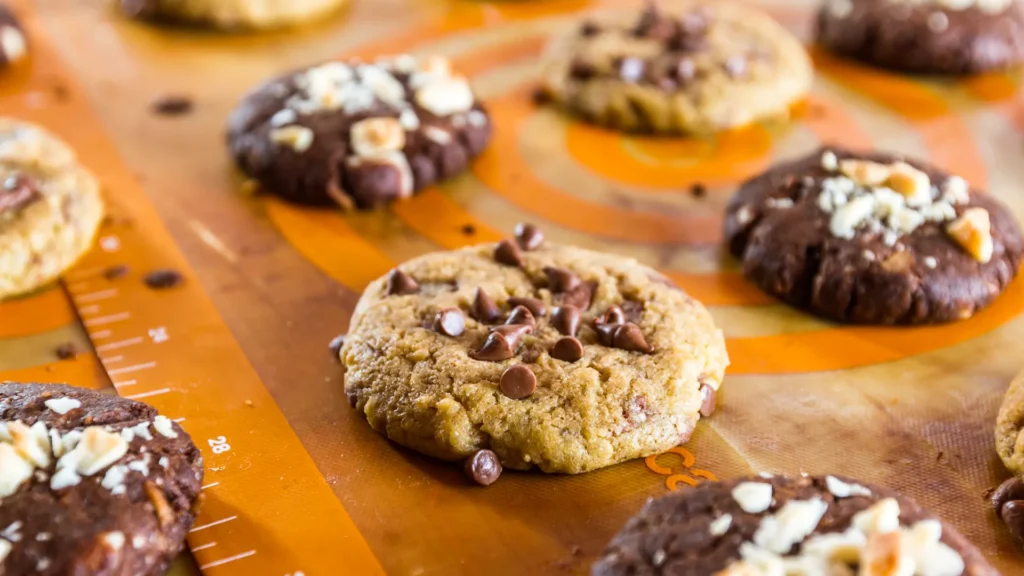

Use the pan lining specified by the cookie recipe when practical. Parchment and a silicone mat can both help with release, but the surface beneath the dough can also affect how the cookie spreads. Changing the liner changes part of the baking setup.
If you’re choosing between them, check three things: the result you want from the recipe, whether the liner fits the pan, and the use limits of the particular product. A general preference for paper or a reusable mat doesn’t answer all three.
What a published comparison found
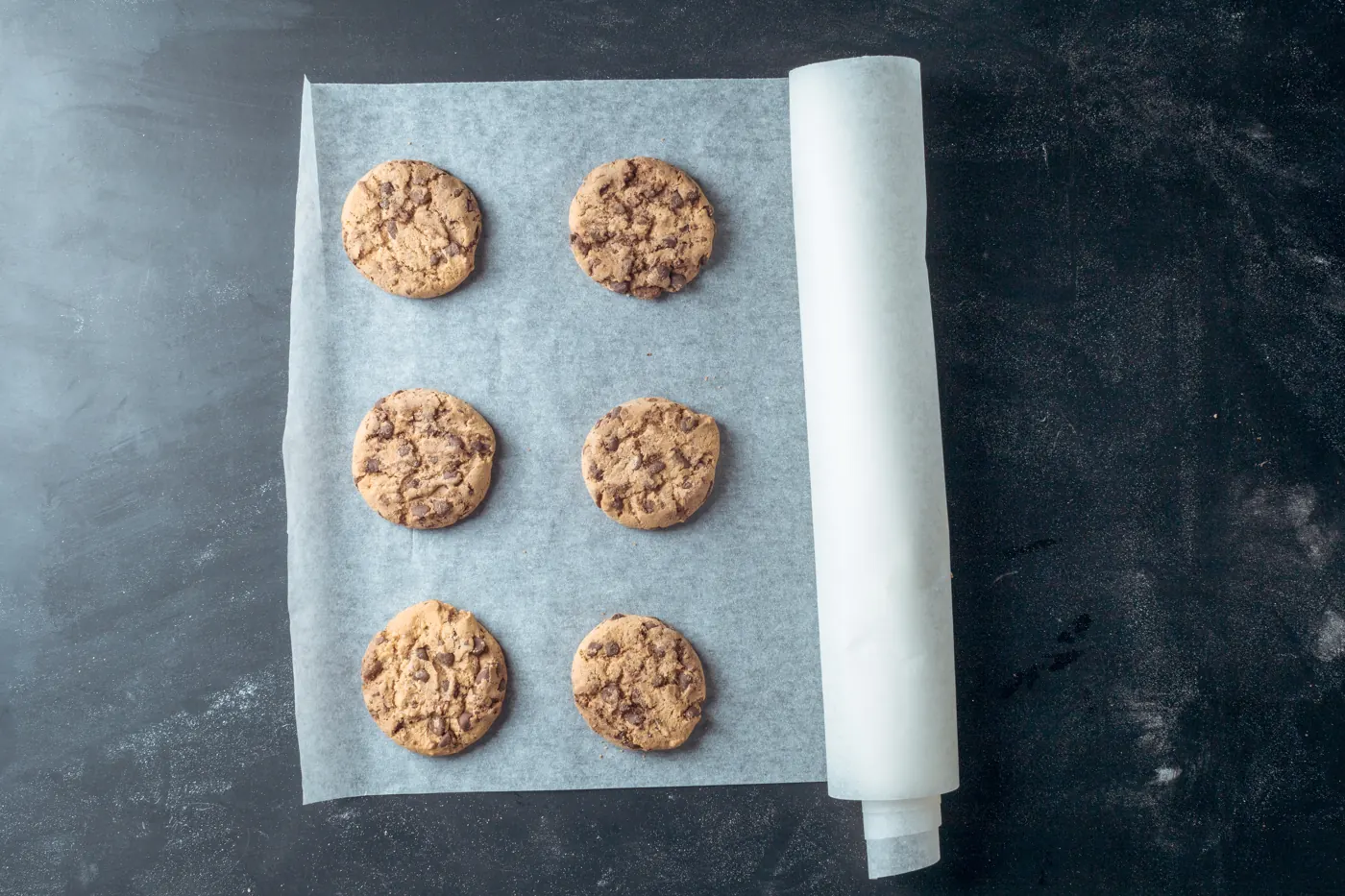
In King Arthur Baking’s pan-lining trial, Jesse Szewczyk used the same Chewy Chocolate Chip Cookie recipe, baked on the same day, for the same time, and on the same oven rack. He compared five pan preparations, including ungreased parchment and an ungreased silicone cookie mat.
He reported easy release from the parchment and generally even cookies, with some spreading a little more than desired. The silicone-mat cookies were his preferred result: thick and chewy, with relatively uniform shape and easy release.
Those are that writer’s findings with that recipe and setup, not a Replicate trial or a promise about every silicone mat and cookie dough. The useful takeaway is that the liner belongs among the variables you consider when repeating a bake.
Check the actual product before using it
A heat limit belongs to a named product, not automatically to every liner in the category. For example, Reynolds Kitchens Parchment Paper Rolls are rated by the manufacturer for oven use up to 425°F. Reynolds instructs users to preheat first and keep the paper away from open flame and oven sides; it excludes broilers and toaster ovens for this product.
The King Arthur Cookie Mat is listed as oven-safe up to 500°F and sized for a half-sheet pan. That is a specification for that mat. It doesn’t establish the rating of another brand or model.
Read the package and current care instructions for the liner you own, including its permitted oven types, temperatures, cleaning, and storage. Match them to the recipe before starting. If they don’t allow the intended use, choose a compatible setup rather than treating the rating of a different product as permission.
Fit the liner to the pan
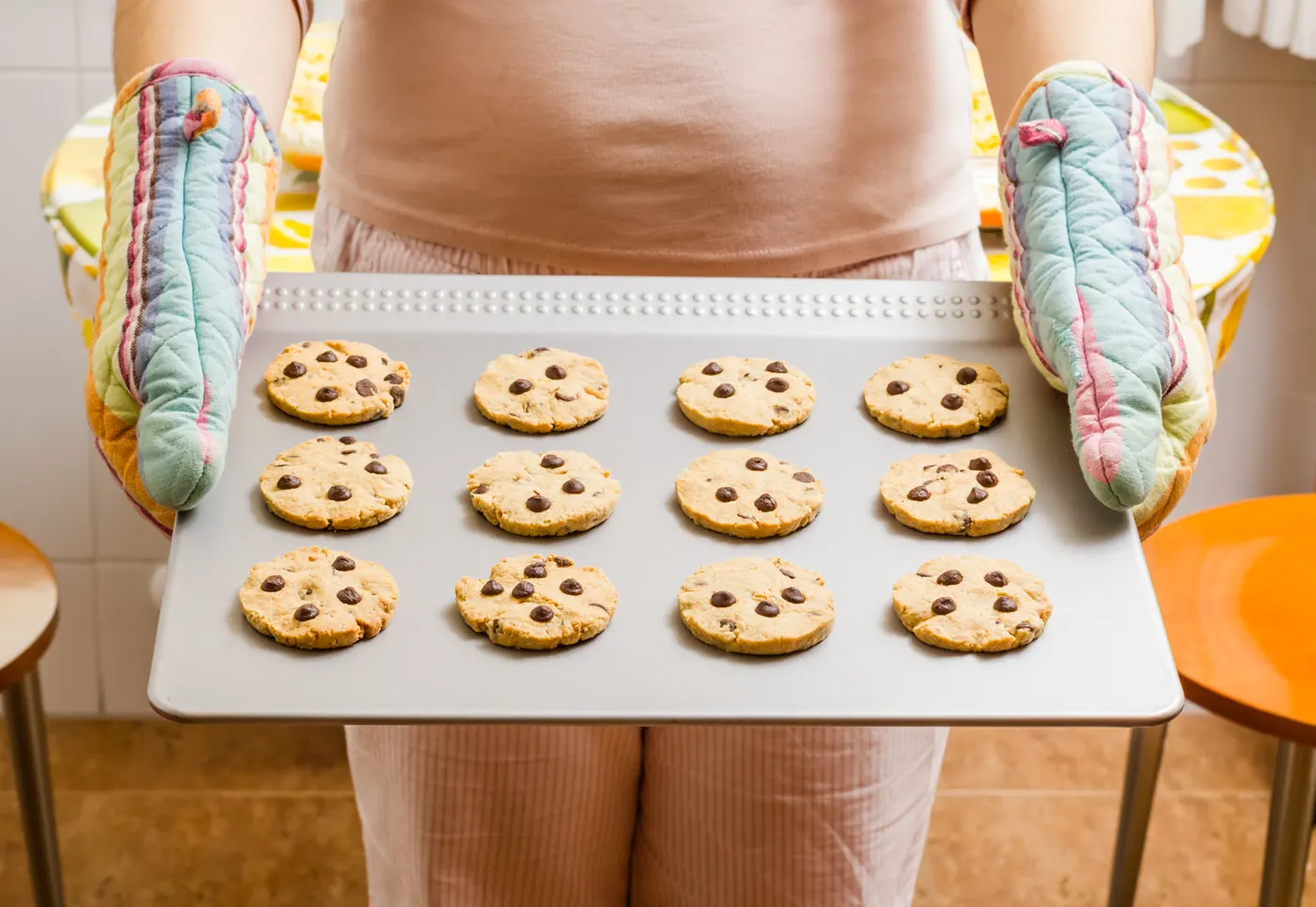
Reynolds describes cutting its roll to the needed size. A reusable mat has its own dimensions, so compare the mat and tray before buying or loading it. Follow the mat’s instructions about handling and fit rather than assuming it can be trimmed like paper.
Check the baking pan itself too. A change of liner doesn’t account for a change from one pan material or finish to another. If you’re trying to understand a different result, keep those decisions distinct.
A small comparison record
If you decide to compare compatible liners with a recipe you already use, make the question specific: which setup gives you the release and texture you prefer for this cookie?
Before starting, record:
- The recipe version and named liner products.
- The pan and the recipe’s preparation instructions.
- The portion size and any prescribed dough-resting step.
- The oven setting, rack, and recipe’s doneness checks.
- What you actually observe about spread, release, edges, and center after baking and cooling as directed.
This is a proposed record, not a report of completed testing. Keep observations separate from preference: a cookie’s shape is something to describe, while “better” depends on what you wanted to eat. A useful result helps you repeat your chosen setup for that recipe without turning one batch into a rule for every cookie.
References
King Arthur Baking’s published trial and Cookie Mat listing, and Reynolds’ parchment-roll instructions, checked October 21, 2026. Product limits are examples for the named items. Stock photographs illustrate liners and cookie preparation; they do not document the cited trial or a side-by-side Replicate comparison.
Found an error or an outdated detail? Send a correction for this article.