
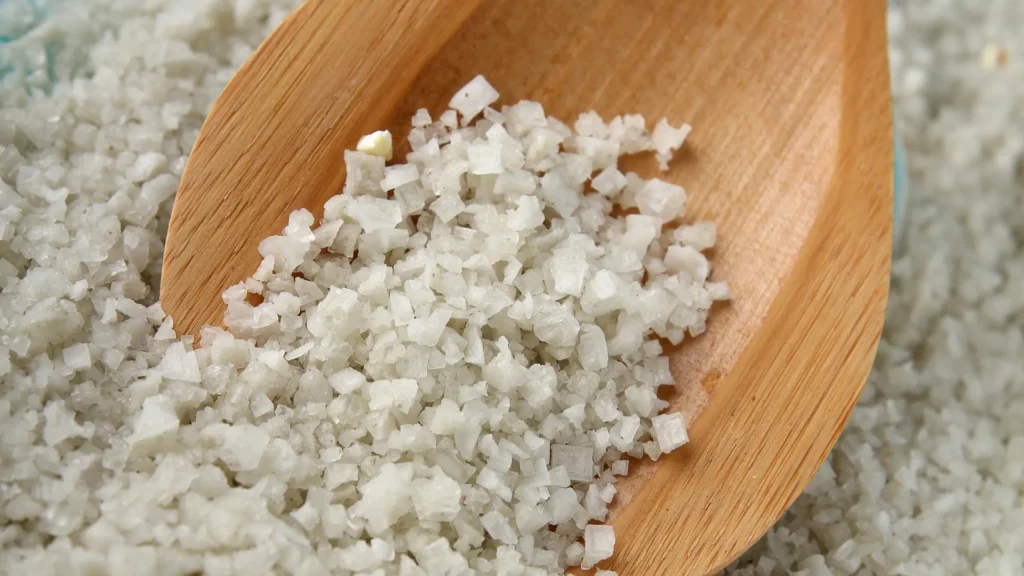

Kosher salt seasons food during cooking, flaky sea salt can add a finishing crunch, and celery salt and seasoned salt add other flavors alongside salt. Lite Salt is a different formulation again. These five pantry options overlap, but crystal size and ingredients make them poor candidates for an automatic spoon-for-spoon swap.
The use matters more than the name
Kosher Salt is a practical default cooking salt, but crystal size varies by brand. Flaky Sea Salt is useful where visible crystals and crunch are part of the final dish. Celery Salt deliberately adds celery flavor. Seasoned Salt may contain several other spices and additives. Lite Salt is a branded or generic reduced-sodium product whose sodium and potassium content depend on its actual formulation.
A recipe measured by weight behaves more predictably than one that substitutes one teaspoon of one crystal size for another. For a final salted garnish, texture also matters. The sensory difference between a flaky finishing salt and dissolved fine salt cannot be captured by a sodium figure alone.
Morton’s conversion chart illustrates why named salt products can need different volume measures. Its Lite Salt product page identifies the potassium chloride blend and includes a warning for people on sodium- or potassium-restricted diets.
Check the product before the health claim
Some reduced-sodium salts replace part of the sodium chloride with potassium chloride. That is not automatically appropriate for everyone, particularly people who must limit potassium under medical guidance. Confirm the actual Lite Salt product and its warnings before recommending it as a healthier swap.
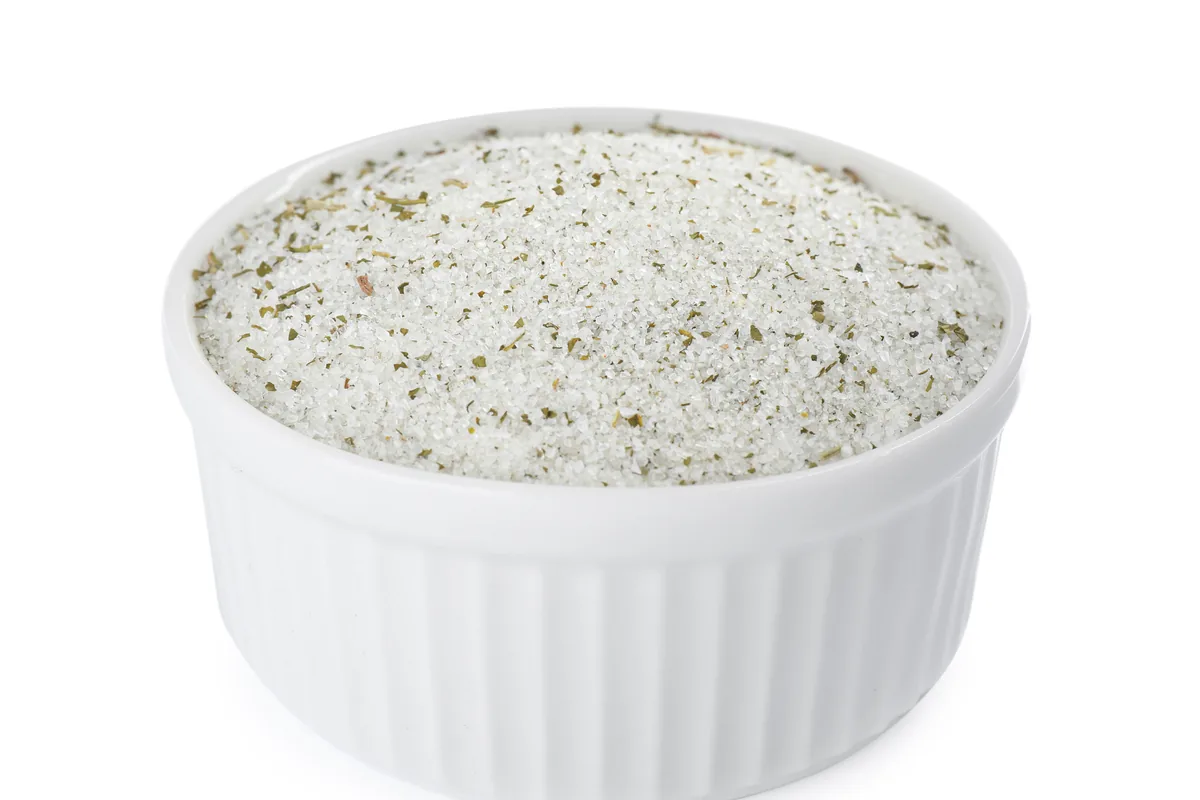
For a blend, read the full ingredient list. A seasoned salt adds more than salt and may introduce allergens or flavor notes that the recipe does not call for.
How we would record a comparison
Use weights, the same base food, and an explicit evaluation of seasoning level and finishing texture. A preference for one salt on eggs does not establish superiority for soup or baked goods. If the dish is being made from a tested recipe, start with the specified salt and record a genuine substitution rather than quietly rewriting its amount.
Match salt to the job
- Kosher salt: general cooking; record the brand when measuring by volume.
- Flaky sea salt: finishing texture where crystals remain noticeable.
- Celery salt: adds celery flavor as well as salt.
- Seasoned salt: other seasonings need to fit the dish.
- Lite Salt: check the specific formulation and label warnings.
For pure salts dissolved into the same food, matching weight is more useful than matching spoon volume. That does not make seasoned blends or potassium-containing mixtures equivalent to pure sodium chloride.
Sources
Related guides
Found an error or an outdated detail? Send a correction for this article.