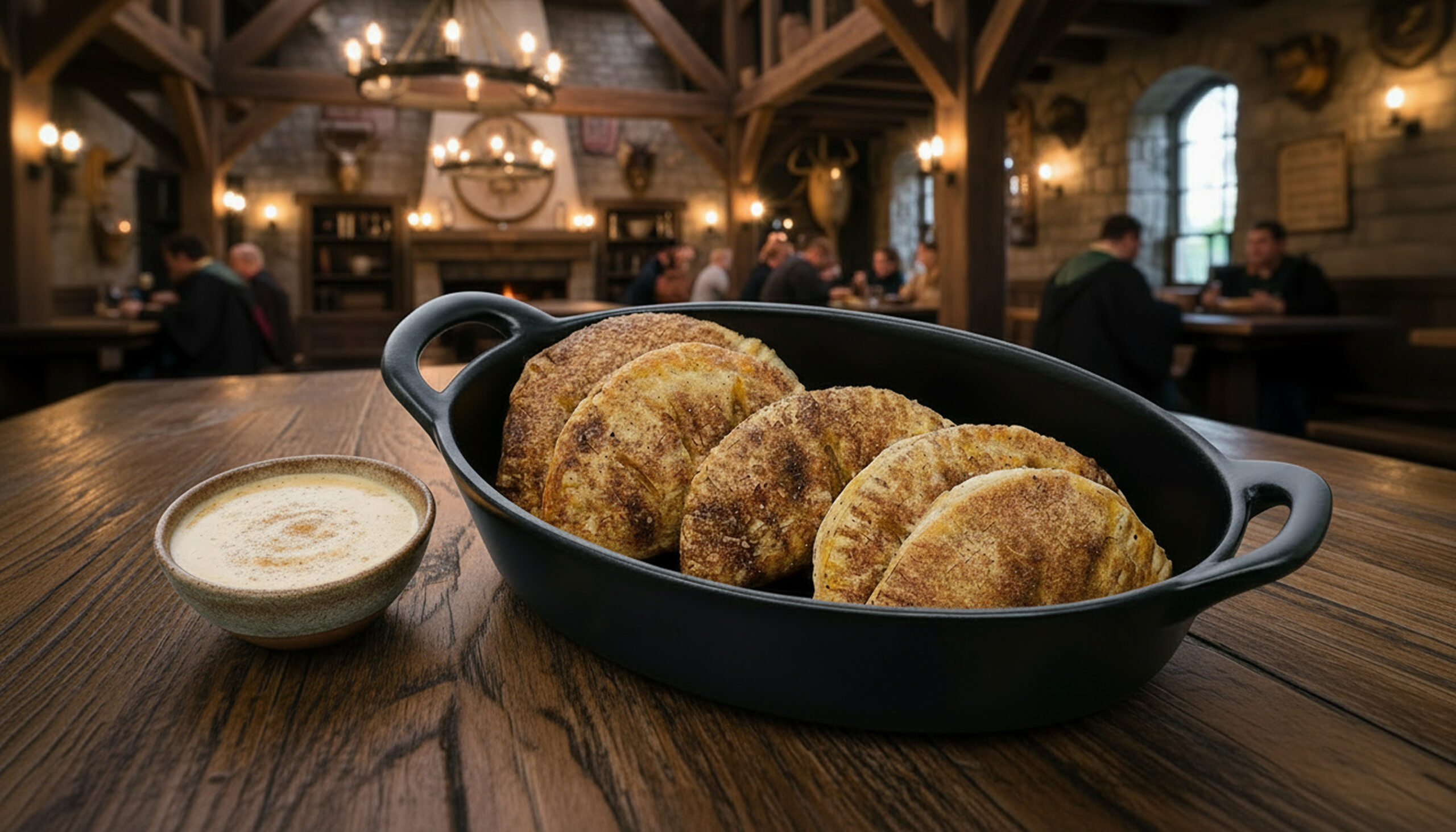

The United Kingdom pavilion looks like the sort of place where you should stop walking and find a table. That’s a reasonable instinct, but it leaves quite a bit unexplored. Behind the pub-and-telephone-box image is a carefully assembled collection of architectural periods, garden spaces, shops, and clues to real places.
This is stop two on my counterclockwise World Showcase route, after Canada and before France. Counterclockwise is my favorite direction to walk the lagoon. Here, I’d slow down before crossing the bridge, because the United Kingdom is doing more than serving fish and chips.
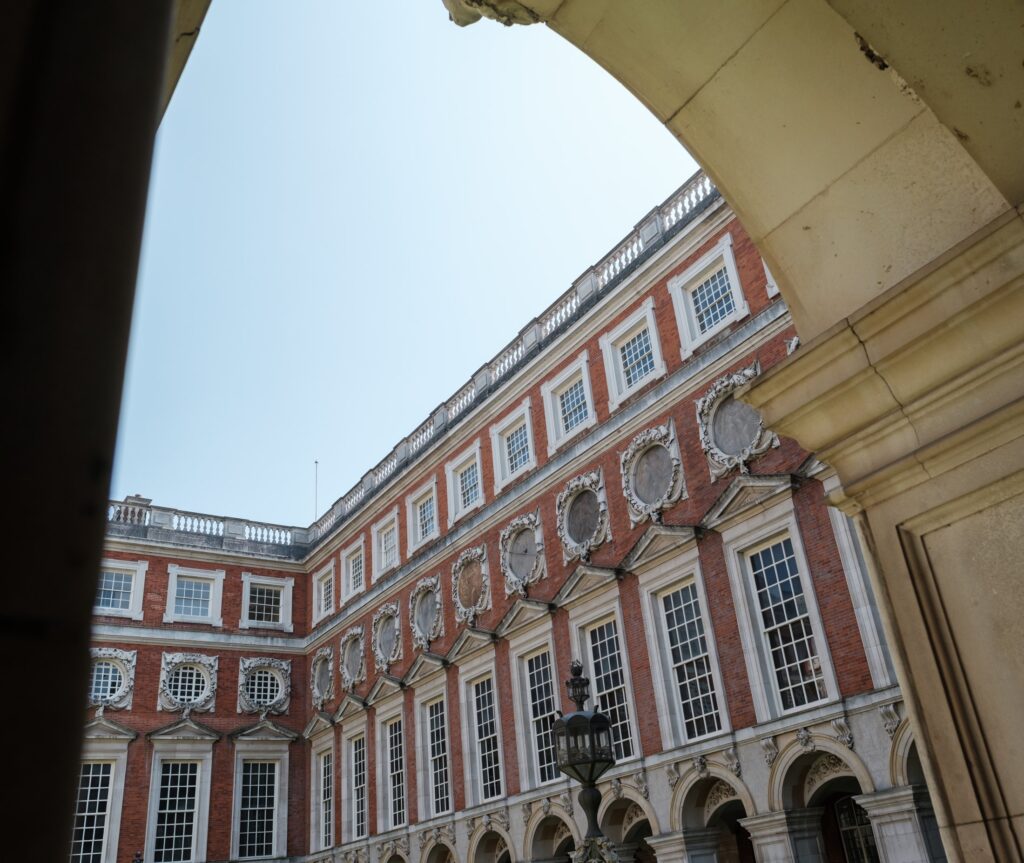
The real-world connection I want to follow is Hampton Court Palace. From there, the trip opens into Shakespeare’s England and Edinburgh, with a reminder that the United Kingdom is four countries, not one interchangeable London backdrop.
A pavilion built from several centuries
The United Kingdom pavilion is a composite rather than a model of one town. Its streetscapes bring together English architectural references from different periods, with formal and cottage-style garden elements nearby. That variety makes a short path feel as if it has accumulated buildings over time.
Hampton Court is one of the connections identified in Disney’s guide to World Showcase architecture. Another reference is Anne Hathaway’s Cottage near Stratford-upon-Avon. You don’t need to pretend these places sit on the same block to appreciate the design. Recognizing the combination is more interesting than trying to assign the whole pavilion a single real-world address.
And no, this isn’t the EPCOT pavilion with a walk-up replica of Big Ben. The point is a collection of streets, gardens, and architectural suggestions, not a miniature checklist of every famous British landmark.
What to see and do at EPCOT
Start by walking away from the lagoon-facing thoroughfare and into the garden spaces. That small change of direction is what separates a pavilion visit from a quick food stop. Compare the more formal planting with the softer cottage references, and look back toward the facades from a second angle.
Rose & Crown Pub Music is the official listing for the pub’s musical entertainment. Use it to find performance information for your visit, rather than building a plan around an old showtime in an article. Music makes sense here because it gives the interior a social purpose beyond being a room to photograph.
There isn’t a large pavilion ride to organize your stop around. The small-scale experiences are the point: architecture, garden paths, a pub atmosphere, browsing, and a meal or snack if you want one. Kidcot provides an activity-card stop for children following the whole World Showcase circuit.
If your group is split between shoppers and people who would rather sit for a moment, this is a useful place to stop making everybody do the exact same thing. Agree on a meeting point and give the pavilion room to work at different speeds.
What to eat and drink
Rose & Crown Dining Room is the table-service choice. The menu draws on British pub-food associations, with fish and chips among the familiar dishes. Choose it when you want a proper meal and time at a table, and check the restaurant’s own menu and reservation information before committing.
Rose & Crown Pub is a different decision from booking the dining room. Look at the pub’s listing for its drinks and food information, especially if one person in your group expects a full restaurant meal and another is picturing a brief drink stop.
Yorkshire County Fish Shop is the simpler counter-service route to fish and chips. It fits a day when you want to keep the rest of the walk flexible. Find your place to eat before the whole group disperses with food in hand.
The pavilion’s menu is an introduction to a recognizable pub tradition, not a summary of everything eaten across England, Scotland, Wales, and Northern Ireland. A real trip can include bakery food, regional cheeses, seafood, contemporary British cooking, and the influence of immigrant communities. Don’t let one plate become the definition of the country.
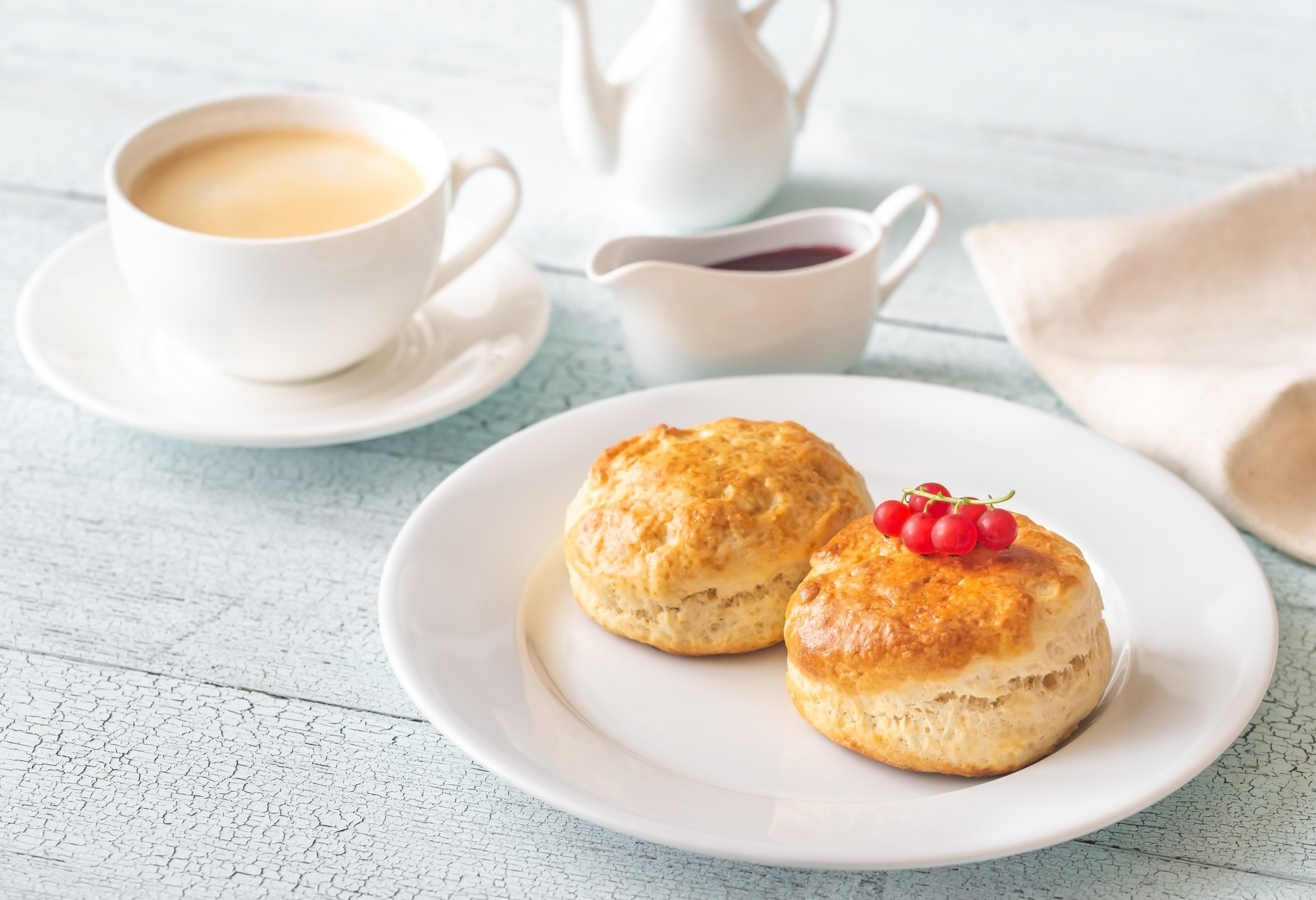
Scones with cream and jam are another useful food connection to explore in the real country. If afternoon tea interests you, make it a deliberate stop. It’s a different experience from grabbing a hot drink between sightseeing appointments.
What to shop for
The Tea Caddy follows the pavilion’s tea connection. The Crown & Crest and The Toy Soldier offer other reasons to step inside rather than judging the shops by their facades alone.
Treat merchandise categories as browsing prompts, since stock changes. For heraldic or family-name souvenirs, a familiar surname on a product isn’t proof of your own genealogy. For food and tea, check origin and ingredients if that matters to you. The best souvenir question is often simply, “Will I actually use this at home?”
The real landmark: Hampton Court Palace
Hampton Court Palace sits southwest of central London on the Thames. Its appeal is partly that it isn’t one stylistically consistent palace. Tudor buildings associated with Henry VIII stand alongside the later Baroque work created for William III and Mary II.
Historic Royal Palaces’ history of Hampton Court explains that layered story. It gives the architecture a chronology that a theme park facade can only suggest. Brick courts, royal apartments, kitchens, and gardens each tell a different part of how a palace functioned.
I’d plan Hampton Court as a substantial visit, rather than a brief detour from an already crowded central London day. Pick the interiors and gardens that interest you, check the official visitor information, and account for the journey. The EPCOT connection is the starting question. The real building has enough material to outgrow it quickly.
London itself offers another scale of walking, with the Thames, bridges, and major buildings providing useful anchors. The view toward St. Paul’s Cathedral is a real London scene, not a reference to a building reproduced in the pavilion. Leave time for the city around the landmark as well as the visit you have planned.

Follow the cottage, then cross into Scotland
For a more domestic scale, Anne Hathaway’s Cottage connects the pavilion’s cottage imagery to an actual family home. Anne Hathaway was Shakespeare’s wife, and the house belongs within the wider Stratford-upon-Avon story. It is not another royal residence or a miniature Hampton Court.
A real itinerary needs that separation. London and Hampton Court make one natural grouping. Stratford-upon-Avon is another choice with its own travel time. Combining them should come from your interest in the places, not from the fact that their architectural references share a Florida courtyard.
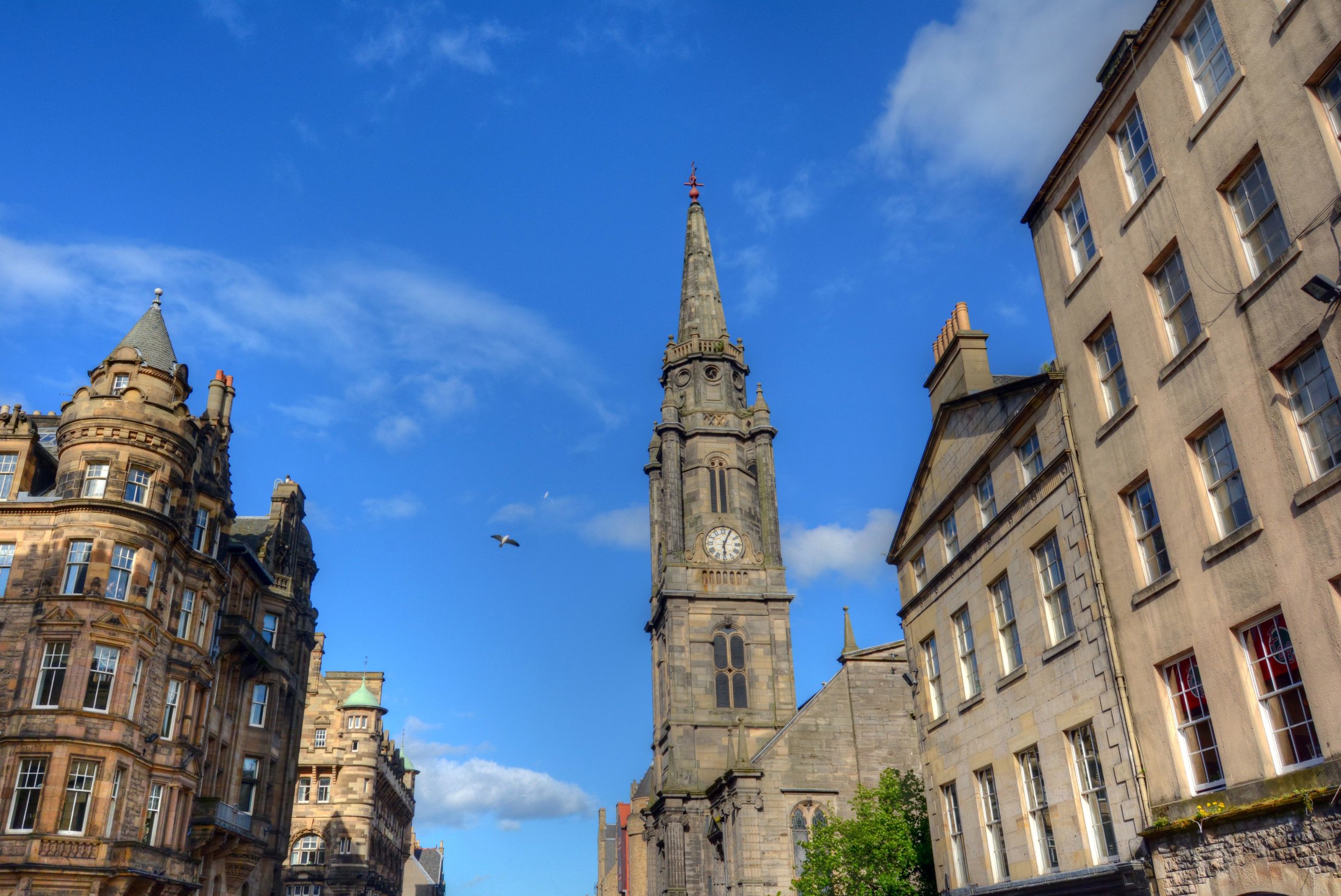
For Scotland, Edinburgh offers a strong contrast. Walk the Royal Mile through the Old Town and explore Edinburgh Castle using its official visitor information. The streets rise, narrow passages pull away from the main route, and the city’s stone architecture gives the walk a very different character from an English cottage garden.
The VisitBritain site is a useful next step for building a trip beyond these first connections. It helps keep Britain’s destinations separate rather than treating the whole island as a collection of London day trips. Northern Ireland is also part of the United Kingdom, with its own planning context; Great Britain and the United Kingdom are not identical geographic terms.
What EPCOT changes
The biggest adjustment is compression. Architectural periods and places that belong to different regions share a short pedestrian route. A pub can combine recognizable design ideas without being the replica of one historic establishment. The result is a readable setting, not a precise town plan.
The pavilion also gives England more visual space than the full four-country United Kingdom could possibly fit into that footprint. That’s worth noticing without turning the visit into a fault-finding exercise. Use the familiar English references to get started, then make a conscious choice to learn about Scotland, Wales, and Northern Ireland in their own right.
For EPCOT, I’d take the garden path, look at the architecture, and choose between a restaurant meal and a quick fish-and-chips stop. For the real world, choose the place that held your attention: palace, cottage, or city. The pub can remain part of the plan. It just doesn’t have to be the entire plan.
Stop 2 of 11: Return to the real-world World Showcase walk or explore our Theme parks hub.
This is a researched guide to EPCOT and the real places behind its design. It does not represent a personal visit to every destination or a tasting of every dish. Photographs show real-world locations and food illustrations, not the EPCOT versions. Follow the official links above for current visitor information, menus, and reservations.
Found an error or an outdated detail? Send a correction for this article.